 English
  Japanese
  Chinese (China)
  Chinese (Taiwan)
  Korean
 Shiragata Park
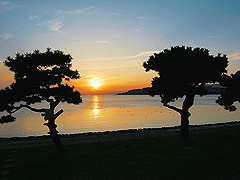
The park is filled with a whole area that used to be the main point of water transportation with the Sea of Japan. The scenery on the lake remains intact, and you can enjoy the setting of the sun with the silhouette of pine trees.

The park is filled with a whole area that used to be the main point of water transportation with the Sea of Japan. The scenery on the lake remains intact, and you can enjoy the setting of the sun with the silhouette of pine trees.
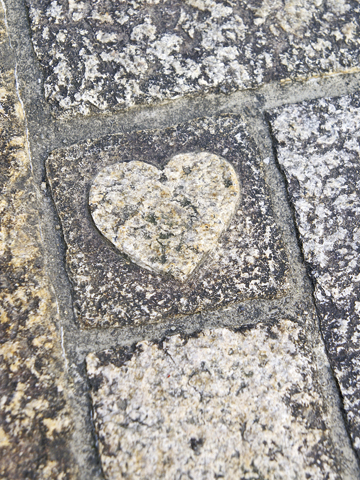
The small diameter of the cobblestones is located on the west side of Caracolo Square. Inside its cobblestones are mixed with two large and small hearts in relief. If you stand on one heart and ask for a nice encounter, you will be tied to the person who first stepped on the other heart.
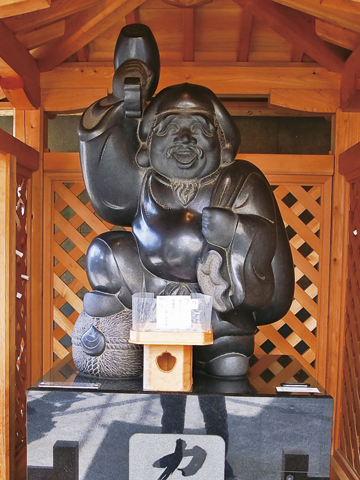
Daiguro-sama, who is seated in Plaza Caracolo; "Koimikuji" and "Kankaku Mikuji", as well as "Ema of the Heart", etc. Let's pat Daiguro-sama and hope for profit.
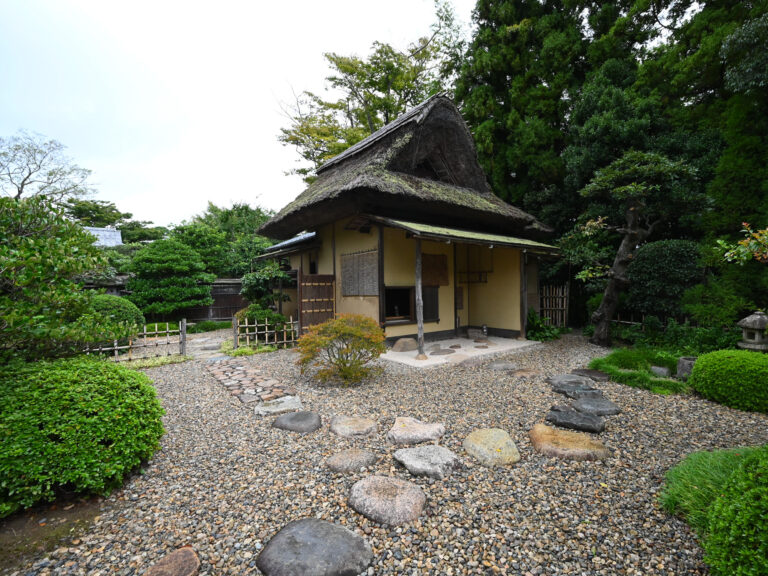
Yasunaga 8 (1779), the 7th lord of the Matsue clan, the 7th lord of the Matsue clan, who is also famous as a tea ceremony, Matsuhira Fumai [Fumai] Koto Matsudaira Harusato [Harusato] built in the house. After several transitions, the building was relocated to its current position in front of Matsue Castle in 1966. The thatched, Irimoya-style building is a simple beauty, and the Irimoya house is built with a flat-framed "Akai-an" of Fumai-nu, and is a tea room of Tangible Cultural Property of Shimane Prefecture. You can take a look at the garden and the tea room from the outbuilding Japanese-style room, and take a breather while tasting the matcha tea (fee: entry hall 410 yen, Shicha 410 yen).
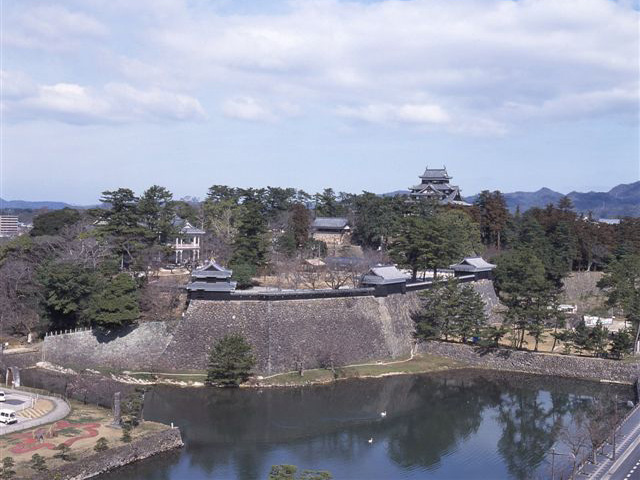
The vast castle site is known as Shiroyama Park (historical site), where the Honmaru and Ninomaru are maintained, and the park is dotted with attractions such as Xingyunkaku, Matsue Shrine, and Shiroyama Inari Shrine, in addition to the national treasure-designated castle tower. It is green and has become a cherry blossom spot in spring.
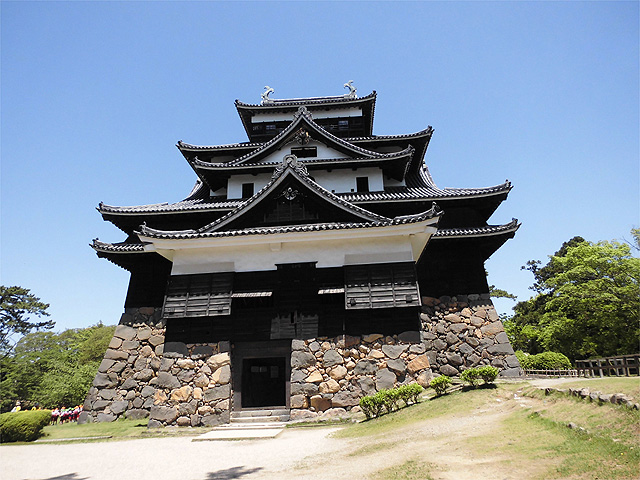
On July 8, 2015, Matsue Castle, which was redesignated as a national treasure, was founded by Yoshiharu Horio in the 16th year of Keijō (1611). It is 30m high with a quadruple fifth-floor tower and one-story basement. A simple beauty hangs over the black-painted clapboard exterior, retaining the character of an early Momoyama castle. It is interesting to see that the eye of the gun provided in each layer, the wells on the ground floor, and so on, that the actual aspects are left in a dark color. The exhibits include a kind of armor armor and ancient documents. The top floor is a gazebo, which overlooks the city and Lake Shinji.

城山公園北側の堀川沿い、かつては上級・中級武士が屋敷を構えて住んでいた通り。今でも板塀と白壁の長屋門や武家屋敷の建物が連なり、松江でももっとも城下町らしいたたずまいを残す。堀川に沿って植えられている老松の並木も年輪を積み重ねた風格があり壮観。ここには小泉八雲記念館や小泉八雲の旧居もあり、散策が楽しい。松江市伝統美観保存地区、建設省(現国土交通省)と「道の日」実行委員会による「日本の道100選」に選定されている。
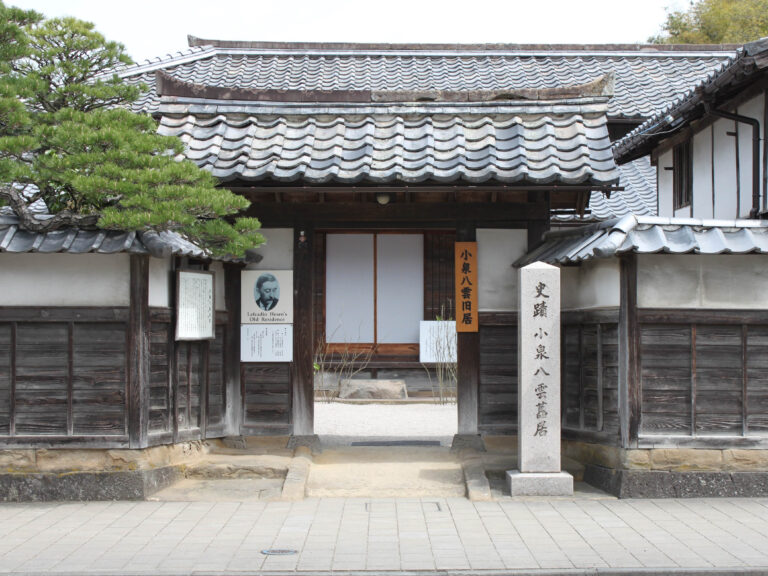
『怪談』で知られる小泉八雲が明治24年(1891)に約5か月間、妻セツと暮らした武家屋敷。八雲が好んで眺め、著書『知られぬ日本の面影』第16章「日本の庭」に登場する庭は、当時のまま保存されている。国指定史跡。屋敷の一部を公開している。
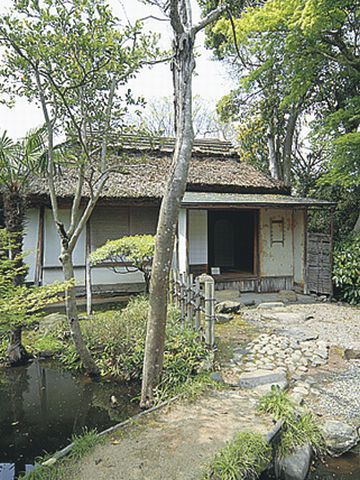
北田川べりに立つ天台宗の古刹だが、幾度も火災に遭い、建物に往時の面影はない。みどころは境内に立つ三斎流の茶室。月を見るために窓を大きくとったことから、観月庵[かんげつあん]とも。不昧の信任の厚かった、荒井一掌[いっしょう]の好みという。門前の橋は、小泉八雲の『あずきとぎ橋の怪』ゆかりの橋で松江市の指定文化財。
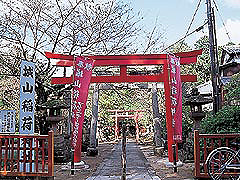
In the deep green of the Shiroyama Park, the Torii of the brilliant red-painted torii is marked. It is a shrine founded by the Matsue feudal lord, and often walks around, also preferring Koizumi Yakumo. There is also a stone fox statue that was my favorite. "Horan Enya", which is held every 10 years, is one of the three major ship shrines in Japan. Cherry blossoms are stunning in spring.