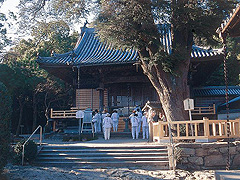
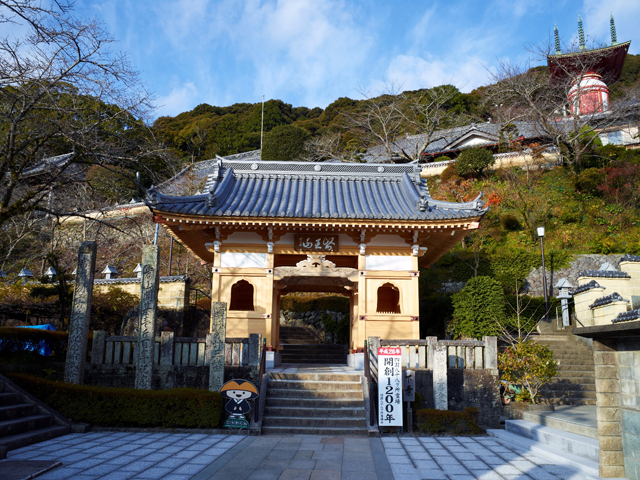
Joraku-ji Temple

Joraku-ji Temple

Info

JR Tokushima Station → Tokushima Bus Extension to Yorinaka for 25 minutes, bus stop: Jorakuji front ride, 10 minutes on foot
10km 20 minutes from Tokushima Dozumi IC via Prefectural Road No. 1 and National Route 192
10 cars

Business Hours

7 to 17 hours

Price

Precinct Freedom

Spot Category

Shrines・Temples・Churches

The information provided reflects the details available at the time of the survey.
Please note that facility details may change due to the facility’s circumstances, so please check for the latest information before visiting. This content has been translated using machine translation.

Information provided by: JTB Publishing

This content uses automatic translation services. Automatic translations may not always be accurate.
Please note that the translated content may differ from the original meaning. We ask for your understanding when using this content.
Related Spots

Zuiganji Temple

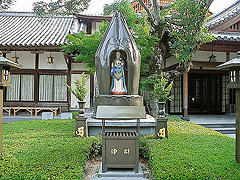
The Zen temple of the Rinzai sect (Rin Zaishu) Myoshinji school, which stands at the foot of the mountain at Byeshan. It is known for its Ikizumi-style garden, which was built in the early Edo period. The garden, which cleverly uses the slopes at the foot of the mountain, is equipped with tea rooms and a triple treasure pagoda, and has a sophisticated style. The Kiri Shitan lantern, which carved a statue of Maria on lanterns during the Edo period when Christianity was banned, and which he pretended to be Jizo-son, cannot be overlooked.

Dainichi Temple

An ancient temple standing on the banks of the river. When Hiroho Daishi was doing Hōma Shōjō in Ōshigamori, Dainichi Nyorai appeared in the air and received the announcement of the construction of Ichiyu, so the figure of Dainichi Nyorai was carved into the main temple, and the name of the temple was also named after this. However, since it later became a temple of Ichinomiya Shrine, it is also known as Ichinomiya-ji, and it becomes prosperous. The main hall was destroyed by fire during the Tensho period (1573-92), and the current Dou was rebuilt during the Meiji period. The eleven-faced Kansei Onbodhisattva, which had been held at Ichinomiya Shrine by the separation of Shinto and Buddha in the Meiji era, was moved to this temple, and this is the main temple. The original main god, Dainichi Nyorai, is enshrined as a Waki Samurai Buddha.

Kokubunji Temple

It was one of the Kokubunji temples erected throughout the country at the order of Emperor Shōmu, and Gyoki was founded. At that time, it was a large gaiji with a seven-storied pagoda as a prayer office for the Zhengui state, but the temple pagoda was burned to the ground due to the fire of the Chōsengagabe during the Tensho years (1573-92). It later became the Sōtō sect temple when it was rebuilt in the first year of Kanbo (1741) by Hōsan Yōshi Kazunaga. It was rebuilt over a long period of time, including the establishment of the Taishido in the Tenpo Year (1830-44). The main temple of the present-day double-layer Irimoya is rebuilt during the Bunsei period (1804-30), and the plaques of Emperor Shōmu and Empress Kōmei are enshrined. The precinct is home to the Meishatsu Awa Kokubunji Garden, a lively stone-style garden made of green stone megaliths from local Awa.

Yakuo Temple

The 23rd dasho of the Shikoku Reiba, which is transmitted to the beginning of Hongjin 6 (815). There are 33 stone steps to the main hall and 42 steps to the male, and worshipers of bad years can be seen climbing by placing coins at each step. In addition, there is Yugito (Yugito), which was built in commemoration of the year 1150 of Shikoku Reiba, when climbing 61 steps of Danjoyaku (Danjoyaku) slope.

Heido-ji Temple

In Enryaku 11 (792), Yakushi Nyorai appears when Hiroho Daishi is praying for evil, and when digging with a cane in search of water for kamochi, milky white water rises, purifying the body with the spirit water, and it is said that the statue of Yakushi Nyorai was engraved and laid down as the main statue. The temple was attached with the hope that the people would be rescued equally by this water. The well on the left hand of the main hall is revered as "Kobo no Water" which is effective against all diseases. In addition, wooden cars dedicated by worshippers who have been exuded to the good legs and have been given a good profit are arranged in the main hall. Above the head inside the main hall, the ceiling paintings depicting the flowers are stunning and worth a look.

Anraku Temple

It is a rare temple in the whole country where Hiroho Daishi, who visited this area where the hot springs had been located since ancient times, conveyed the benefits of Yuji Onsen, and the mountain name is Ononzan. Daishi himself carved and made the main honor of the Yakushi Nyorai, who is to help save the illness and calamity of the modern era. The present main temple was dedicated to the gratitude of the sick disease, and is held as the original Buddha. As many as 50 statues of Buddha carved by the Kyoto Buddhist master, Akyo Matsumoto, are enshrined in the temple. Shukubo has a history of more than 400 years since it was designated as a station-ji temple (a temple designated by the clan where you can stay in trouble at the inn), and is pleased as a jukubo with a hot spring.

Contact Us: Business & Personal Inquiries

By proceeding, you agree to our Terms of Use And confirm you have read our Privacy Policy .

Notes

· We are available for inquiries 24 hours a day. Responses will be provided between 9:00 and 18:00 (including weekends, public holidays, and year-end/New Year holidays).
· Depending on the nature of your inquiry, it may take some time for us to respond.

RURUBU & ALL WAY JAPAN
Privacy Overview

This website uses cookies so that we can provide you with the best user experience possible. Cookie information is stored in your browser and performs functions such as recognising you when you return to our website and helping our team to understand which sections of the website you find most interesting and useful.