 English
  Japanese
  Chinese (China)
  Chinese (Taiwan)
  Korean
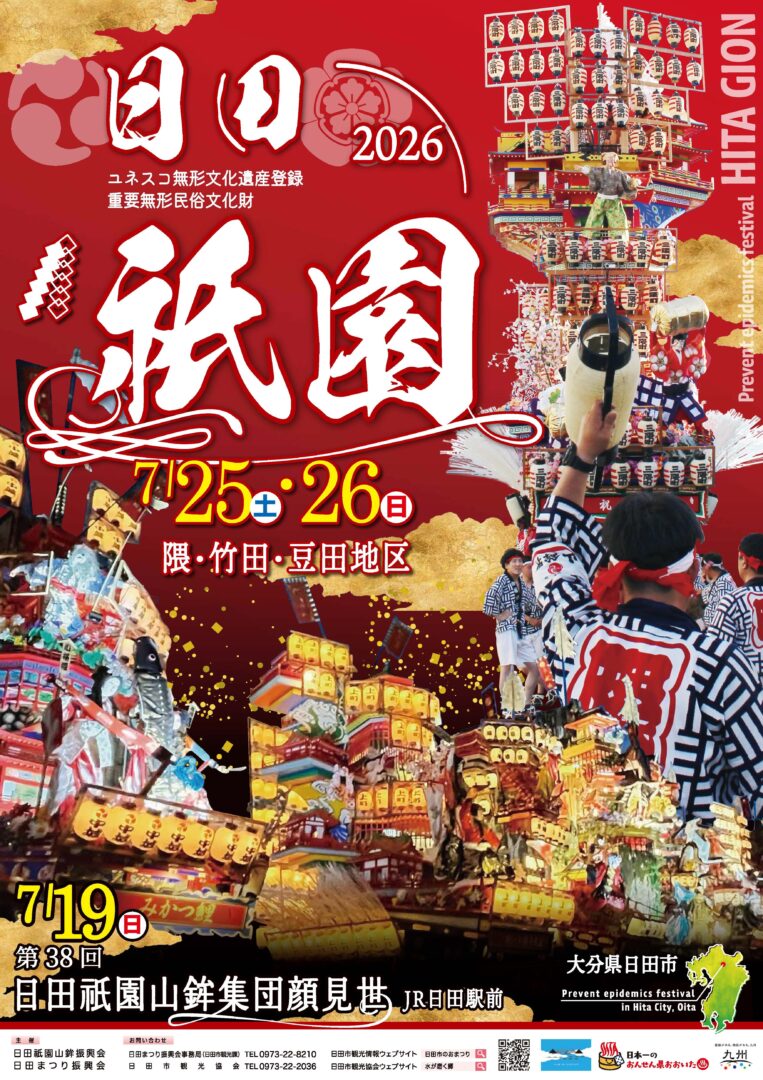
Hita Gion Sansama Group Kama Myo
Hita Gion Hita Gion Sanzan Group Kami Sei JR Hita Station
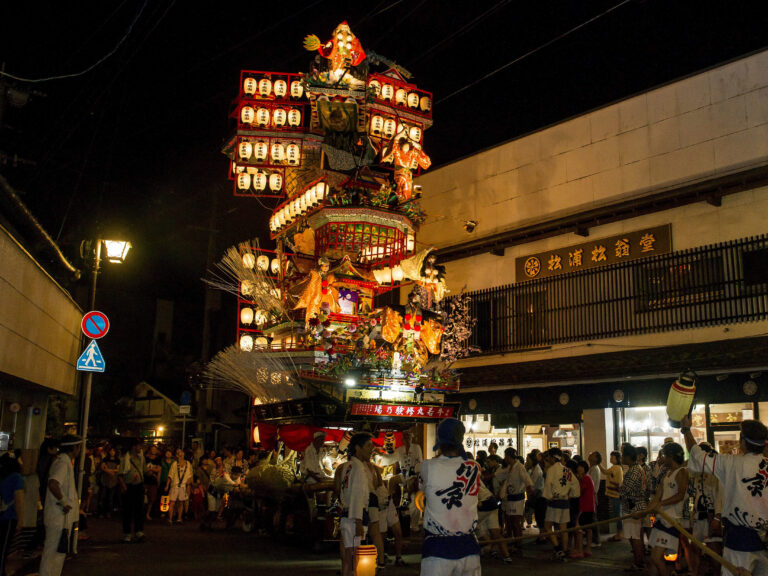
Hita Gion
A festival to ward off diseases and natural disasters while praying for safety. The sight of the splendid and luxurious floats parading to the sounds of Gion Bayashi is a summer tradition in Hita. In December 2016, it was registered as a UNESCO Intangible Cultural Heritage. On July 19 (Sunday), before the main festival, the "Hita Gion Float Group Face-Showing" takes place, where floats gather in front of JR Hita Station, creating a dazzling and spectacular scene. You can enjoy the splendid and luxurious summer tradition of Hita, the "Hita Gion."
65th Yamato Koryama "Castle Festival"
About 800 cherry blossoms bloom at the site of the historic site Koriyama Castle. At night, the night cherry blossoms illuminated by the bonbori lights and the lit-up castle tower can be seen. The Koriyama Castle site has been designated as the "100 Japanese Sakura Places".
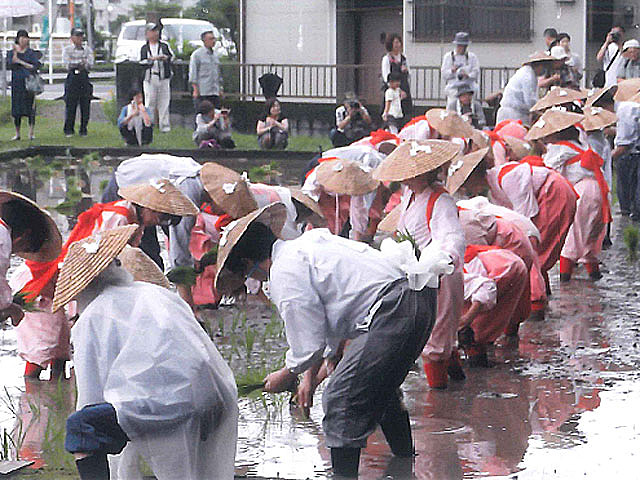
Mita-planting festival
Saotome and Saya Otsuo perform rice planting; the danokamai and Todo-gumi are also dedicated; now they are performed on the following Sunday, past May 5 of the lunar calendar.
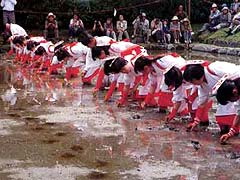
Mita-planting festival
The Daiyama-jinjin worships Shintoku, who was taught to make rice to Kihana Kaiyahime. As an agricultural deity among a number of Shinto virtues, we pray for the five grain fertility, and on the day, three Shinkoshi units go to the Saita Matsuri-no-mikoshi temple. The jade seedlings, which were carefully raised to serve the subspecies festival, are offered along with the shrine, and the ceremony is solemnly performed. The priesthood alone is dedicated. Held annually on May 5, Lunar calendar.
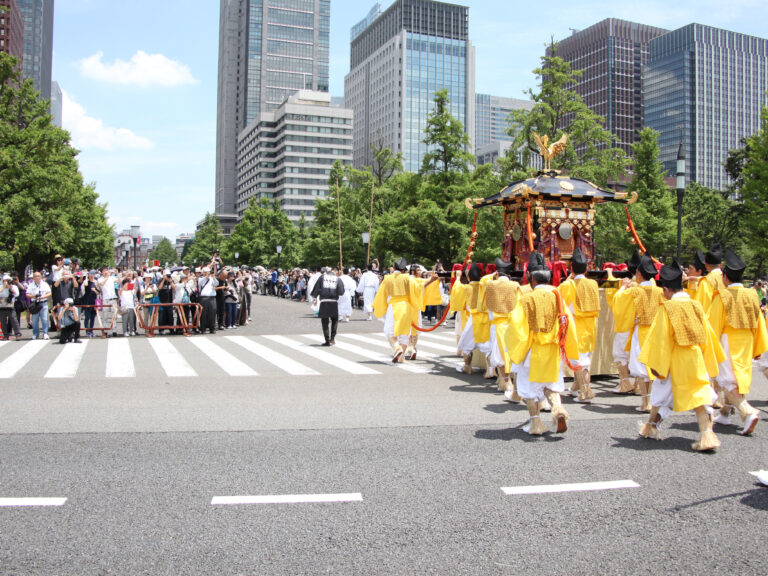
Mountain King Festival
One of the three major festivals in Japan. It has been widely known to the world under the name of "Tenka Matsuri", which was counted as the first festival in the capital of the capital and was observed by successive general military families. Image courtesy: Hie Shrine
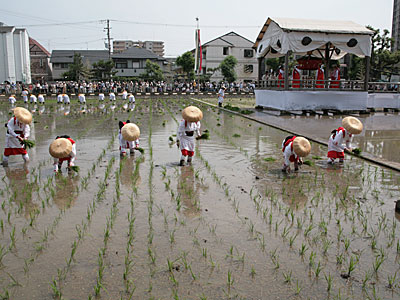
Mita Uejin
One of Japan's three major rice planting rituals. On the stage set up in Kanda, Shinto performing arts such as Tami Mai, Mitashiro Mai, and the Fuyu warrior event are dedicated. In the rice planting dance and the Sumiyoshi dance dance lightly around Kanda. An important intangible folk cultural property of the country that tells Osaka of its summer visit. Image courtesy of Sumiyoshi Taisha
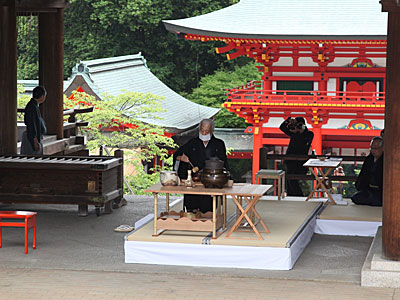
Tea Festival
From the theory that tea cultivation first began in Shiga, and that tea was first performed for the first time, tea is served by Iemoto of the Rai Senke family. As part of the festival's votive event, which will be held on June 10, the following day, "The Anniversary of Time", a tea donation by Ieyamoto will be held by the Ieyamoto from the beginning of the Gozengen.
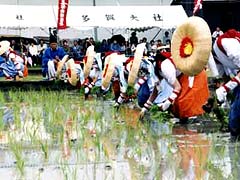
Mita-planting festival
An event to plant rice to pray for a good harvest and offer it to God. About 60 Saotome in scarlet and light blue hakama figures perform rice planting in Kanda, which is about one of them, to go along with the idyllic rice peter. The main shrine festival is 13 o'clock, and the rice peter is 14 o'clock.
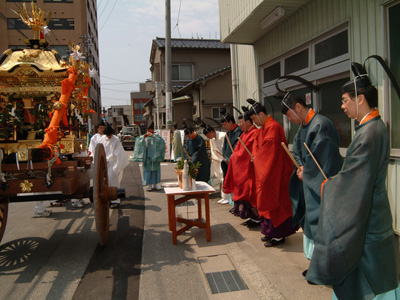
Mountain King Festival
The Hie Shrine Spring Festival, which has flourished since the time of the old clan, as the Sōshitai Festival of Toyama Castle, as the Sōshitai Festival for the castle of the castle.