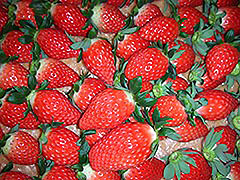
Takahashi Strawberry Garden

Takahashi Strawberry Garden

Info

JR Kimitsu Station → 50 minutes by bus, bus stop: Lake Mishima, 1 minute walk
18km 26 minutes from Kimitsu IC, Tateyama-do, via Prefectural Road No. 92, National Route 465
30 cars

Business Hours

10 to 16 o'clock

Price

Late January-April 6: 2100 yen for ages 4 and older, 1000 yen for ages 2-3, April 7-May 6: 1700 yen for ages 4 and over, 800 yen for ages 2-3

Spot Category

Sightseeing Ranch and Plantations

The information provided reflects the details available at the time of the survey.
Please note that facility details may change due to the facility’s circumstances, so please check for the latest information before visiting. This content has been translated using machine translation.

Information provided by: JTB Publishing

This content uses automatic translation services. Automatic translations may not always be accurate.
Please note that the translated content may differ from the original meaning. We ask for your understanding when using this content.
Related Spots

Yoshizaki Sake Brewery

In Kururi, a well is still used in his life, and it is a famous water that was selected for the 100 famous water races of Heisei. Drinking using abundant groundwater is also popular, and four breweries are scattered. Among them, Yoshizaki Sake Brewery, which was founded in the first year of Kanei (1624), has the longest history of sake breweries in Chiba. Recommended for souvenirs using live water.

Tohei Sake Brewery Joint Stock Company

A long-established brewery from the end of Edo. They do not mass-produce sake, mainly made from Hyōgo Prefecture's Yamada Jintao as a raw material, and use Kururi's minisui, and continue to be carefully built. The representative stocks "Fukuiwai" include Hon Brewery, Pure Rice Sake, and Daiginjo. Daiginjo 720 ml 3960 yen is a gem that is initially crisp and dry and slowly spreads the sweetness of rice later. The "special pure rice", which uses 100 percent of Yamada Jintao, is also popular at 1.8 liters of 3080 yen.

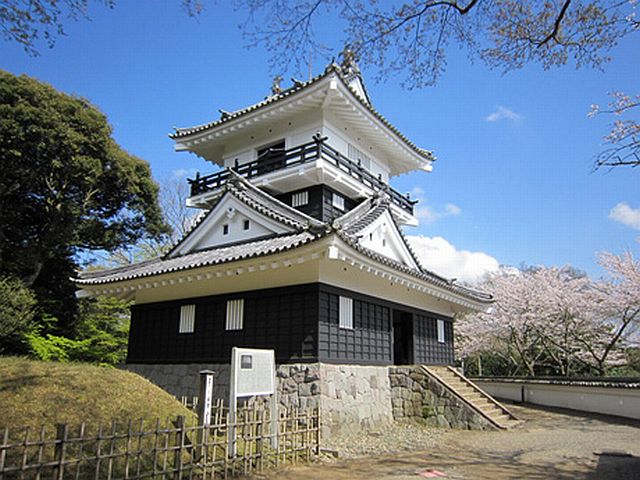
Kururi Castle Ruins

It is located in Shiroyama, east of JR Kururi Station, at an altitude of 80 to 145m. It has the alternative name of "raijo [ujo]" from the legend that the long rain continued to fall on the occasion of Tsukijo. During the Sengoku period, the Boso Satsumi clan was based, and during the Edo period, the Tokugawa fudai daimyō such as the Tsuchiya clan and the Kuroda clan lived in the castle and welcomed the Meiji era. The surrounding area is now maintained as a castle park, with a two-tiered, three-story tower tower built on the Honmaru site, and a Kururi castle museum built on the Ninomaru site, which tells the history of the castle and the local area.

Suwa Shrine

On the occasion of the Ojō Kōki, who was appointed as the lord of Osugasō, Shimousa Province, he was invited by Shinano Suwa Taisha Shrine as the god of the lord of the territory. He has since been revered as the god of industrial development, the god of wisdom, and in recent years as the god of advanced learning. The present main shrine is of the 1853 (Kaei 6) construction, and the annual festival "Sawara no Taisai (Autumn Festival)", which takes place in October every year, is designated as a national important intangible folk cultural property.

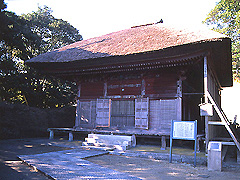
Daishoji Temple

The temple of the Tendai sect, known as Narikiri (Namikiri), is a temple of the Tendai sect that collects the thick faith of the fishing people for great fishing prayers and sea protection. The main priest, Fudō Myōō, was reportedly picked up from the sea by the wives of the fishermen of the land during the middle Kamakura period and laid them here to rest. The thatched-roofed Fudō, which houses Fudō Myo, is designated as a national important cultural property, and is presumed to have been erected during the Muromachi period.

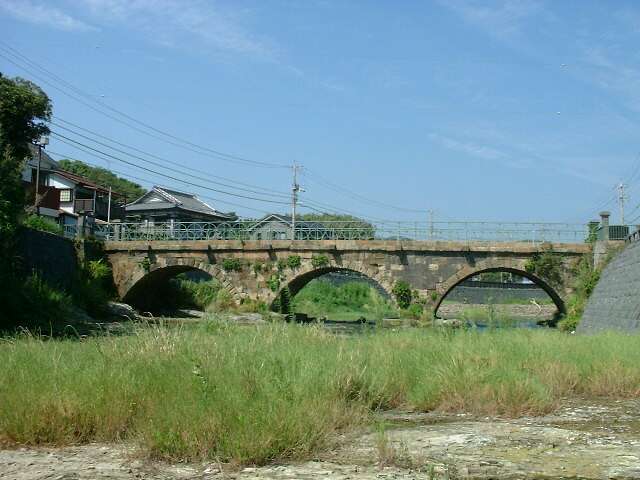
The bridge of glasses

Western-style Mie-bashi, a masonry method, on the lower Nagao River at Takiguchi, Shirahama. Because there are three arches, it is not really glasses, but it has come to be called a glasses bridge from the appearance of moving to the river. The bridge was built in Meiji 21 (1888) with a donation of 399 yen and 40 yen from the villagers. He said he had walked across the river before the construction. It is a sturdy bridge that, in wartime, tanks passed through it without being broken by the Great Kanto Earthquake. Repair work was carried out in 1977 and 1993, and the figure remains at the time of construction. Prefectural Designated Tangible Cultural Property. Japan's Meihashi Hyakusyo.

Contact Us: Business & Personal Inquiries

By proceeding, you agree to our Terms of Use And confirm you have read our Privacy Policy .

Notes

· We are available for inquiries 24 hours a day. Responses will be provided between 9:00 and 18:00 (including weekends, public holidays, and year-end/New Year holidays).
· Depending on the nature of your inquiry, it may take some time for us to respond.

RURUBU & ALL WAY JAPAN
Privacy Overview

This website uses cookies so that we can provide you with the best user experience possible. Cookie information is stored in your browser and performs functions such as recognising you when you return to our website and helping our team to understand which sections of the website you find most interesting and useful.