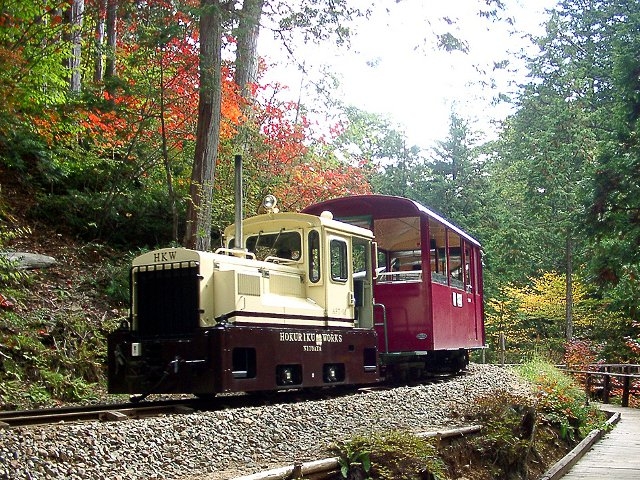
Akazawa Forest Railway

Akazawa Forest Railway

Info

JR Agematsu Station → 30 minutes by car; or Ontake Kotsu Bus 30 minutes to Akazawa Natural Resting Forest, stop off, walk
From Ina IC on Chuo Expressway, 53km 1 hour 30 minutes via National Route 361 and 19
220 units/ordinary car 600 yen

Business Hours

Late April-early November service (closed on track maintenance day), operation time must be inquired

Price

Round-trip 800 yen (summer vacation is separate)

Spot Category

Tourist Railway Cable Car Torco


Autumn forest railway

The information provided reflects the details available at the time of the survey.
Please note that facility details may change due to the facility’s circumstances, so please check for the latest information before visiting. This content has been translated using machine translation.

Information provided by: JTB Publishing

This content uses automatic translation services. Automatic translations may not always be accurate.
Please note that the translated content may differ from the original meaning. We ask for your understanding when using this content.

Related Spots

Akazawa Forest Museum

A museum located in the Akazawa Natural Rest Forest. It displays tools related to forestry, and introduces the history of forest resources and forestry. You can learn more about the Akazawa-no-Mori, Kiso-no-Mori, which has been managed as a sacred tree of the Ise Shrine since ancient times, and the forestry represented by the middle ride of Kiso. In addition, there is also a corner to introduce animals of the forest.

Sleeping Floor Art Park

A park that stretches across the flat on the left bank, a little down the Kiso River from the floor of the sleep. In connection with the legend of Taro Urashima, you can enjoy a walk while admiring granite monuments and objects made with the theme of time. The eye-catching is a huge sundial monument in the center of the park. It is a work of art by the pioneer of environmental art, Akira Kaku, and it is a work of art that calculates the fluctuation of the Earth's axis of rotation. There are also works that get motifs from the Urashima legend, such as the Tamate Box and the Dragon Palace Gate, so it is interesting to look around while adding interpretations to each of them.

Kiso's Loko

Rong (historical site), known for its "Pao no Asaka", one of the Kiso Hakkei. It is a difficult place on Nakasendo, which has become a song pillow as a dangerous thing since ancient times. It used to be a 100m long road with only a round of wood and planks along the cliff, but it was burned down in the early Edo period and was later converted into a stone-kumen. At present, the old national highway runs over the Rō, leaving only a part of the stone wall.

Kōtoku-ji Temple

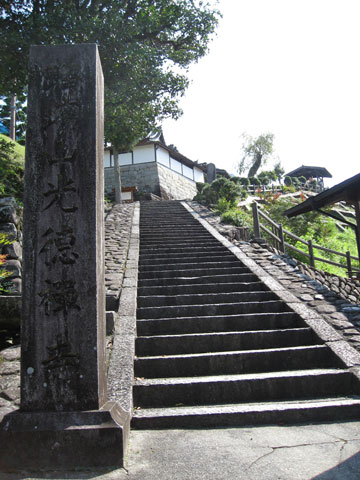
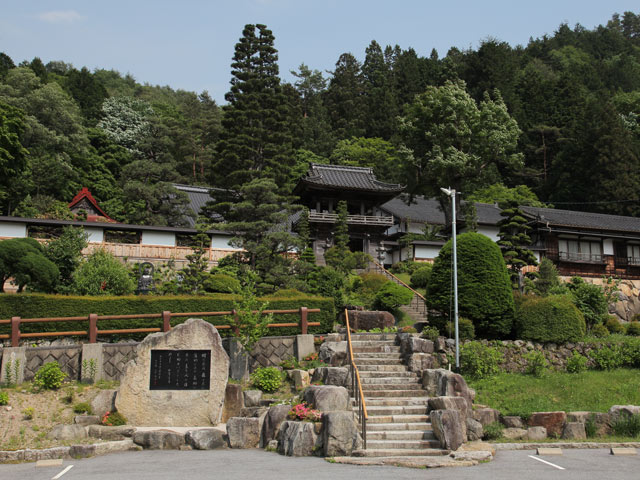
An ancient temple of the Rinzai sect, located on a high ground overlooking the townscape. Kaesan was in the year of Meiyo 9 (1500). In Kyoho 10 (1725), the main hall, which was erected by the Hayashi family, includes the Uguisu-tsuku corridor, the Yamaoka Tetsushu flat-profile, and the Owari Tokugawa family's basket. The back of the back [kuri] next to the main hall houses a basket with a car devised by the priest in the Tenpo years. In the shrine under the entrance stone steps, Enmei Jizo, which is said to save women, is celebrated. As the festival approaches in April, the stone gets wet at night due to the temperature difference between day and night. The Honson Yakushi Nyorai was by a Buddhist master, Kiyama, of Gyeongsang 4 (1599). Chubu 49 Yakushi No. 21.

Myokaku-ji Temple

The ancient temple of the Rinzai Myoshin-ji school, which is lined with the main temple and the Jōō-dō and the bell-roomon. It is said to be about 700 years ago, but was rebuilt in Kyoho 11 (1726) after it was destroyed by fire. The gardens are well-maintained, and the flowers of the four seasons add color. The main hall was rebuilt in 2018 for aging.

Hakusan Shrine

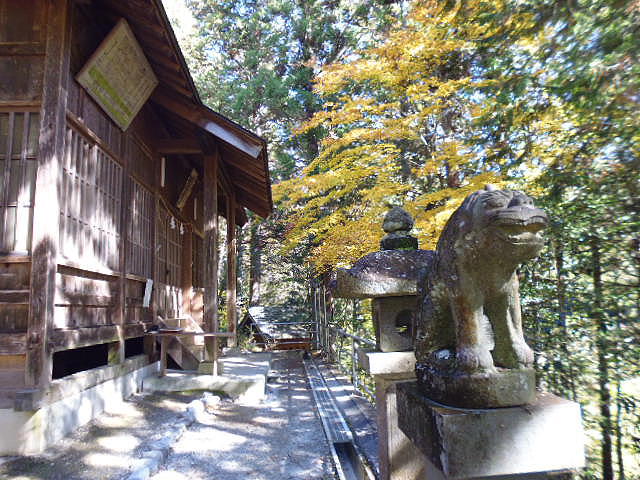
Natural wood of cypress and cedar thrives on the grounds. The four shrines (important cultural property) of Kumano, Izu, Hakusan, and Zao, which are about 1m away from the side where the bills of the first year of Kenbu (1334) remain inside the Okiya in Ishigaki (Oiya). All of them are considered to be the oldest Kamakura architecture in Nagano Prefecture, which is characterized by the roof of Ichikensha style cypress skin. The entrance with the inscription of 1439 was left behind, indicating that it was the center of the culture of Kiso Valley.

Contact Us: Business & Personal Inquiries

By proceeding, you agree to our Terms of Use And confirm you have read our Privacy Policy .

Notes

· We are available for inquiries 24 hours a day. Responses will be provided between 9:00 and 18:00 (including weekends, public holidays, and year-end/New Year holidays).
· Depending on the nature of your inquiry, it may take some time for us to respond.

RURUBU & ALL WAY JAPAN
Privacy Overview

This website uses cookies so that we can provide you with the best user experience possible. Cookie information is stored in your browser and performs functions such as recognising you when you return to our website and helping our team to understand which sections of the website you find most interesting and useful.