Minoh wealth

Minoh wealth

Event Overview

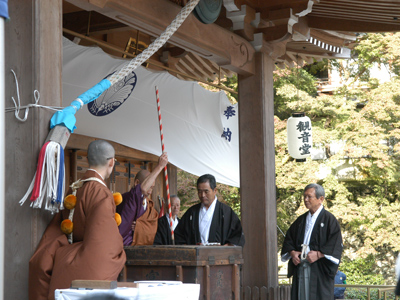
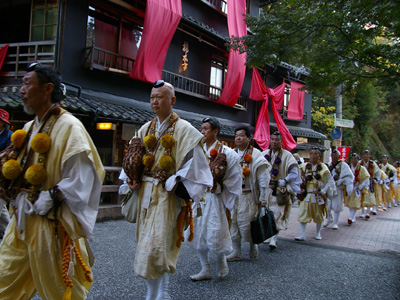
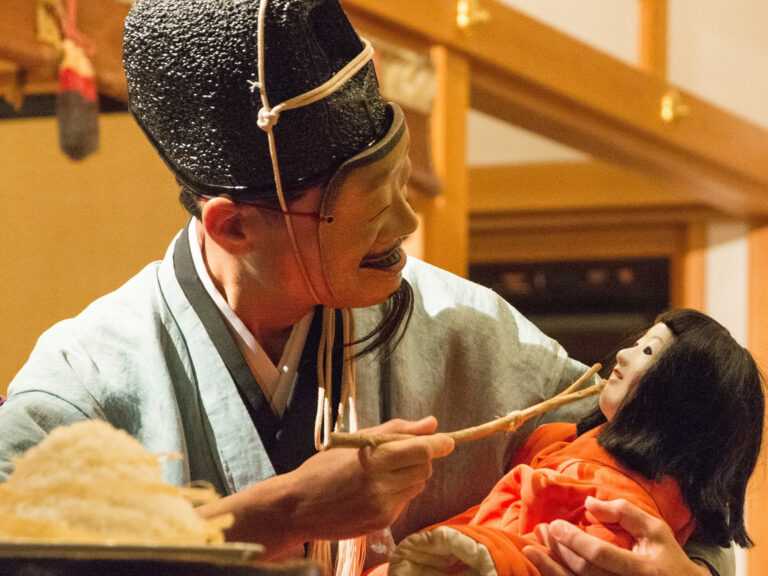
The one that won the lottery "Mino no Tomi [Mino no Tomi]", which is the origin of the lottery, was awarded the "Daifuku Gomori", the main son of the temple, and since ancient times, there has been a strong profit in business prosperity, it was also called "Fukutomi" and its fame was widely echoed. According to the old documents, during the Edo period, many people in the east and west of ancient times pushed in search of the fortune of Minoh Tomi, and Takian-Anji was reportedly a tough buzz. Although it had been lost in the Meiji period, it was revived in autumn 2009, after 140 years of time, to the old style. Only those who purchased the mini Daifuku Gomori, which is sold at Takianji Temple, can participate. * The contents may be changed or canceled.

Info

Hankyu Minoh Station → 15-minute walk

Event Period

Price

1000 yen (as the purchase cost of mini Daifuku Gomori)

Event Category

Other

The information provided reflects the details available at the time of the survey.
Please note that facility details may change due to the facility’s circumstances, so please check for the latest information before visiting. This content has been translated using machine translation.

Information provided by: JTB Publishing

This content uses automatic translation services. Automatic translations may not always be accurate.
Please note that the translated content may differ from the original meaning. We ask for your understanding when using this content.
Related Events

Cherry Blossom Festival

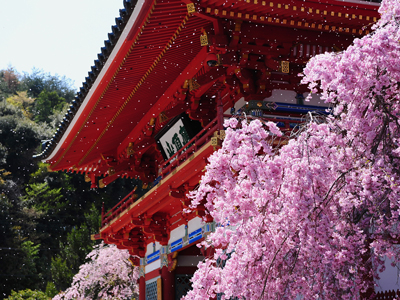
About a 30-minute drive from Shin-Osaka Station is Katsuoji Temple, famous for its late-blooming cherry blossoms. Around the time when the cherry blossoms in the lower world drop their flowers, the cherry blossoms in the mountains greet the see. Step into the 80-thousand-tsubo precinct, and a stunning weeping zakura with a deep green in its back, greets the worshipers. The contrast between several types of cherry blossoms and nature seems to be looking at a wide painting. This temple is also known as "the temple of winning luck", and every day there are no worshipers from all over the country to receive "winning dharma" when praying for luck or success. Dharma, who has been successful in the precinct, is dedicated to the place. Image courtesy of Katsuoji Temple

Autumn leaf bath at Katsuo-ji

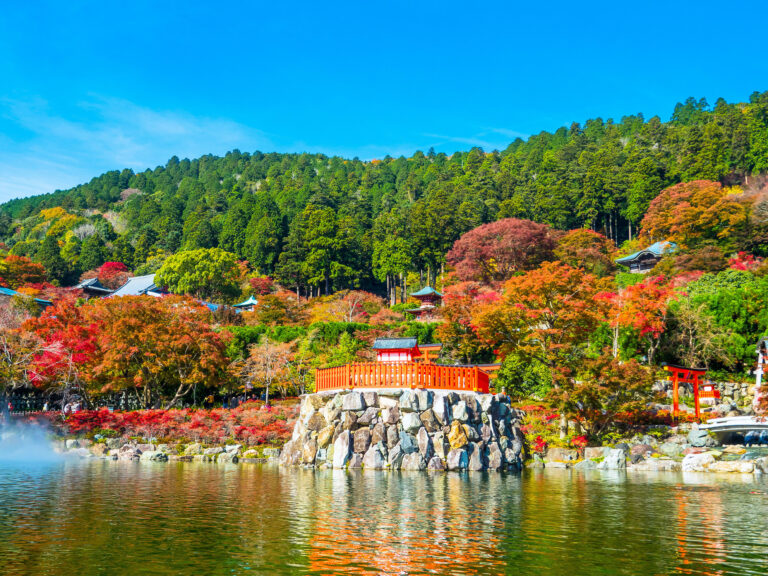
The 23rd place in the West Country, which is famous as the temple of "The Temple of Wainting" and "Wainting Dharma". It is famous as one of the most famous places of autumn leaves in Kansai. The colorful contrast of dozens of kinds of nature such as red, yellow and purple in the background of the green of the mountains is a perfect view. Walking around the precinct, you can feel that your mind is naturally healed, and there are many worshipers who pray for good luck every day. After sunset, you can see a fantastic light up. Light up is Saturday, November 9 to Sunday, December 1, public holidays, and sunset on Wednesday, November 27, at 20:30 (last reception is 20:00). Image courtesy of Katsuoji Temple

Minoh Mountain Seven Days

At Takianji, the main mountain of Japan's Shugendo, which was founded by the actors, the city of Monzen was once crowded with the city of Hōma, which was opened on the 7th of each month. It began in 2005 to try to revive the buzz to modern times, "Minoshan Nanichi". Every month, many participating stores welcome people with attractive benefits limited to 7 days. In particular, it is a must-see for Takaianji's "Jōtōdai Hōma" which is held in April, July and November (April only 15th). You can also enjoy the sale of bargain goods and shopping street events. Image courtesy of Minoh FM Town Soda Co., Ltd.

Mita Uejin

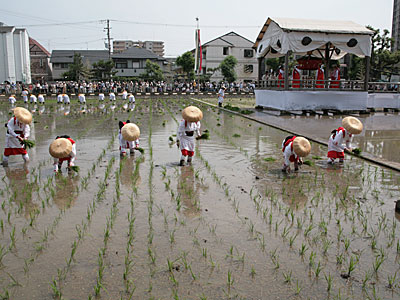
One of Japan's three major rice planting rituals. On the stage set up in Kanda, Shinto performing arts such as Tami Mai, Mitashiro Mai, and the Fuyu warrior event are dedicated. In the rice planting dance and the Sumiyoshi dance dance lightly around Kanda. An important intangible folk cultural property of the country that tells Osaka of its summer visit. Image courtesy of Sumiyoshi Taisha

Zhenhua Festival

In ancient times, it was believed that during the flower season, the spirits of epidemics would scatter on the fallen flowers. The imperial court established a ritual to pacify these spirits as the "Hana-tame no Matsuri" in the Jingi-ryō of the Nara period. Traditionally held solemnly, various events are conducted, including the main shrine ceremony on the 25th, offerings of kagura, gagaku, and bugaku. The "Spring Ancestor Festival," which honors the ancestors of the parishioners, is also held. *Depending on the situation, there may only be the sacred rites. As of 2026, the roof replacement work of the main shrine is underway.

Mita Uejin

The rice planting shrine at the Hangzen Shrine is a form in which the worship hall is regarded as a rice field. It ends with Tarobo and two Saotome performing a rice-planting ritual on pine needles, which are seen as seedlings. When the votive service is over, the people gathered hope for Fukutoku and collect the sown rice fir. Image courtesy: Hang Zenjin Shrine

Contact Us: Business & Personal Inquiries

By proceeding, you agree to our Terms of Use And confirm you have read our Privacy Policy .

Notes

· We are available for inquiries 24 hours a day. Responses will be provided between 9:00 and 18:00 (including weekends, public holidays, and year-end/New Year holidays).
· Depending on the nature of your inquiry, it may take some time for us to respond.

RURUBU & ALL WAY JAPAN
Privacy Overview

This website uses cookies so that we can provide you with the best user experience possible. Cookie information is stored in your browser and performs functions such as recognising you when you return to our website and helping our team to understand which sections of the website you find most interesting and useful.