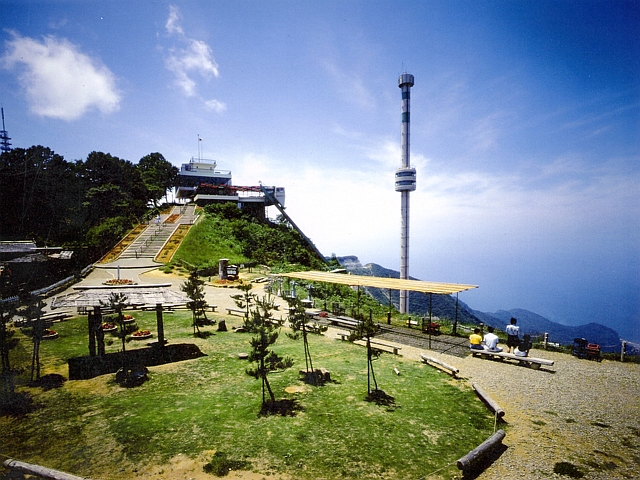
Yahiko summit park

Yahiko summit park

Info

From JR Yahiko Station, take a 12-minute walk to the shuttle bus for the ropeway, get off at the ropeway base station, take the ropeway for 5 minutes, get off at the summit station, and it's a short walk.
30 minutes from Sanjanyan IC on Hokuriku-do via National Route 289
145 units

Business Hours

Free walking, ropeway from 8:45 to 17:00 (depending on the season)

Price

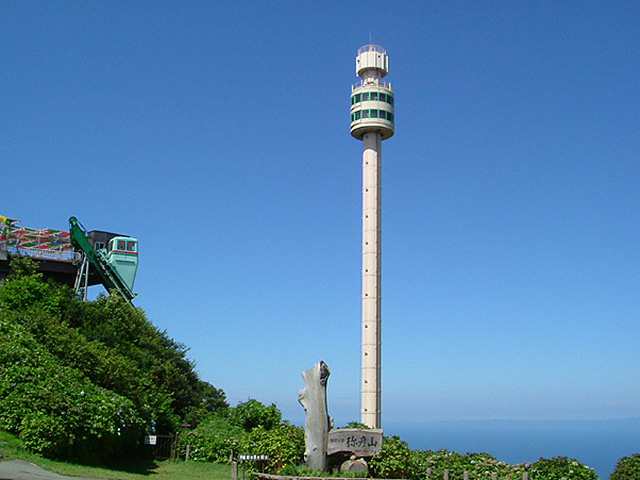
Ropeway round trip 1500 yen, panoramic tower 650 yen, climbing car round trip 380 yen

Spot Category

Park, flower viewing spot

The information provided reflects the details available at the time of the survey.
Please note that facility details may change due to the facility’s circumstances, so please check for the latest information before visiting. This content has been translated using machine translation.

Information provided by: JTB Publishing

This content uses automatic translation services. Automatic translations may not always be accurate.
Please note that the translated content may differ from the original meaning. We ask for your understanding when using this content.

Related Spots

Yahikoyama skyline

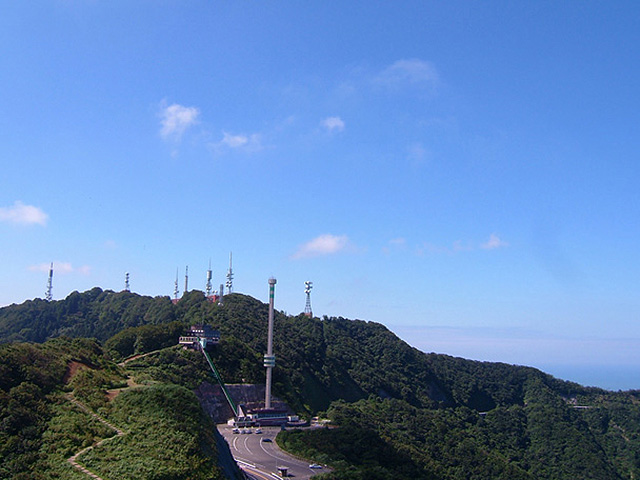
Mount Yahiko has been revered as a sacred mountain since ancient times. At an altitude of 634m, there is the Imperial Shrine of the Imperial Shrine at the east foot of the mountain, and the Mount Yahiko Park, where the Rotating Lifting Observation Tower "Panorama Tower" and the Mount Yahiko Observation Building, is located on the ninth station. Yahikoyama Skyline is a mountain driveway leading to the park. It is part of the prefectural road No. 561 connecting Yahiko Village and Niigata City, with a total length of 13.7km between Sarugaba Gate and Mase Gate at the foot of the mountain. It is a scenic driving route that runs across Mount Yahiko and also has a difficult spot in the Dairozaka, where hairpin curves are continuous. It is a 15-minute walk to the summit from the summit park, which can also be found on the Mount Yahiko Ropeway.

Yayoi Shrine

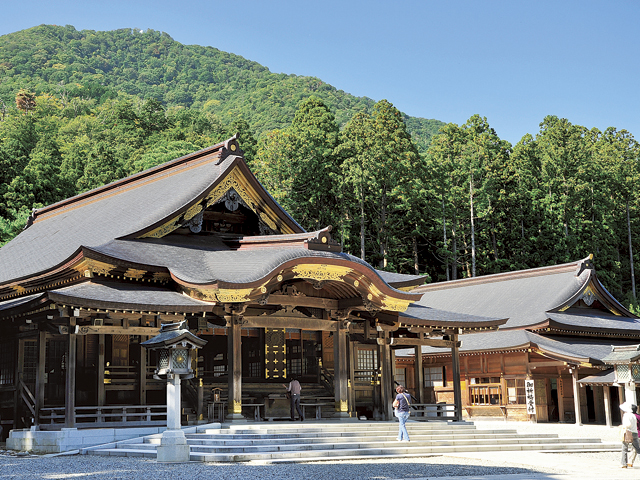
The priest is the great-grandson of Amaterasu-Omikami, the life of Tenkayama. On the occasion of the Jinmu Tōshū, the god of rebirth and exorcism was killed because he saved the crisis by offering the Futo Mikatanoken (Futsuma no Tsurugi) to the Emperor, who was hit by the poison of his enemy in Kishu Kumano and fell into a predicament. Enthronement of the Emperor came to the area following the royal decree of the Kukunoku of Yue, and gave the people techniques such as rice cultivation, fishing, salt production, and sake brewing, thus creating the foundation of the industry within the prefecture. Since ancient times, the imperial family and other successive shogunate and warlords have been revered, and are still widely revered by the title of "Oyahiko-sama". The current shrine was rebuilt in 1916 after the Great Fire at the end of the Meiji era.

Mount Yahiko

You can enjoy the view up to the Sea of Japan and Sado by climbing to the 634m peak at the Mount Yahiko Ropeway or the Mount Yahiko Skyline. In addition, the Yayoi Shrine, which sits at the foot of the shrine, has been known as Oyahiko-sama since ancient times, and has a mysterious space covered with trees that are over 400 years old and old cedars.

Yuzuru no Sato

"Tsuruyobo" is one of Sado's legends based on the play "Yuzuru" by Shunji Kinoshita. This land was named Yuzuru no Sato because the author heard this in the Kitakatabe settlement. A monument of Shunji Kinoshita's own brush stands.

Hasedera Temple

In the second year of Datong (807), the old temple that was opened by the Kobo Daishi. It was named because it imitated Haya-ji Temple in Nara. Yamauchi is large, there are 6 rooms for the first to sixth temple treasure exhibition rooms, and there are 5 courses for viewing (free, reservation system) from 20 minutes to 1 hour. You can also enjoy seasonal flowers such as peonies in May, cherry blossoms, azaleas and hydrangeas, and there are also three cedars (natural monuments designated by the prefecture) that are more than 1000 years old. The three statues of the eleven-faced Guanyin standing (Important Cultural Property) of the temple treasure, which is transmitted as the statue of the Hiroho Daishi, are the secret Buddha. It is published every 33 years (the next time is 2034). There are 15 cases of state-registered tangible cultural property such as the main hall, back back, tōmō-dō, bell-dō, and a corridor, as well as seven cases of prefecture-designated tangible cultural property such as the statue of the wooden hodo-myōō, the statue of the wooden kokudō, and the statue of the shitenno, and one case of the city-designated cultural property. In addition, there are 20 kinds of various experience courses.

Sado Museum

A general museum that transmits the nature, history, and culture of Sado, and also displays the sketch, drawings, and sketchbooks of Bokusen Tsuchida, a Japanese painter related to Sado.

Contact Us: Business & Personal Inquiries

By proceeding, you agree to our Terms of Use And confirm you have read our Privacy Policy .

Notes

· We are available for inquiries 24 hours a day. Responses will be provided between 9:00 and 18:00 (including weekends, public holidays, and year-end/New Year holidays).
· Depending on the nature of your inquiry, it may take some time for us to respond.

RURUBU & ALL WAY JAPAN
Privacy Overview

This website uses cookies so that we can provide you with the best user experience possible. Cookie information is stored in your browser and performs functions such as recognising you when you return to our website and helping our team to understand which sections of the website you find most interesting and useful.