Nakahime Mingling Tomb (Nakatsuyama Kofun)

Nakahime Mingling Tomb (Nakatsuyama Kofun)

Info

Kintetsu Dochinosato Station → 9 minutes on foot to Nakahime Meiryo Kofun Hall
1.4km 4 minutes from Fujiidera IC on Nishi-Meihan Road via Prefectural Road No. 12

Business Hours

Free to visit (from outside the fence)

Price

Free to visit (from outside the fence)

Spot Category

Remains, historic sites, castle ruins, cemeteries, spirits, graves, and places

The information provided reflects the details available at the time of the survey.
Please note that facility details may change due to the facility’s circumstances, so please check for the latest information before visiting. This content has been translated using machine translation.

Information provided by: JTB Publishing

This content uses automatic translation services. Automatic translations may not always be accurate.
Please note that the translated content may differ from the original meaning. We ask for your understanding when using this content.

Related Spots

Hazami Mountain Kofun (Scissor Mountain Kofun)

It is located in the southern part of the city of Fujiidera, in the Furuichi Kōmun, in the first half of the 5th century. The rear circle side of the single-piece moat has been reclaimed, and the shape of the moat, like the one that nips a mound, resembles a Japanese shears, hence the name "chelicazuka". The mound is 103m long, 60m in the diameter of the rear circle, 9.5m in height, 66m in the front, and 9.1m in height. Cylindrical Haniwa and figurative Haniwa have been excavated from the mound. It is one of the constituent assets of the World Cultural Heritage "Hyakutan Bird/Furuichi Kofun", and is also a nationally designated historical site. It is thought to have had a close relationship with Nonaka Miyayama Kofun, the southern front-and-back mound across the road, due to its position.

Pot Mound

Koyama is located across the road from Kintetsu Toshinori Station. There used to be a spot around this area of the area, which was called "Sawada no Nanatsuzuka", but the area disappeared due to the conversion of residential land, leaving only the Onatsuka Kofun, a nationally designated historic site. At the end of the fourth century, Tsukizoku was thought to be a mound of the Nakahime Mingling Tomb, and at that time it was a 63m-side large-shaped mound with a moat. The current situation is that a square mound with a side of 40m and a height of 7m remains, and the burial facilities and grave goods are unknown, but fragments of cylindrical haniwa and figurative haniwa have been excavated. If you climb the steps of a grass-green-covered mound, you can see the back circle of the Ichinoyama burial mound behind Doshinosato Station from the top of the mound, and the Nakahime Meiryo burial mound to the southwest.

Tsudou Shiroyama Kofun (Shiroyama Kofun)

The front-back circular mound located at the northern end of the Furuichi Kofun group. Tsukizo was in the late 4th century. The length of the mound is 210m, with a double moat and dike at the time of construction, and the total length is about 400m when the outer moat, which is now a residential area, is included. The name of "Jōzan" is due to the construction of a castle on a burial mound during the Sengoku period. At the end of the Meiji era, a stone pit and a long-shaped sarcophagus were found from the rear circle, and a number of copper mirrors, magatama, and swords were excavated. The water bird-shaped Haniwa excavated from the inner moat is a nationally designated important cultural property. The burials were unknown, and only the top of the rear circle was ruled by the Imperial Household Agency as "Fujiidera Tomb Reference Site". It is a country-designated historic site and one of the constituent assets of the World Cultural Heritage Site "Hyakutan Bird/Furuichi Kofun". There is also the Tsudō Hachiman Shrine within the mound hill, the flower shobu garden at the site of the inner moat, and the Tsudō kohana garden where the rape and cosmos bloom.

Linchang Temple

A Shingon sect temple reportedly opened by Gyoki; burned down by Oda Nobunaga, but rebuilt as late as the Edo period; and a famous garden as the site of the Hirado Azalea; and a natural monument of the prefecture at the nearby Okanaka-Jinshasha.

Small Island Shop

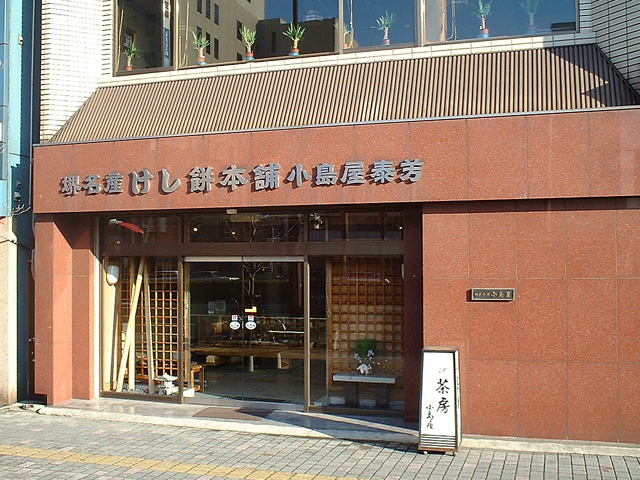
One keshi rice cake is a specialty of 135 yen. The paste is wrapped in rice cakes and generously sprinkled with poppy grains, which protects a taste that has not changed since those days when it was founded in the Edo period. The flavor of the poppy grains is fine. The second floor is a tea house, and a set with matcha and sencha is 650 yen.

Nakamuraya

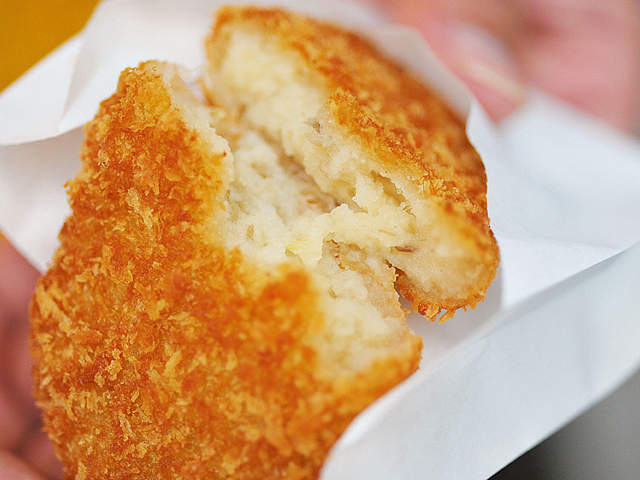
A nostalgic croquette shop in the shopping street that has been around since 1955. The croquettes, fried crispy over high heat for 90 yen, are fluffy with potatoes and popular among both children and adults. It's a signature product that sells 3,000 pieces a day. I want to stroll through the Tenjinbashi-suji shopping street with a freshly fried croquette in hand. The minced cutlet is 150 yen.

Contact Us: Business & Personal Inquiries

By proceeding, you agree to our Terms of Use And confirm you have read our Privacy Policy .

Notes

· We are available for inquiries 24 hours a day. Responses will be provided between 9:00 and 18:00 (including weekends, public holidays, and year-end/New Year holidays).
· Depending on the nature of your inquiry, it may take some time for us to respond.

RURUBU & ALL WAY JAPAN
Privacy Overview

This website uses cookies so that we can provide you with the best user experience possible. Cookie information is stored in your browser and performs functions such as recognising you when you return to our website and helping our team to understand which sections of the website you find most interesting and useful.