 English
  Japanese
  Chinese (China)
  Chinese (Taiwan)
  Korean
 Former Bank of Japan Hiroshima Branch
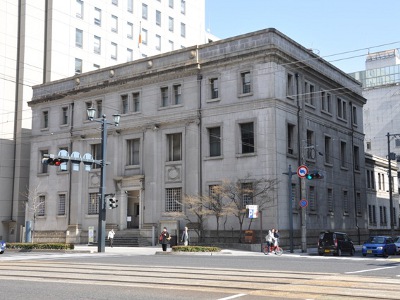
Despite the bombing at 380m from the hypocenter, the building escaped the collapse because it was a robust building, and the operation resumed two days after the bombing. It was used until 1992.

Despite the bombing at 380m from the hypocenter, the building escaped the collapse because it was a robust building, and the operation resumed two days after the bombing. It was used until 1992.
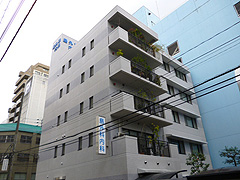
The atomic bomb dropped by the B29 "Enola Gay", whose T-shaped Aioi Bridge was the intended drop target, actually cracked about 600m above the island hospital, 300m southeast of Aioi Bridge. An atomic bomb disaster description board is set up on the side of the building.
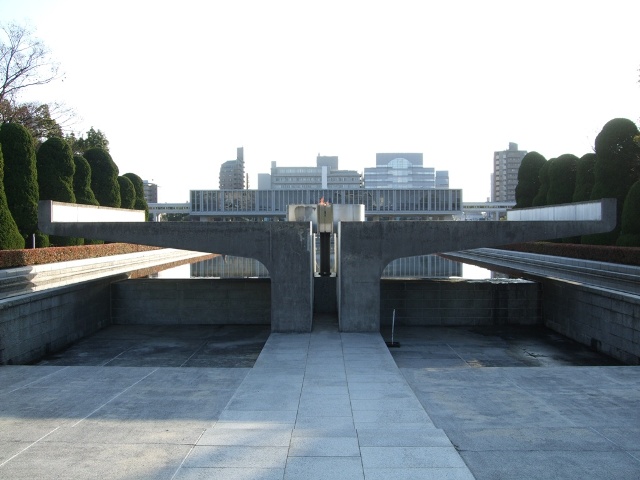
Construction to comfort the spirits of atomic bomb victims as well as praying for the elimination of nuclear weapons. The design was by architect Kenzo Tange, and it is located at the northern end of the "Peace Pond" in the Peace Memorial Park. On August 1, 1964, the flame lit with the wish of anti-nuclear power continues to burn.
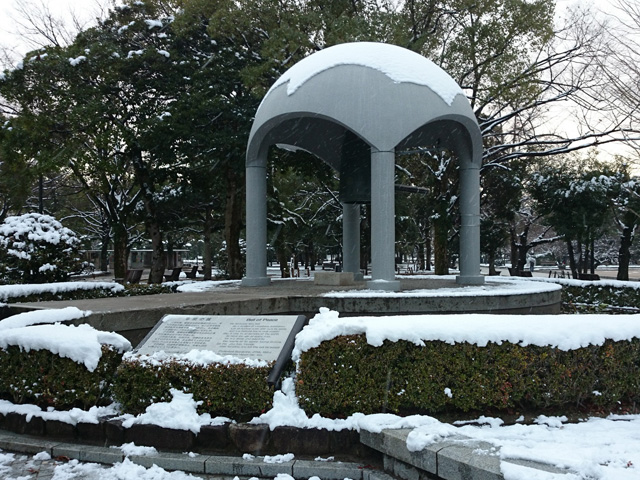
The bell, which aims at nuclear elimination and peace and was erected as a symbol of its spiritual and cultural movement. The bell is stamped with a map of the world without borders. You can strike peace freely.
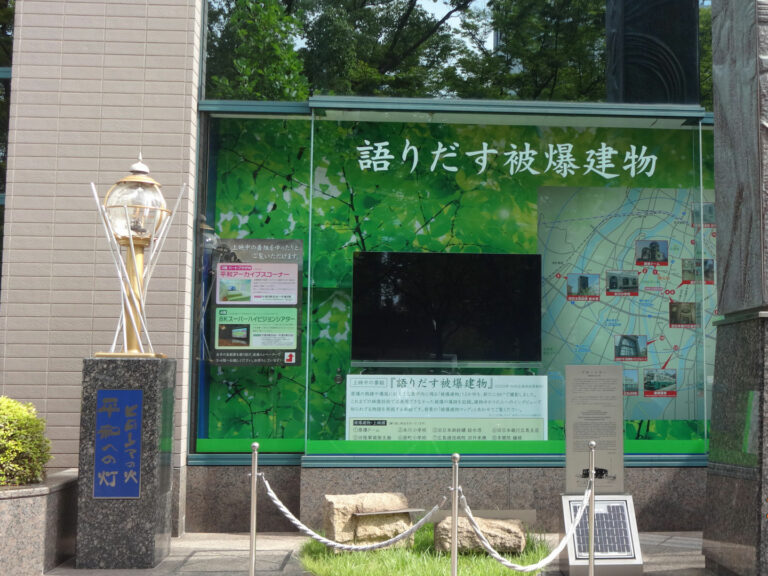
In 1945, Tatsuo Yamamoto of Hoshino-mura, Fukuoka Prefecture (currently Hoshino-mura, Yame-shi) brought it back from the ruined Hiroshima, and the "Fire of Peace" which is still protected in Hoshino-mura. A fire that was lit by a combination of the Peace Memorial Park "Peace of Peace" in Hiroshima City.
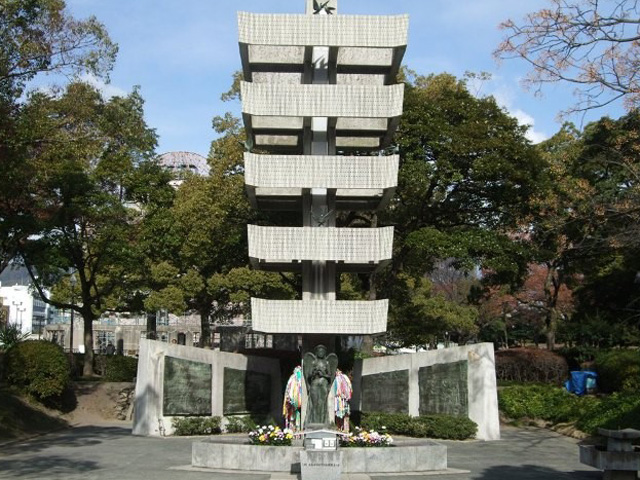
A memorial monument of a student who was mobilized for the working service and died in the atomic bomb or air raid, under the monument stands a statue representing the various sects as one.
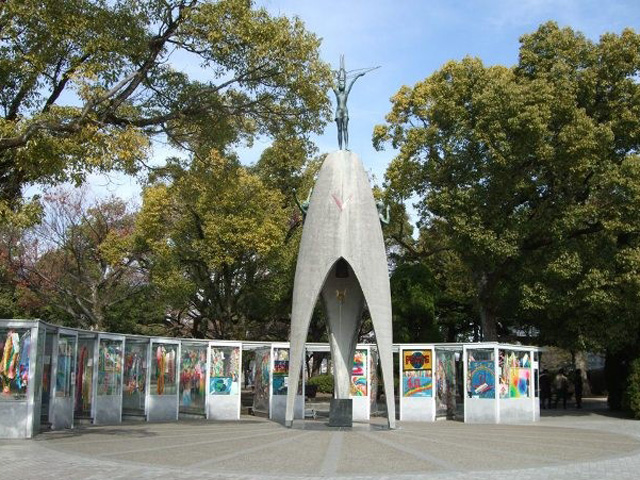
The statue was built by the calling of a classmate of Sadako Sasaki, who died due to the atomic bomb. The paper crane still arrives from all over the world.
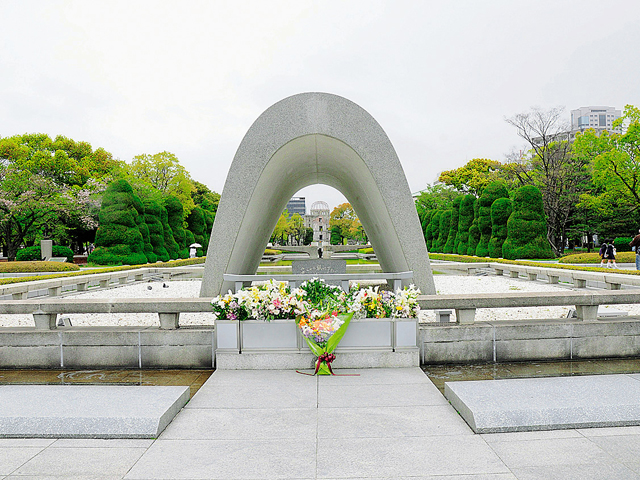
It is located within the Peace Memorial Park and is named Hiroshima Peace City Memorial. It was designed as a Haniwa house type because of the desire to protect the spirits of atomic bomb victims from rain and dew, and was erected on August 6, 1952. The stone room is filled with a roster of 308,725 (as of August 6, 2017) atomic bomb dead, and the inscription "Please rest in peace."
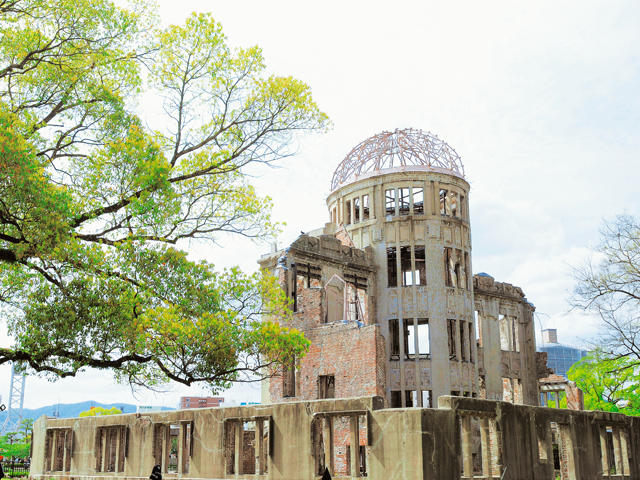
Taisho 4 (1915) The former Hiroshima Prefectural Industrial Encouragement Hall of architecture, it stands on the south side of the Aioi Bridge, facing the Motoyasu River. Half-destroyed by the atomic bomb, the unscruple figure with its crumbling outer walls and steel frames laid bare still conveys the wu of war. It is one of the few remaining buildings from the time of the bombing, and is also listed on the World Heritage Site as a symbol of vows to abolish nuclear weapons and seek peace for mankind.
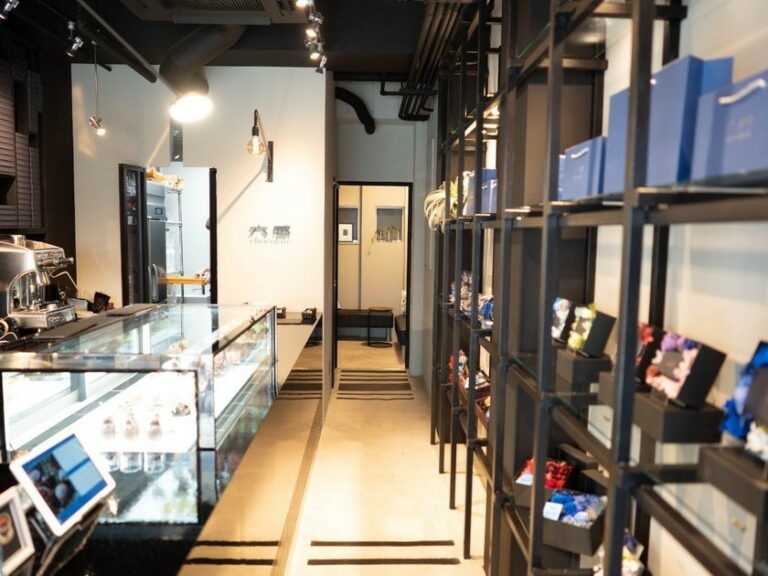
A chocolate specialty store located in Teppongcho, Naka-ku, Hiroshima. It sells carefully crafted, jewel-like chocolates, as well as lip-shaped "lips" and clear drink "Chocolat Sparkling," which tastes like chocolate. The second floor is a cafe space, with a menu of chocolates and cakes as well as drinks.