 English
  Japanese
  Chinese (China)
  Chinese (Taiwan)
  Korean
 Namba Parks Gardens
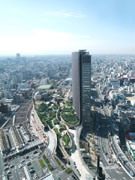
The rooftop park, which stretches in terraces from 3 to 9 floors, is full of nature, including seasonal flowers and trees.

The rooftop park, which stretches in terraces from 3 to 9 floors, is full of nature, including seasonal flowers and trees.
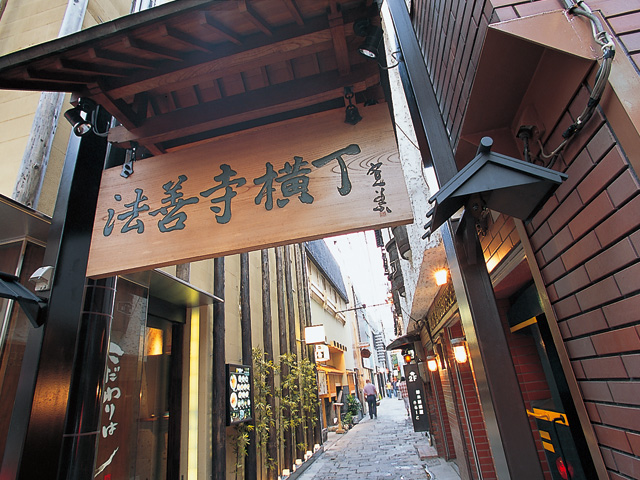
While a short distance from the bustling Dotonbori, the tawy Hozenji Yokocho. A street stall that had been operating in the precincts of Hozenji is said to begin. It is now lined with long-established restaurants and bars, and the colorful drift of Showa Emotions. It seems to be a Yokocho loved by entertainers and writers, and there are spots related to stone monuments and signs.
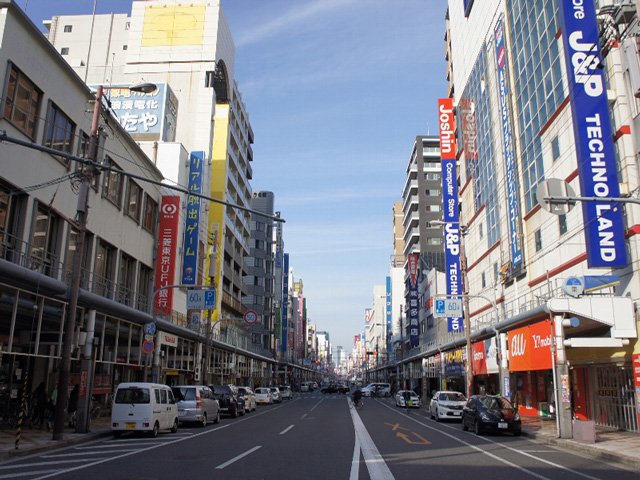
Before the war, it was a second-hand bookstore street, but in the 20th of the Showa era, an appliance store street like the present was born. There are now about 200 specialty stores such as personal computers, audio, mobile phones, and lighting fixtures, as well as home appliances. In recent years, there has been an increase in pop culture-related stores such as anime and games. Recently, the number of foreign tourists has increased, and the number of duty-free dealers has also increased.
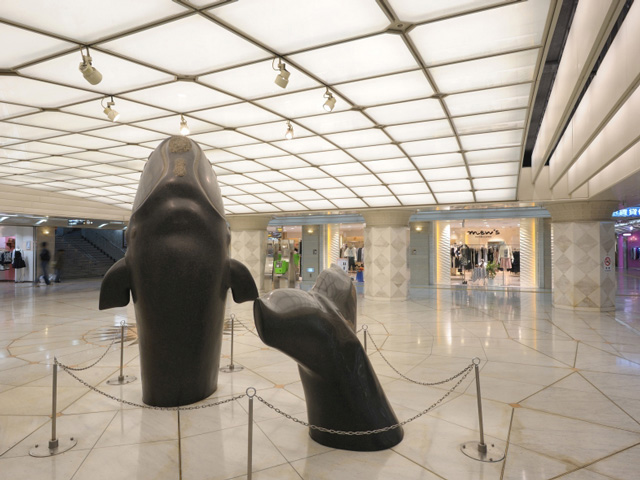
The Namba Walk, which stretches 715m east-west extension of Namba Station on the base axis of Midosuji Subway, is a single shopping street that connects straight from Nihonbashi Station on the east end to JR Namba Station on the west. It was opened as "Rainbow Town" in 1970 and changed its name to "Namba Walk" in 1994. There are about 230 shops lined up on two parallel streets on the north and south sides, and there are also recreation spaces in various places, such as a whale park with whale statues and a forest park in the image of a forest.
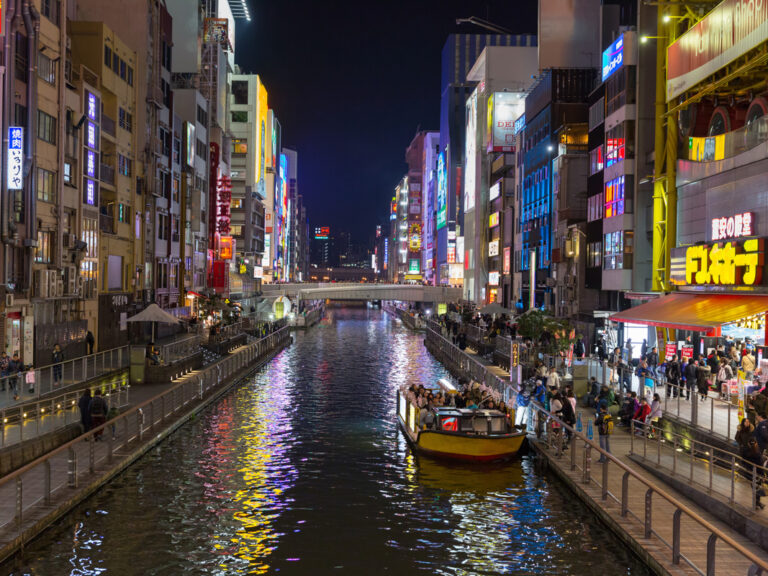
A promenade maintained on the water side of Dotonbori River. You can walk around the floating garden bridge to Nippon Bridge. You can cross the vibrant downtown area "Minami" with unique shops. Neon colors the river at night, creating a beautiful night view.
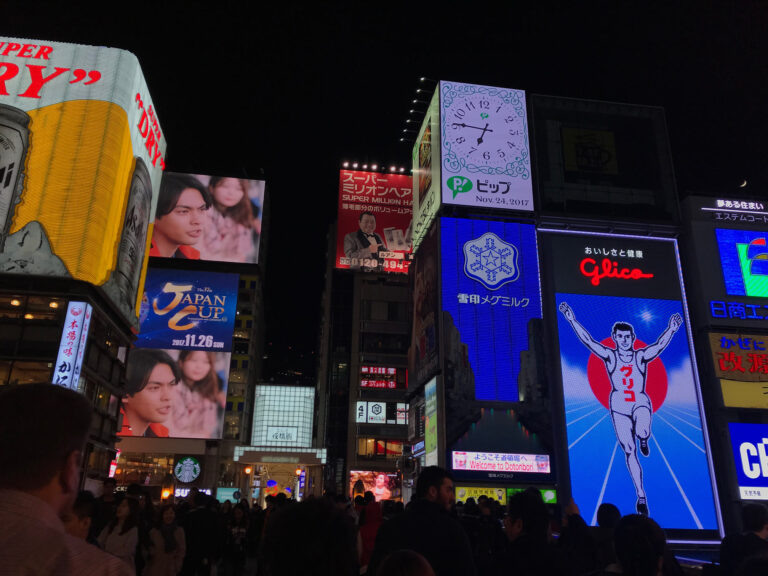
An exciting shopping street in Osaka, with crabs, octopus, puffer fish and a huge polar colored billboard approaching one after another. After a memorial shoot in front of Glico and in front of Kuidaoretaro, let's start eating takoyaki. It is also interesting to walk around the neighborhood of Hozenji through the ukiyo-koji. The details are required by the official website.
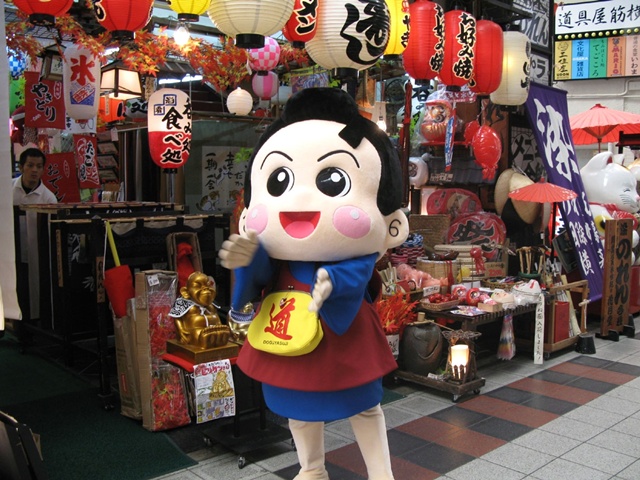
It is marked by a bright red sign with a large "road" on the southern hand of Namba Grand Kagetsu. An arcade street that continues from this sign to Nansan Street in the south for about 160m. There are about 50 specialty shops that deal with cooking utensils, kitchen equipment and signboards used by professional cooks. Of course, ordinary customers can also easily use it. Tools for takoyaki and okonomiyaki, which are indispensable in Osaka's food culture, are arranged in large and small, and it is fun to just watch and walk. Many people buy sample keychains such as nigiri and vegetables at shops that handle food samples made with Row. The use of credit cards varies depending on the store.
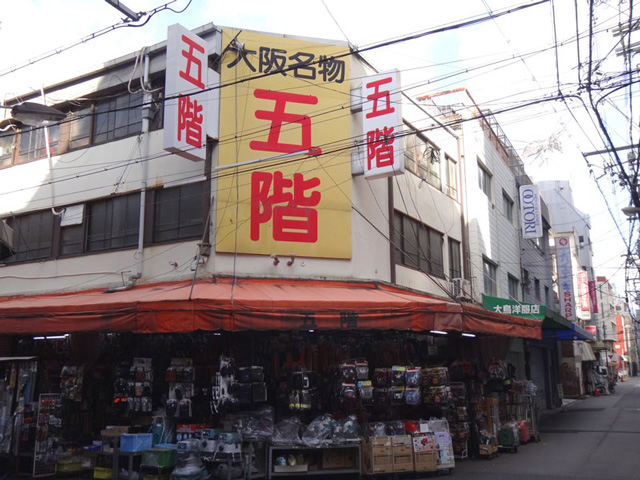
The five-story department store, which was born as Osaka's first five-story high-rise building in 1889, is the origin of its name. After that the building was gone, only its name and the shops around it remained. At present, its name is known as a market area where shops dealing with used home appliances, antiques, kimonos and carpentry tools are concentrated.
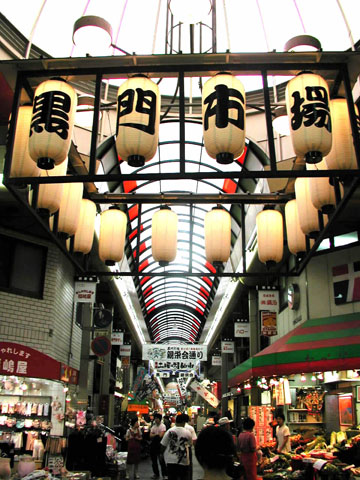
A market called "the kitchen of Naniwa". The total extension of the street, which is lined with about 170 shops, including fresh fish shops, greengrocers and eateries, is 580m. From early morning, many cooks come to stock ingredients.
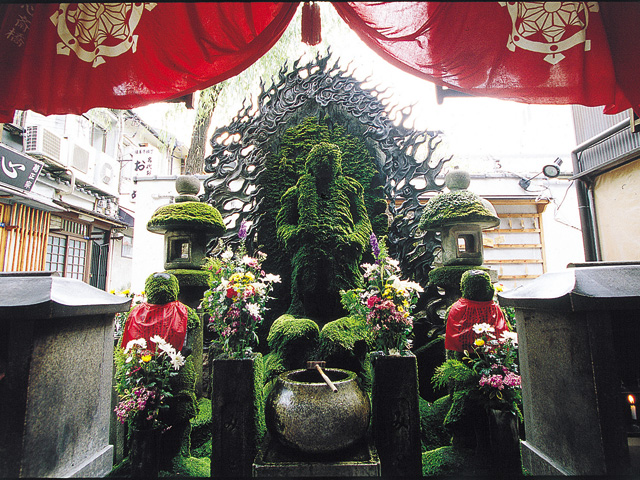
水掛け不動さんでおなじみの浄土宗の寺院。苔むした不動さんに水を掛けてお願いすれば、商売繁盛や恋愛成就などにご利益があるといわれている。