Archives: Travel Post

Nishi Hanami Aji

A street on the west side of the Hanami-koji in Gion. Although not as bustling as Hanami-koji, it is a moist and calm street lined with townhouses in a thin alley, giving the original atmosphere of Gion. It is a walking spot like a hole that is dotted with popular cafes. Note that access time may change depending on traffic conditions.

Shirakawa Minami-dori

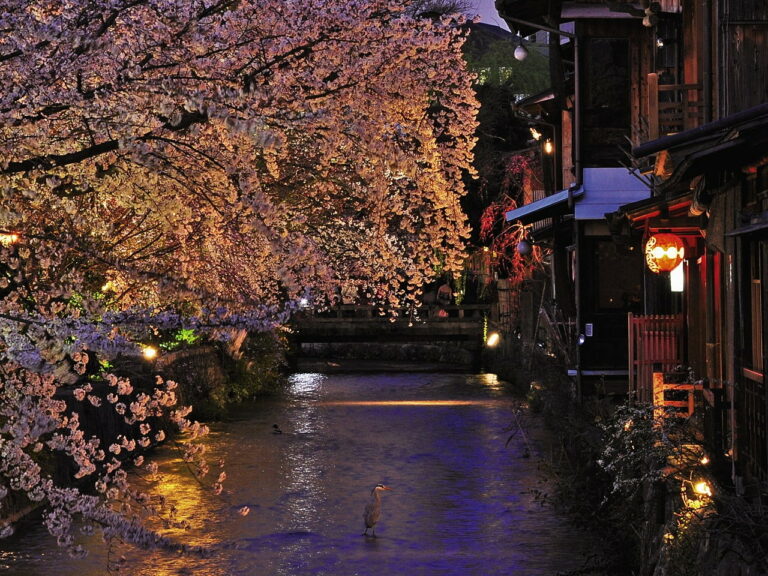
It is a street that meets you as you head north along the Kamo River from Minamiza-mae, and a 200-meter-long cobblestone road with a row of cherry blossoms and willows along the flow of Shirakawa, which flows into the Kamo River. It used to be a place where teahouses were set up and buzzed, and together with Shinbashi-dori on the north side, the whole area has become the state-selected "Kyoto City Gion Shinbashi Important Traditional Buildings Preservation Area". On the street stands a monument of "Kanikuni Gion-Hanakohishi Water Nagaruru under the Pillow" by Isamu Yoshii, a poet who loved Gion, and at the intersection with Shinbashi-dori, Tatsumi Daimyojin says that there is a benefit to Bukigeishitachi. The weeping cherry blossoms along the road are stunning, and the area near the lit-up Tatsumi Bridge is particularly winsome.

Stone fence alley

There is an alley with stately cobblestones and stone walls between Kodaiji-dori and Shimokawara-dori, and you can enjoy a walk with a Kyoto-style inn, a restaurant, and a tea shop with beautiful gardens.

Yuu Yoshii Monument

In 1955, it was erected by Junichiro Tanizaki and others in the celebration of Yoshii's Koki. The stone monument standing along the Shirakawa River is engraved with a song sung by Isamu Yoshii, a poet who loved Gion, saying, "When you go to sleep, you go to the water." the area where the song monument is located is surrounded by the cobblestone road and the murmuring of the river that flows by the side, and the willows that are swayed by the wind.

Shōgun Tsuzuka Seoryu

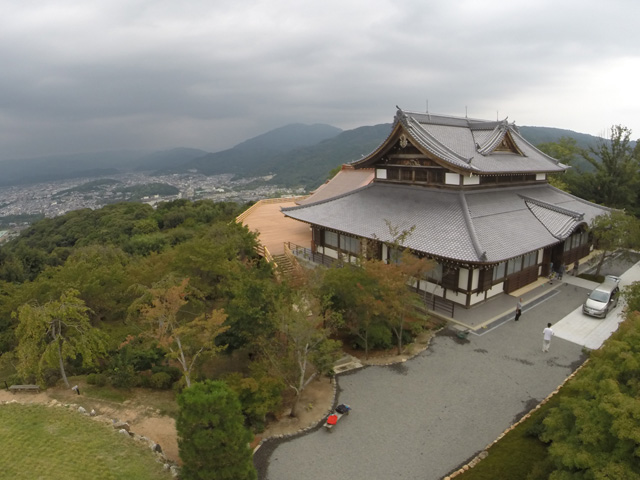
Two observation decks give you a full view of the city of Kyoto. There is a large shōgun mound filled with a statue of the general in the interest of the capital at the time of the construction of Emperor Kanmu Heiankyo, the garden is full of cherry blossoms and peaches, and the autumn leaves are stained with crimson in autumn.

Shijo Bridge

A bridge over the Kamo River in Shijō-dori. It was also known as the Gion Bridge because of its cross-linking in the year of Eiji 2 (1142), and it was on the Sanyo Road of Yasaka Shrine (Gion Shrine). On the south side of the east side stands the Minamiza, famous for the "Kami-seisei", a style poem by the master of Kyo, and beside it is a monument to the birthplace of Kabuki.

Sanjo Bridge

The bridge of Sanjō-dori over the Kamo River. The wooden-style, stately bridge bearing the mock-jewel (giboshi) is widely known as a symbolic landscape of Kyoto. It was the terminus of the 53rd Tōkaidō in the early modern era. The current bridge was renovated in 1950, but the image of a gibashi built by Hideyoshi Toyotomi in Tensho 18 (1590) is left behind, and the jugaku of the magaku is used at that time. From the bridge, you can see the peaks of Higashiyama, Kitayama, and Mount Hiei.

Yasui Kinbilla Palace

It began at Fuji-ji Temple, which is said to have been founded by Fujiwara Kamarashi during the Emperor Tenchi (668-671), and after the god of the priest, Sotoku, was distributed to Sanuki during the rebellion of Homoto and destroyed. Komei-in Kanshō-ji Temple, where the princess of the princess, Awauchi Samurai, enshrined the spirit, is said to be the occurrence of the Yasui-Kinbilla Palace. Since Emperor Sōtoku refused all greed and performed "kokomori", it is considered to be a prayer office to cut off all greed, and now many people come to worship as a god who has a bad edge and has a good relationship. It is said that the edge and the curb monument in the precinct are pictures of a picture horse, and if you pass a hole in the center from the front, you will cut a bad edge, and if you pass it from the back, you will get a good edge.

Yasaka Shrine (Mr. Gion)

The general headquarters of Gion Company, which has about 3000 companies nationwide. It is familiar under the name of "Gion-san". The main shrine is designated as a national treasure, in an architectural style called Gion-zo, in which the main shrine and the hall of worship are covered with one roof. The summer festival, Gion Festival, is derived from praying for the elimination of the disaster during the plague epidemic of Jinkan 11 (869). There are also many worshippers on New Year's Eve-New Year's Day, and the pure fire, which is a mixture of the roots of the kake, is transferred to the noose of Kichōcho and brought back to be used as a lighthouse for the New Year's shrine, or as a fireseed for a zoni pot, praying for a year's disease-free disaster. Ota-sha at the precinct is said to have a benefit for geishitami, and geiko and maiko from Gion also visit for the visit.

Contact Us: Business & Personal Inquiries

By proceeding, you agree to our Terms of Use And confirm you have read our Privacy Policy .

Notes

· We are available for inquiries 24 hours a day. Responses will be provided between 9:00 and 18:00 (including weekends, public holidays, and year-end/New Year holidays).
· Depending on the nature of your inquiry, it may take some time for us to respond.