 English
  Japanese
  Chinese (China)
  Chinese (Taiwan)
  Korean
 Near the roadside station Ueno-mura, the scallop of the Kanryu River riverbed
The fireflies inhabit the riverbed of the Kanryu River at the back of the Ueno-mura Road station. Normal viewing is from late June to early July.

The fireflies inhabit the riverbed of the Kanryu River at the back of the Ueno-mura Road station. Normal viewing is from late June to early July.
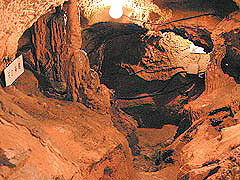
The Jotsu Cave located within Kawawa Nature Park. In a cave found about 1,200 years ago, Chung-hung Kaizanshonin 400 years ago walked up to the innermost part and spread this cave to the world. The total length inside the cave is 2.2km. It boasts the size of Kanto-ichi and is designated as a natural monument of the prefecture. The visit course is about 700m(40 minutes), and there are countless halls of hall of halls of Oishi pillars and innumerable branches where you can finally dive.
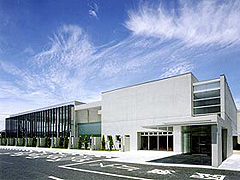
Citizen Pool in Fujioka City, west of Gunma Fujioka Station. It is an indoor pool that can be used all year round and can be enjoyed by children and adults. It can be used for various purposes such as swimming and leisure, such as a 25m pool with 7 courses, a running water pool with 100m per lap, two sliders, and an infant pool. There is also a warm room, a training room, and a dressing room for people with disabilities, so you can enjoy it comfortably in the bright glass hall.
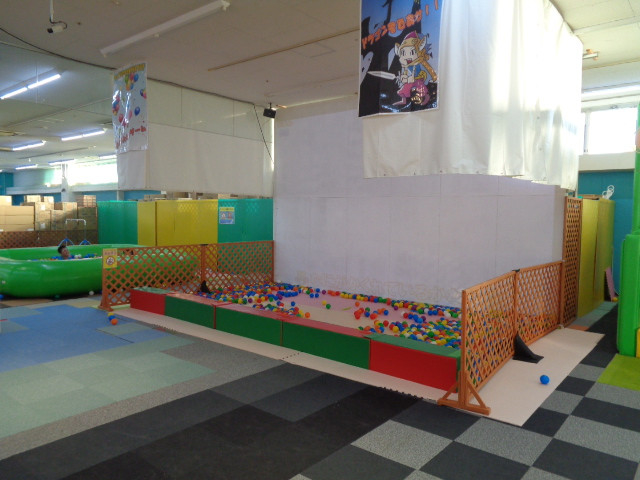
Leisure land of everyone to create a play. There are many prize kids corners, sound games, video games, etc. The wide kids corner is recommended for parents and children because you can play plenty of popular air play equipment. "Exciting Athletic," like a giant jungle gym, has a tunnel slide and a three-dimensional maze so you can play in an exploration mood. "Nagerunda" is a playground equipment for projection mapping. Try to hit the ball against the monster projected on the projector and defeat it, or try a game to beat the jumping ninja corps. "Rollers" is a large doughnut-shaped air play equipment. You can go inside and lie down and roll around and play.
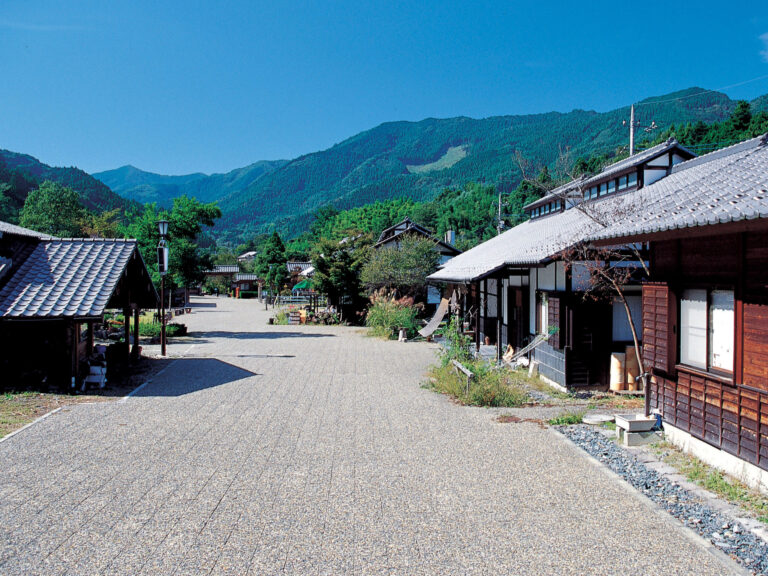
Experience village where you can create various crafts such as dyeing, ceramic art, and glass. You can make your own original work in the relaxed atmosphere of the mountain village. Experience is possible from time to time (the experience date is confirmed in advance). Book required. There is a restaurant and a stand. Take 30 minutes to 1 hour.
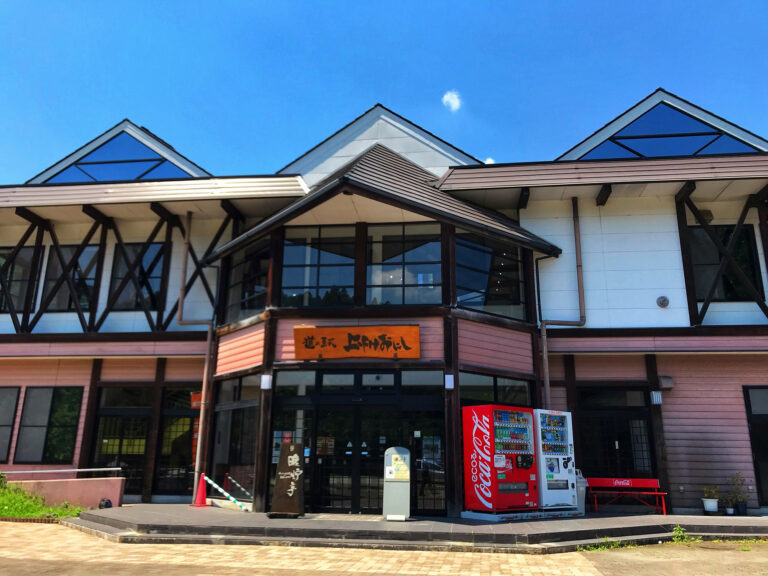
It was reopened in April 2019. It has been reborn into a place where people from the area gather, such as the new building of the kids corner and the opening of the dining room "Fireplace Tei". Materials on the three-wave stone exhibits and the remains of the Stone Age dwellings are preserved, allowing you to learn about the history and culture of the area. Experience programs (reservations required) such as forestry, beekeeping, and ceramics are prepared, and since there are experts, they can participate with confidence. At the cafeteria "Fireplace-tei", you can enjoy hand-made soba noodles and Shimokubo Dam curry. There is a sowing stove in the store, and the flickering flames are impressive.
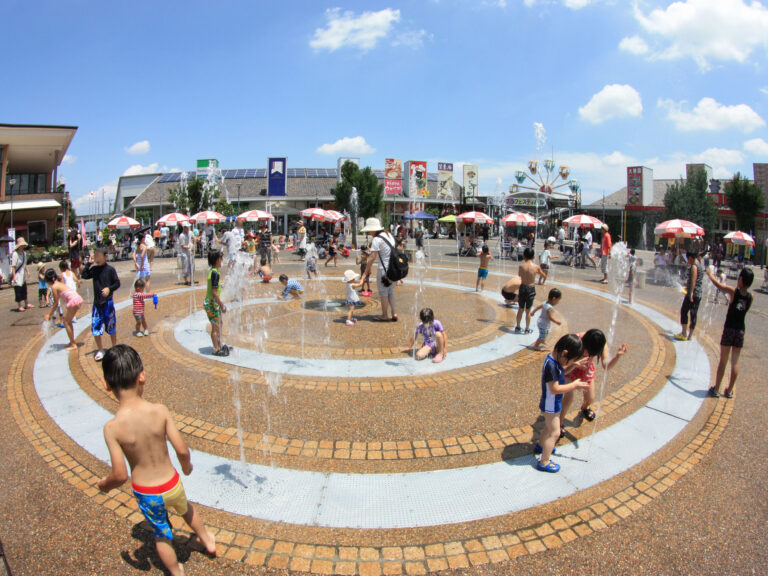
The only free road station in the Gunma that can be accessed from either the expressway or the general road, including the Marchen Plaza with a play-play facility, the Agri Plaza with a produce direct sale shop, the Gourmet Plaza boasting a wide variety of eateries, and the Flower Exchange Hall. The "Fureai Square", which is full of water fountains in summer and illuminations in winter, has 18 specialty shops, including a direct sales shop for produce, a mini amusement park with souvenir and eateries and the facility's symbol Ferris wheel. Only the uphill line (Nagano → Tokyo) can enter from the Joshinetsu Expressway. If you use from the downhill line, go down from Fujioka IC and enter from the general road.
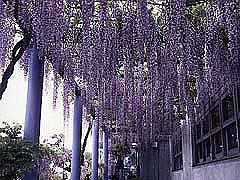
A "wisteria no hana"-themed facility located within Kōshinzan General Park. There is an exhibition room in the hall, which introduces the characteristics and types of wisteria. There are Fujitana and Fujimi Honen in the surrounding area, and "Fuji Festival" is held from late April to mid-May. Selling of goods and concerts are held. Light up at night (from sunset to 20 o'clock). It takes 30 minutes.
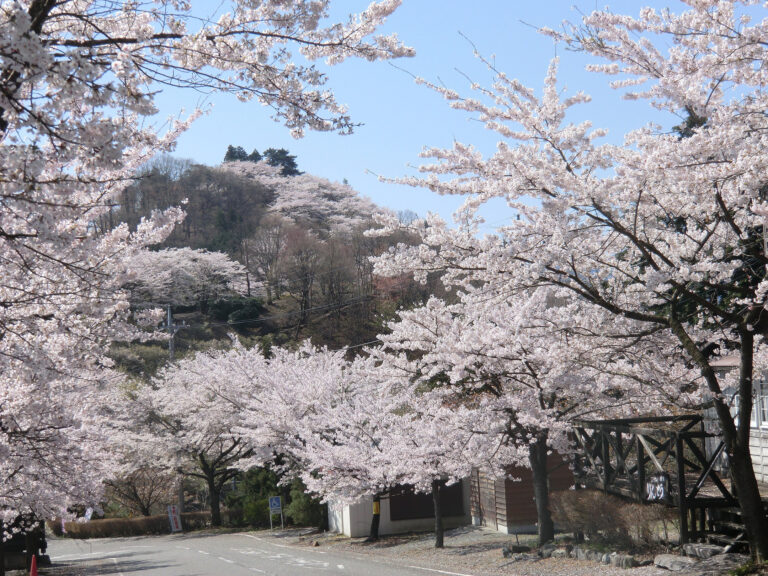
About 7000 plants of Fuyuzakura (winter cherry blossoms), a national famous and natural monument, are planted and will be seen from November to December. From mid to late November, the contrast between autumn leaves and winter cherry blossoms is great, and many people come to visit with a camera in hand. The buds of Fuyuzakura (winter cherry blossoms) that have not bloomed in winter are rare in bloom after overcoming the severe cold. About 3,000 cherry trees are also planted, so a total of about 10,000 cherry trees bloom in April. The view of the whole Sakurayama being dyed light red is exquisite. The Sakurayama Festival is held every year on December 1.
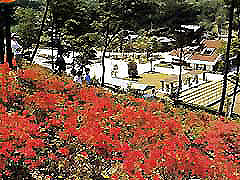
There is a natural park spread over the area of Mount Koshin at an altitude of 189m. There is a pond and an observation deck overlooking the city in the lush green garden, which serves as a place for citizens to relax. There is also a citizen's gym, a mini amusement park, a mini zoo, and a Fuji Fureai hall in one corner of the park.