 English
  Japanese
  Chinese (China)
  Chinese (Taiwan)
  Korean
 Ikaho Hobe Museum of Art
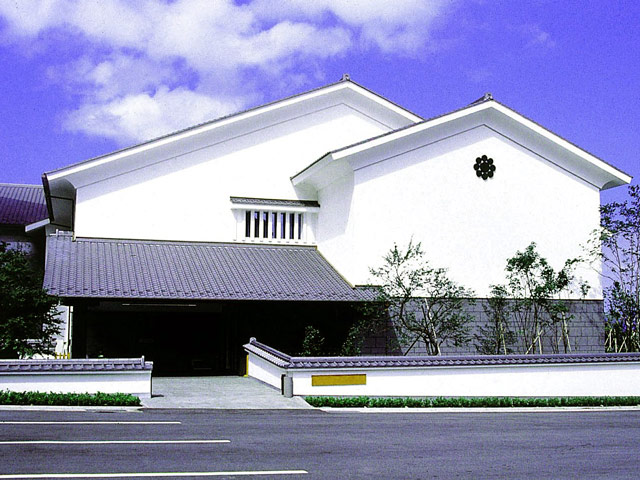
It displays contemporary Japanese paintings and works by Kaichi Kobayashi, who was active from the Taisho era to the Showa era. There is an observation break room on the second floor where you can see 180 degrees.

It displays contemporary Japanese paintings and works by Kaichi Kobayashi, who was active from the Taisho era to the Showa era. There is an observation break room on the second floor where you can see 180 degrees.
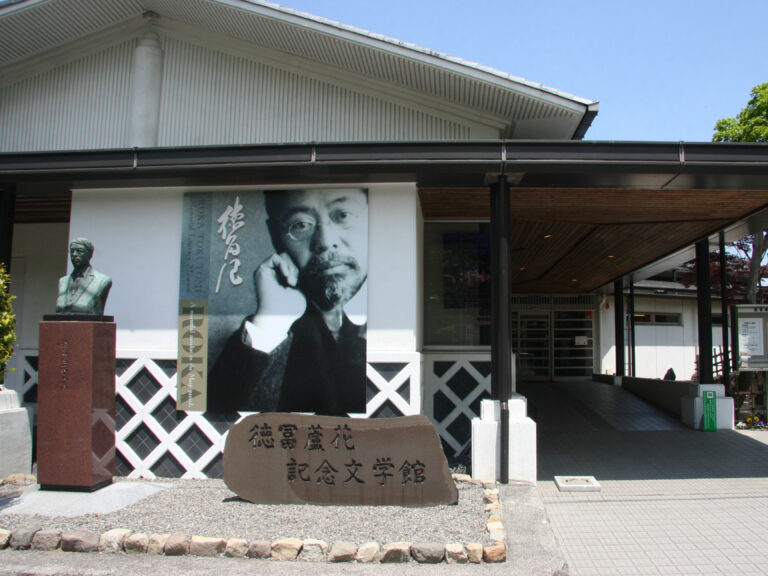
A memorial hall showcasing the life of Meiji Bungo Tokutomi Tokutomi and the trajectory of his works. You can tour the first edition of the book, which is a representative work, "Fyotogisu" [Hototogisu], as well as the correspondence and photographs of the time. The memorial hall, which has a separate wooden structure from the exhibition hall, is the Jōhana no Jōjō, a restored departure of the inn, Chiaki-jin Sentei (Chigirajin-Sentei), which had reached its end. Journey time 1 hour.
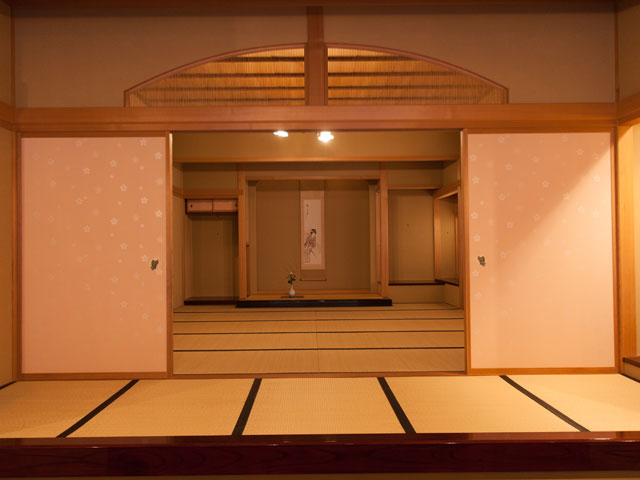
Takehisa A Japanese-style room with a heavy storehouse door provided on the third floor of the "Yume-Nikuro Funakan" at the Ikaho Memorial Hall. With commentary on the works of Yume-ji according to the seasons (hanging axis), you can admire them firsthand. You can enter only in case of special course (reservation and separate fee required for 2 or more people).
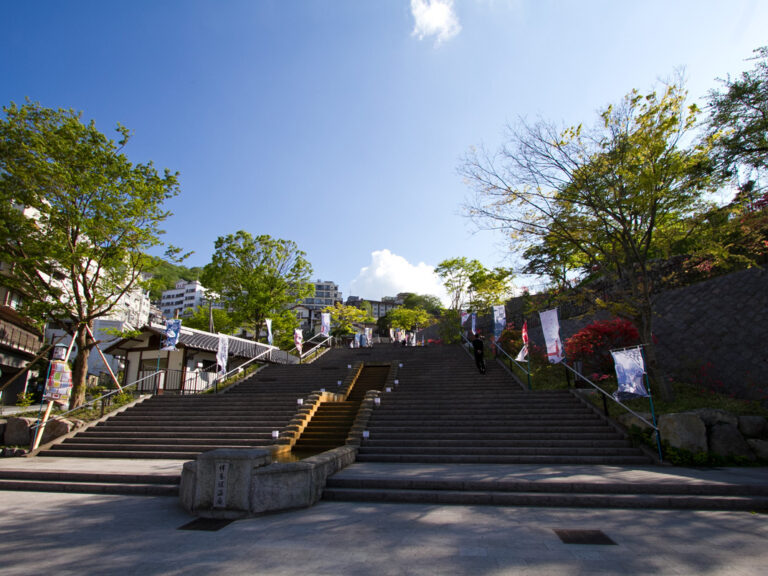
The main street of Ikaho Onsen, which has been running for more than 400 years since the end of the Sengoku period. The 300-meter, 365-step stone steps that run from the entrance near Ikaho-Osekisho to Ikaho Shrine at the top are lined with inns, public-water pools, and souvenir shops. The flow of the source can be seen through the glass from the four Komaguchi viewing stations.
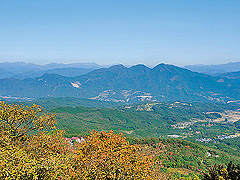
An observation deck on the way from Ikaho onsen town to Lake Haruna. It has an altitude of 1029m. On a clear day, it can be seen as far as Tanikawa Ren-ho, Akagi-yama, and Naetayama. The view is also beautiful at dusk and at night.
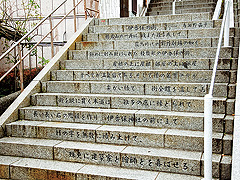
Note the characters carved on the middle of the stone steps-gai, a poem called "Ikaho no Machi" published in 1915 by the female poet, Akiko Yosano, in which the onsen-gai of the period is remembered.
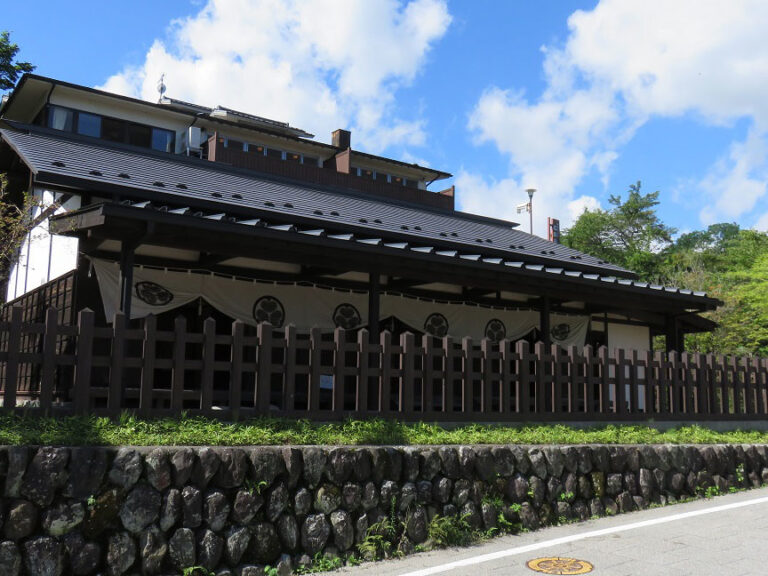
The residence was constructed in 1893 (Meiji 26). It was used as a summer resort for the imperial family. The building was burned to the ground in 1952 and is now the site of the Ikaho Training Center at Gunma University. The kutsuishiki used in the entrance remains where it was at the time.
In Kanei 8 (1631), he restored the checkpoint of the back and back of the Mikuni Highway, which was established by the order of the shogunate. At that time, the sekisho was a building with a thatched roof between the frontage 5. Inside, street bills, old documents and armor from the time are displayed.
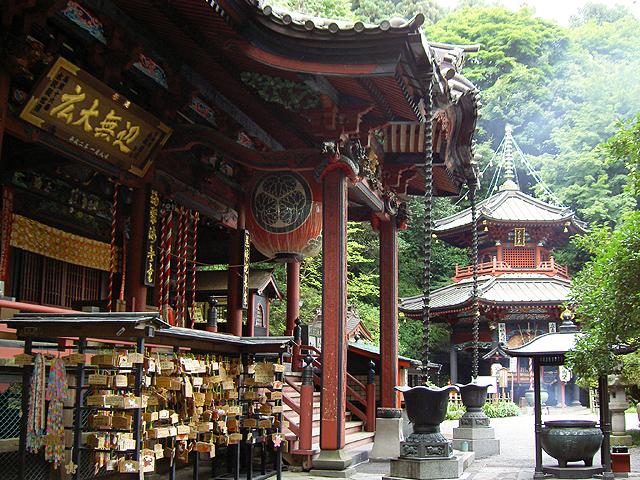
It is an ancient temple of the Tendai sect, which is familiar with the name of Mizusawa Kanzeon, and the 16th place of the Sakadō Sanjō Kanyon Shrine. It was opened by the Imperial Court of Suiko during the Asuka period. The current main hall is from the mid-Edo period, and the main temple, which is said to be Princess Ikaho's Omochi Buddha, is enshrined in the church. Rokkaku-do (Important Cultural Property) on the right of the main hall is a building representing the Jizō-son religion. At Shakado, which was erected in 2001, you can see many Buddha statues and Buddhist paintings such as the Three Buddha statues.
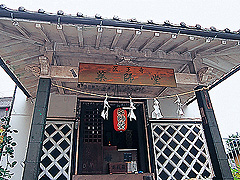
Just below Ikaho Shrine, the ancient temple of Shōen 2 (1574), which enshrines the disease-curing Yakushi Nyorai, and is also known locally as the god of eyes. The Yakushaka Festival, which is held every year on May 8, is served with sweet tea.