Archives: Travel Post

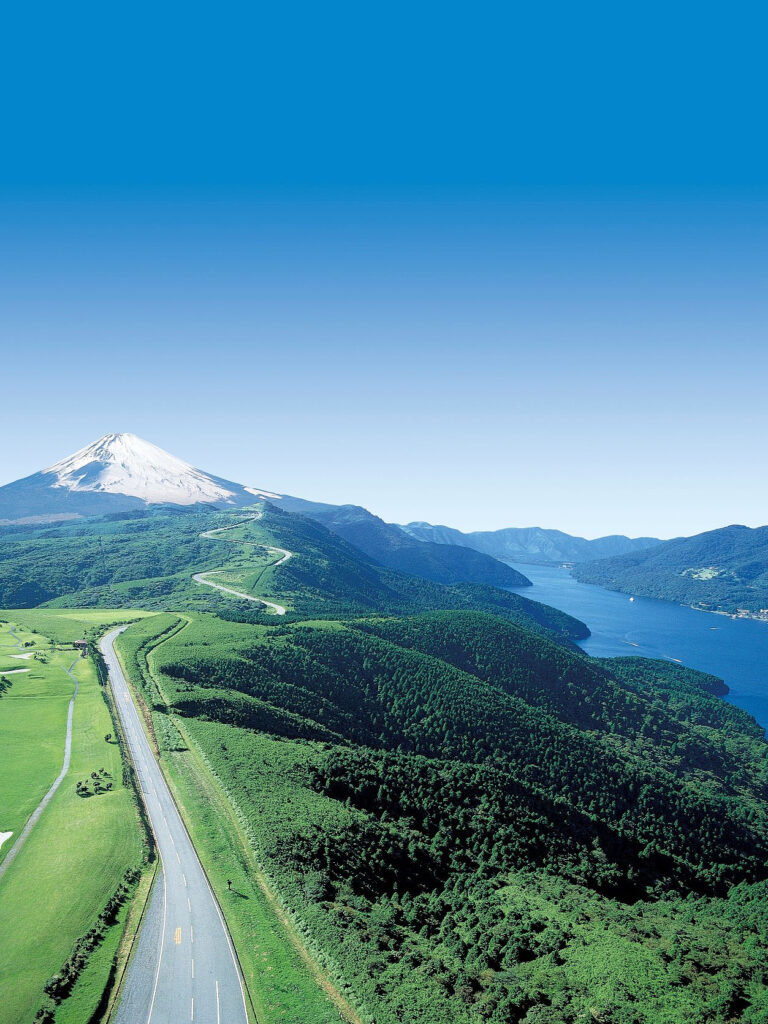
Lake Ashi skyline

A 10.7km-long toll road that runs on the ridgeline on the western shore of Lake Ashi from the Hakone Pass to Kojiri. It is located at an altitude of 850 to 1100m, and you can see Mt. Fuji, Lake Ashi and Suruga Bay. Especially the view from the Mikuni Observation Deck is good. Lake Ashino is under your eyes, and Mt. Fuji and Mt. Komagatake are spread in front of you. To the rear, you can see Suruga Bay over Mishima and Numazu, and on a clear day you can see the majestic Mount Fuji, which extends its foothills to the northwest. It can also be used as a shortcut from Gotemba IC of Tomei Expressway to Izu.
Mount Hakone

There is a hiking course for good legs that walks along the ridge of the west bank of Lake Ashino. The course time of Hakone-cho ~ Ashikawa Entrance ~ Sotoyamayama Circumpath Entrance ~ Uminohira ~ Yamabushi Pass ~ Mikuniyama ~ Kojiri Pass ~ Togendai is about 5 hours and 30 minutes on foot.

Hamamatsuya Main Store

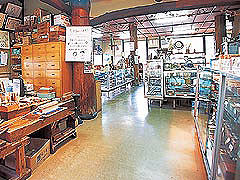
A Hakone marquetry and wood inlay shop in Hatajuku. Conceived by Nibei Ishikawa in the late Edo period, parquet work is a traditional craft that involves intricately combining wood of different colors to create geometric patterns. It is called "solid making" to make a product using a thick seed tree as it is to cut the pattern with a canna and stick it to the wood product. "Mokuzogan" is a wooden painting that can be cut with a woodworking sewing machine. The first floor is a store, but you can tour the production process at the factory on the second floor. There are also easy items such as a secret box of 1500 yen ~ and a solid top 600 yen ~. Parquet remote control rack 7500 yen.

Tea house in the field

A shop that handles Hakone parquet work. In addition to the traditional parquet karakuri box (operation 4 times 1080 yen ~), card case 370 yen ~, coaster 420 yen ~, accessories 1300 yen ~, demonstration of parquet work by traditional craftsmen and experience class (750 yen ~) are also held.

Gold finger parquet craft

A specialty store for parquet and wood inlay in the field inn of the birthplace of Hakone Parquet. Displayed inside the shop, the 1.5-meter-high Nara Kōfukuji Five-storied Pagoda, reproduced with 15,000 parts, is a work by the late Mr. Kikuji Kinzashi, who is overwhelmed by the density of parquet work. The exhibition also includes a piece of wood, which is a reproduction of one of the works in Hiroshige Ando's "Tōkaidō Fifty-three" in a parquet. The Hakone-carved brooch, which is made from the process of parquet work, is an original work. In addition, there are many affordable items such as netsuke 550 yen, coaster 880 yen, parquet pendant 1100 yen, couple chopsticks 2640 yen, etc.

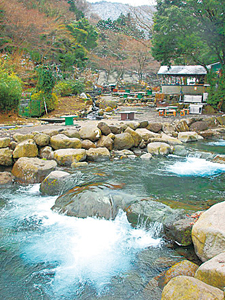
Hatajuku Seiryu Trout Fishing Ground

A trout fishing field using a tributary of the Suun River. 2kg of trout is released at one time, and even beginners can easily enjoy fishing. You can rent 300 yen for food and 200 yen for a rod, so you can go empty-handed. Wrapped in the river sounds and surrounding greenery, you can fully enjoy the interaction with nature that you can not usually taste. Fish caught can be barbecue on the spot. Basically, the tools are brought in, but the loan of the iron plate is 700 yen and the charcoal set is 1500 yen.

Hakone old highway

During the Edo period, the old road was used by many travelers. We start at Ichirizuka in Hatajuku and go over several uphill slopes such as Takakizaka. A road of cobblestones and cedar-lined trees continues on the road for about 6km to the Hakone-Osekisho on the shores of Lake Ashino, to remember the atmosphere of the time and time.

Seven bends

A clear slope on the way to the prefectural road from the Omarushi Chaya to Hatajuku. It was known in the Edo period as a difficult place to climb a straight steep-up kashi no kizaka. In the spring, the cherry blossoms on the roadside are stunning.

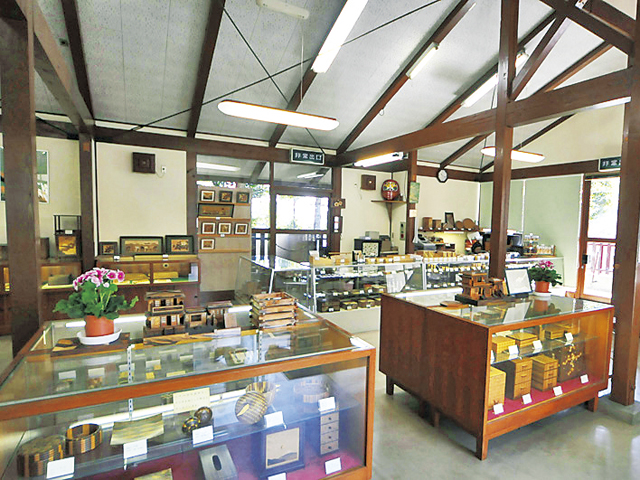
Hatajuku Parquet Hall

The traditional craft of Hakone, parquet work, was conceived in Hatajuku during the late Edo period. The Parquet Hall is a facility built to make the parquet known to more people. Demonstration (video) by craftsmen can be seen, as well as tools used for parquet work. There is also a corner for the sale of parquet products.

Hakone old highway rest area

It displays costumes and tools from the travels of the Edo period, including bento with a waist, Sodega, and Yamago. In particular, there is a must-see corner where you can recreate an episode related to Ako Nanshi's entrance at a Amazake tea house. It is said that Yogoro Kanzaki of the Ako Nanshi was associated with a stadster while taking a break at a Amazake tea house, but there was no commotion in front of him, and he wrote a text of the book. There is also a corner to introduce illustration panels of Hachisato Hakone and travel items from the Edo period. It takes 15 minutes.

Contact Us: Business & Personal Inquiries

By proceeding, you agree to our Terms of Use And confirm you have read our Privacy Policy .

Notes

· We are available for inquiries 24 hours a day. Responses will be provided between 9:00 and 18:00 (including weekends, public holidays, and year-end/New Year holidays).
· Depending on the nature of your inquiry, it may take some time for us to respond.

RURUBU & ALL WAY JAPAN
Privacy Overview

This website uses cookies so that we can provide you with the best user experience possible. Cookie information is stored in your browser and performs functions such as recognising you when you return to our website and helping our team to understand which sections of the website you find most interesting and useful.