Archives: Travel Post

Settlement Information Center on the island of Pashigashima
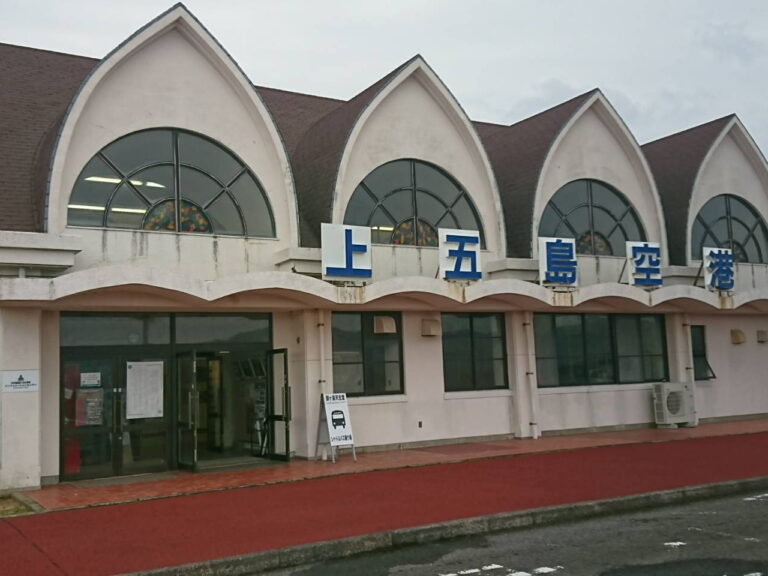
An information center opened within the Kamigoshima Airport Terminal on the island of Pashigashima, where the constituent asset "Settlement of Pashigashima" of the World Cultural Heritage "Hidden Christian Related Heritage of Nagasaki and the Amakusa Region" is located. Tourists such as general cars and rental cars, sightseeing buses, and taxis will be transferred to the Shirahama area, where the city is located, to a free shuttle bus at Kamigoshima Airport by "Pigashima Park & Ride". The visit of the Oshigashima Cathedral requires advance reservation at the "Hidden Christian-related Heritage Information Center in Nagasaki and the Amagusa Region" (telephone: 095-823-7650), but even on the day, this information center will be accepted if there is room. There is also a panel exhibition and video airing in the center to introduce the "Settlement of Pashigashima", so I would like to tour it after gaining knowledge in advance.
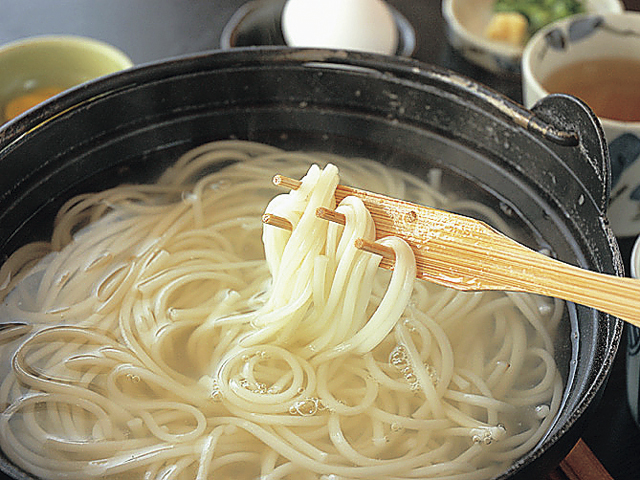
Goshima Udon no Sato

Goshima udon noodles are made of tsukurushikoshiko, which are spread with camellia oil, which is a specialty of the island. The facility, run by the Goshima Tebebe Udon Cooperative, is home to the udon tea house "Yumen Sanmai".

Whale Museum

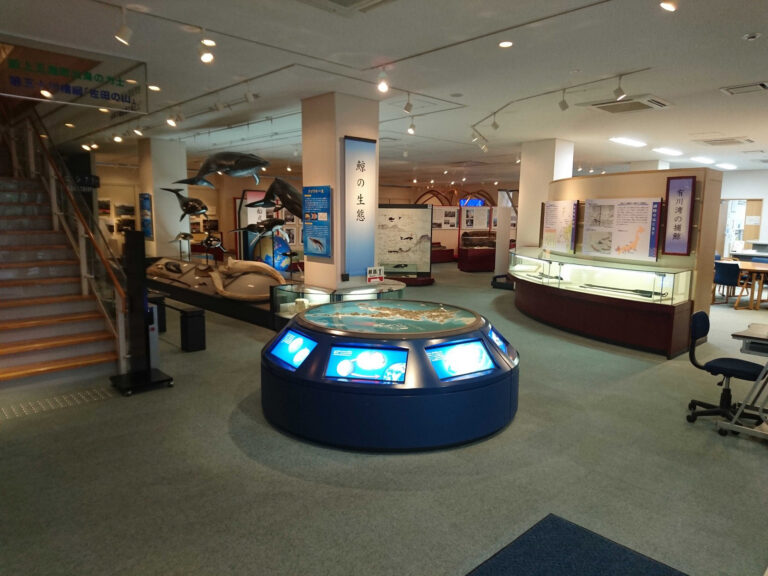
The museum is located at the Arikawa Port Terminal Building "Whale Guest House", the gateway to Kamigoshima. Corners such as "Arikawa Bay Whaling", "Mothership Whaling Industry", and "Whaling Ecology" introduce a variety of materials on whaling, which was practiced in Arikawa Bay until the end of the Meiji period, using panels and real objects. Of interest include tools such as kitchen knives and harpoons used during the ancient whaling period, as well as models and skeletal specimens of seven different types of cetaceans. The mini-theater, where you can relax in a chair with a massage function while watching footage of a whale swimming calmly, is well received. It also introduces 29 churches and yokozuna Sada's Yamaseki on Kamigoshima. Along with a panel introducing the church, it displays the design drawings and patronized carpentry tools of Tetsu Kawasuke, a native of the local Shome district who is credited with church architecture. Skeletal specimens and full-scale models of mink whales outside the museum are also spectacular.

Square related to Ryoma Sakamoto

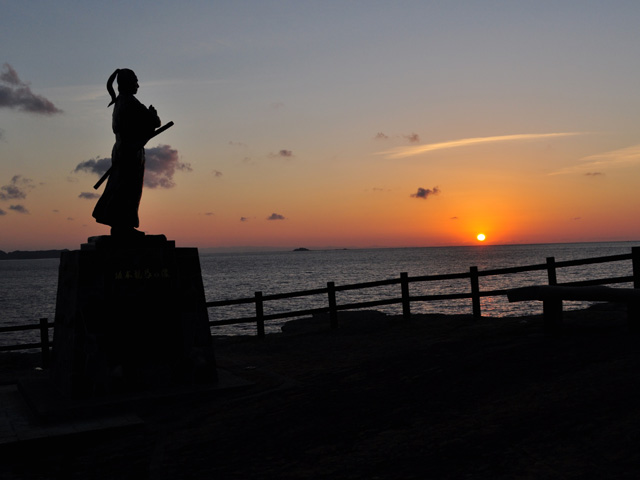
A square maintained on a corner of Nakadori Island, along the coast with views of the island of Akigashima and Hirashima. In May of the second year of Gyeongsang (1866), the Wile Uef, a Western-style wooden sailing ship owned by Kameyama Shahong, organized by Ryoma Sakamoto, was in distress off Shioyazaki (Shioyazaki). It is said that Ryoma, who was in the process of sanatorium on wounds sustained in the Teradaya incident, asked the village officials to run to this area to erect a memorial monument. In the square, there is a monument marked "Land of Yukari Ryoma" and a replica of the Wile Uef's steering stick, while a bronze statue of Ryoma praying for the befukus of 12 young Shishi, including Ike, stands in the hope of Shioaizaki. The real-life steering bars are kept at the "Shio-Sai", a private residence located near the square.

Catholic Pashigashima Church (Pashigashima Church)

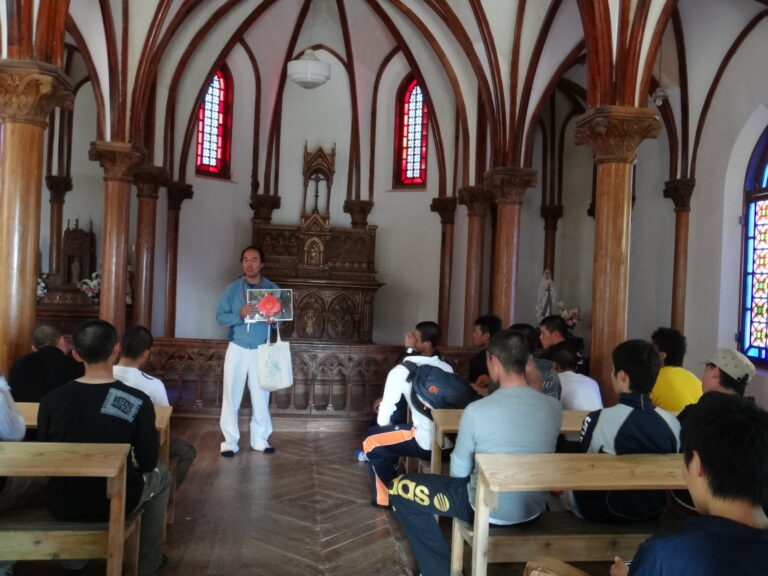
The church which serves as the center of the constituent asset "Settlement of the Potagashima" of the World Heritage Site "Hidden Christian Related Heritage of the Nagasaki and Amakusa Regions". The church began with the fact that Domingo Matsujiro, who was the head of the hidden Christians in the Kamigoshima area in the second year of Gyeongsang (1867), moved to Shirahama on the island of Pashigashima and made his home a "temporary cathedral". The current church is the second generation, and was completed in 1919 after a ten-year period with the labor service of the lay people. It is designed and constructed by Tetsu Kawasuke. The exterior using Goshima stone is a strong kumi stone. The tower house, crowned with an octagonal copper-planked dome roof, is impressive. The interior is a single corridor, and the folding ceiling, such as the bottom of the ship, is built with a special construction method called a hammer beam. The interior was decorated with the motif of the camellia of the Five Island Islands, and the nickname "Hana no Mido" was made throughout. National Designated Important Cultural Property. Watch out for access by the Pashigashima Park & Ride.

Catholic Great Church

A church where you can see it in the northern part of Nakadori Island, on a high ground on the opposite shore of Aogang Port Pier. The hidden Christian people who had migrated from the open sea of the Omura Domain in the late Edo period built the first church, which was now relocated to Wakamatsu Island and became Doinoura Church, in 1879. The current church was rebuilt in 1916, and the design and construction was done by Tetsu Kawasuke, a native of the local area. It has a double-tiled roof with a beautiful brick exterior wall decorated with different styles of brickwork and colors. The main entrance is a dome-shaped bell tower, the interior is a three-way corridor, and the ceiling is a plastered rib vault ceiling. It incorporates a Romanesque style, including stained glass with a floral pattern made in West Germany, and a semicircular arch window, and the carving of the stigma is made by Yosuke's father, Yoshiro Tetsukawa. It has been designated as a tangible cultural property in Nagasaki Prefecture, as almost all of it remains as it was then.

Catholic Gangbuk Church

A wooden, tiled, one-story Catholic church located in the northern part of Nakadori Island in the five island islands. The church was founded in 1882, and was the oldest of its kind as an active wooden church where Mass was also held, with little change in size and shape at the time of the founding. In 2007, it was damaged by a fire that was believed to be caused by a leakage. Structures such as columns and beams, as well as the outer walls remained firmly, the restoration work was decided after an investigation and examination. In 2010, the former figure of the beautiful curved rib vault ceiling (the skilful ceiling) was restored, and it is now designated as a tangible cultural property of Nagasaki Prefecture.

Catholic Aozagaura Church (Aozagaura Cathedral)

A church standing on a small hill in Aosagaura, overlooking Namawan in the northern part of Nakadori Island. The present church was built in 1910 (Meiji 43) and became the third-generation church in Aozagaura. The one-story building, with a double-layered roof structure, with a red brick outer wall and a tiled roof, was constructed by congregants carrying up bricks from Sasebo in total. The inside of the hall is a three-story building, the walls are plastered, and the ceiling is a four-part rib vault ceiling in both the main and side antefacts. The ornamentation of the columns on either side of the front entrance and the stained glass of the circular windows are graceful. It was designed and constructed by Tetsu Kawasuke, who was originally from the local area, and was the second brick church to be built by Tsuke, after the former Noriko Church. It has been designated as an important cultural property of the country as an example of a brick church. The white statue of Mary and the green of the cycads weave a beautiful contrast in front of the temple.

Nozaki Island Guided Tour

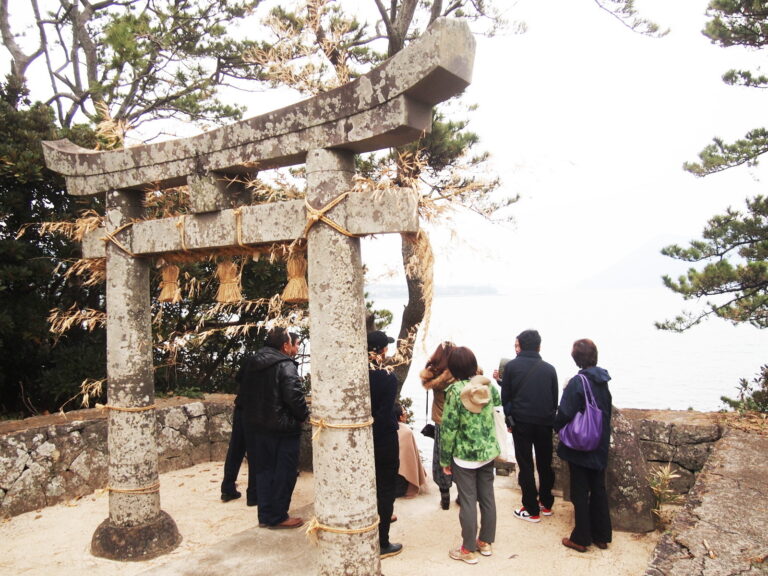
A guided tour to touch the history and nature of Nozaki Island, one of the islands of Oshuri town. Nozaki settlement site, which is the "settlement site of Nozaki Island", a constituent asset of the world cultural heritage "Hidden Christian-related heritage of Nagasaki and the Amakusa region", the site of the Noshu settlement and the former Noshu church, the stone wall on the steep slope, a herd of wild deer, and the white-sand Nōshu coast, stroll around the almost deserted island with a guide. 2 hours and 30 minutes, 2 to 10 people are held in advance. There are also "Funamori Trekking", which walks along the village road to the site of Funamori settlement at the southern end of the island, and trekking to visit the Okinokamishima Shrine and Oeishi in the northern part of the island from October to June.

Small Price Island Guided Tour

A guided tour that allows you to explore the small price gaga located at the northern end of the five island islands. The small-priced island is home to a port town that once flourished as a transportation hub in Asia and also for international trade, whaling industry, etc. The nature is also rich, and the whole island is designated as the West Sea National Park because of the unique landscape made of volcanoes. In the tour, we will tell you the charm of the island while touring the scenic spots and points of history. A "cow tower" to celebrate cattle used in reclamation work during the 1300 s when two islands became one, the red gravel Akahama coast to show that the small-priced island was a volcano, the Jino-Kamijima [Chino Kojima] Shrine, which faces the Okino-Kamijima Shrine on the island of Nozaki, and the Aigoyama Garden, which has a good view, and Kenbu Nitta, which used to be the sea. It takes about 2 hours to 2 hours and 30 minutes. The minimum number of passengers is 2. Book up to 7 days before basic with advance reservation. A cycling guided tour around the island by bicycle is also held.

Contact Us: Business & Personal Inquiries

By proceeding, you agree to our Terms of Use And confirm you have read our Privacy Policy .

Notes

· We are available for inquiries 24 hours a day. Responses will be provided between 9:00 and 18:00 (including weekends, public holidays, and year-end/New Year holidays).
· Depending on the nature of your inquiry, it may take some time for us to respond.

RURUBU & ALL WAY JAPAN
Privacy Overview

This website uses cookies so that we can provide you with the best user experience possible. Cookie information is stored in your browser and performs functions such as recognising you when you return to our website and helping our team to understand which sections of the website you find most interesting and useful.