 English
  Japanese
  Chinese (China)
  Chinese (Taiwan)
  Korean
 Buried Museum
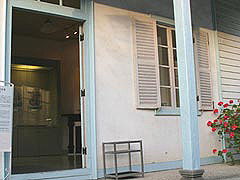
It is located in the Higashiyama Teyo-style residential complex, where you can tour the artifacts from the Edo period, etc.; it takes 10 minutes; and is designated as a city-designated tangible cultural property.

It is located in the Higashiyama Teyo-style residential complex, where you can tour the artifacts from the Edo period, etc.; it takes 10 minutes; and is designated as a city-designated tangible cultural property.
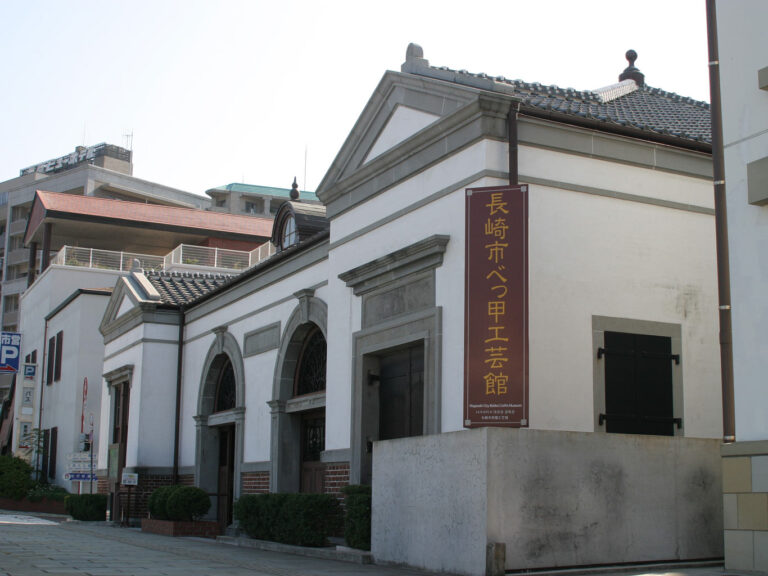
A facility set up to preserve the techniques and skills of Nagasaki's traditional craft, tortoiseshwork. There are about 300 works by tortoiseshell works on display inside the museum, and there are a lot of replies, such as the jet-black vivacous Tenma and the treasure ship using only the amai-colored places of the hawkish. The building uses the former Nagasaki Customs Desakimatsu (Important Cultural Property), which was repaired and restored in 2002.
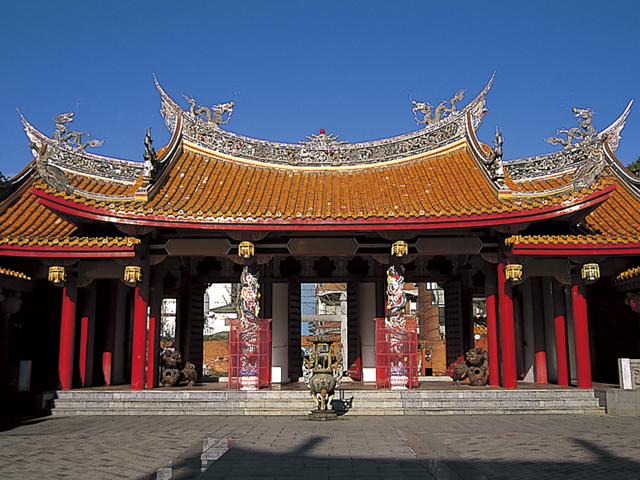
Facilities adjacent to the Confucius Temple. There are precious things that are national treasures. The cultural heritage that makes you feel the weight of 5000 years of history in China is explained in an easy-to-understand manner by age and dynasty, and it is worth seeing a museum. There is also a stand on the first floor where Chinese souvenirs can be bought. Take 30 minutes.
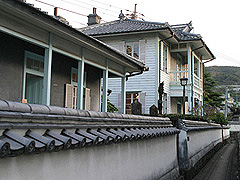
The Museum of Materials, located in the Higashiyama Teyo-style residential complex. It will display a large number of materials from the Kaiso Ueno Hikoma [Ueno Hikoma], pictured, and photographs about Nagasaki during the Meiji and Taisho periods. It will take 15 minutes. It is designated as a municipal designated tangible cultural property.
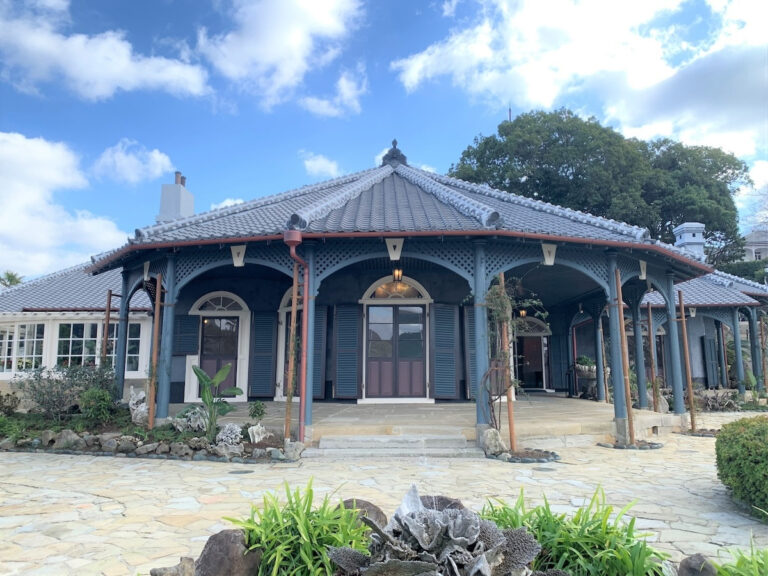
On a site of about 30,000 sq m, the former Glover House, the former Ringer House and the former Olt House of the National Designated Important Cultural Property, which has been extant since the settlement period, as well as the six Western-style buildings that were scattered around the city were relocated and restored. Among them, the former Glover House, which was built in 1863, is the oldest surviving wooden Western-style building in Japan, and was listed as a World Cultural Heritage Site in 2015. The former home of trader Thomas Blake Glover from Scotland, whose four-leaf cloverleaf roof is characteristic from above. You can overlook Nagasaki Port from the observatory in the park, and the night view and light up are beautiful. It celebrated the 50th anniversary of its opening in September, 2024.
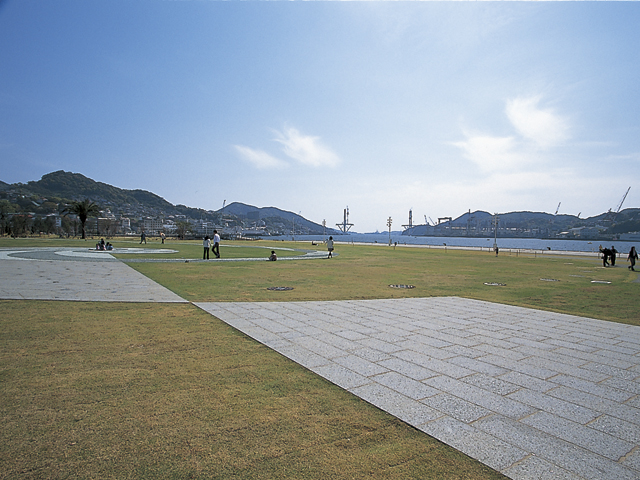
A place of relaxation for Nagasaki citizens surrounded by the sea and greenery. It is dotted with modern designs and contraptions, such as the "Water Theater", which uses natural water sprung from the mountains for fountains and babbling, and the "Biedro Road", which is embedded with cobblestones. 2004 (2004) Good Design Prize Award winner.
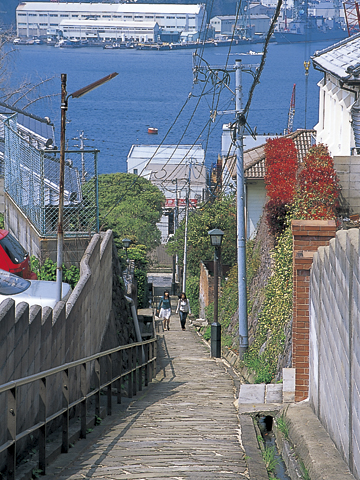
This road is often featured as a Nagasaki-like landscape in commercials and movies. It is also fun to look back and watch the scenery on the way up, not to mention going down. The name comes from the fact that when it rains, the water that runs down the slope makes a sound of "more and more." there is a groove on the side of the cobblestone called a triangular groove in the shape of a triangle, and the shape of the groove is different above and below to regulate the speed of the water flow.
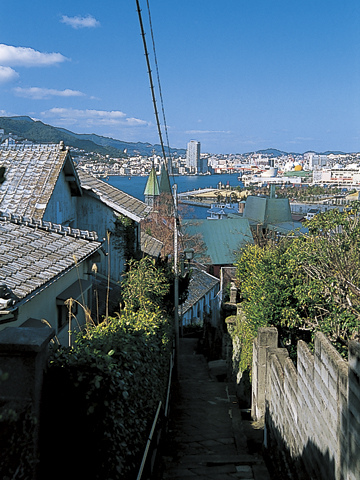
A stairway from the side of the Minamiyamate Rest House to the side of the Oura Cathedral. Although it is narrow, it is a great view spot with the side wall of Oura Cathedral and the steeple of the church, and the port of Nagasaki beyond. It is said to be the place preferred by the writer, Shusaku Endo, "which smells of grapes."
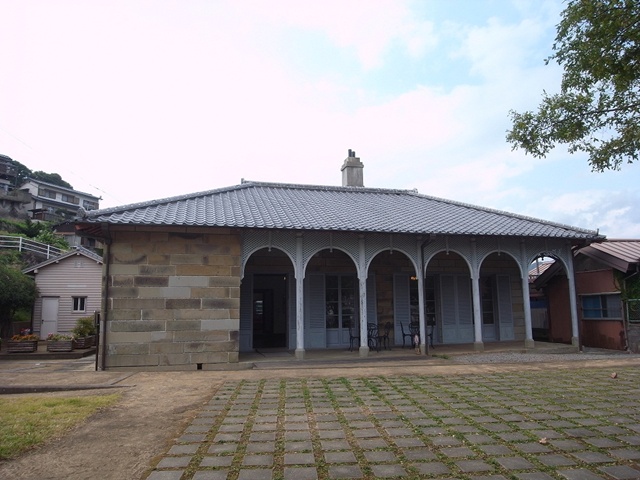
It is an early Western-style house with stone walls built at the end of the Tokugawa period, and you can rest freely inside the building, and you can see the scenery of Higashiyamate from the Oura Observation Park just in front of it. In addition, from the main entrance of the Minamiyamate Rest House, you can see the port of Nagasaki over the Oura Cathedral.
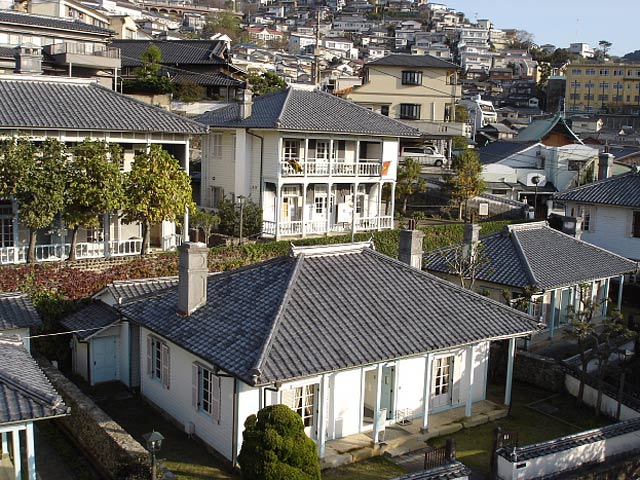
A Western-style house of seven wooden buildings lined up facing the Dutch slope. It was built as a rental house in the late Meiji 20 s, and six of the seven buildings can be visited. A photo and video show the situation during the foreign settlement period at the East-Yamate District Preservation Center. The Old Photographic Museum, which uses three buildings, displays a large number of photographs about Nagasaki during the Meiji and Taishō periods, as well as the materials of the photo's founding, Hikoma Ueno. At the Buried Museum, you can tour items from archaeological sites from the Edo period. The Higashiyamate "Earth Museum" cafe slow, which is also a base for international exchange, offers physically friendly lunches and sweets.