Archives: Travel Post

JR Shin-Tosu Station

A station on the Kagoshima route of the Kyushu Shinkansen, where the station building, designed with the image of a bird wing, is catching the eye. Convenient facilities for sightseeing will be set up at the first Shinkansen station in Saga Prefecture, including group-ready toilets complete with powder rooms and a tourist bath pool, one of the largest in northern Kyushu. There is also a station on the JR Nagasaki Main Line, which provides convenient access to Saga Prefecture from all parts of Kyushu.
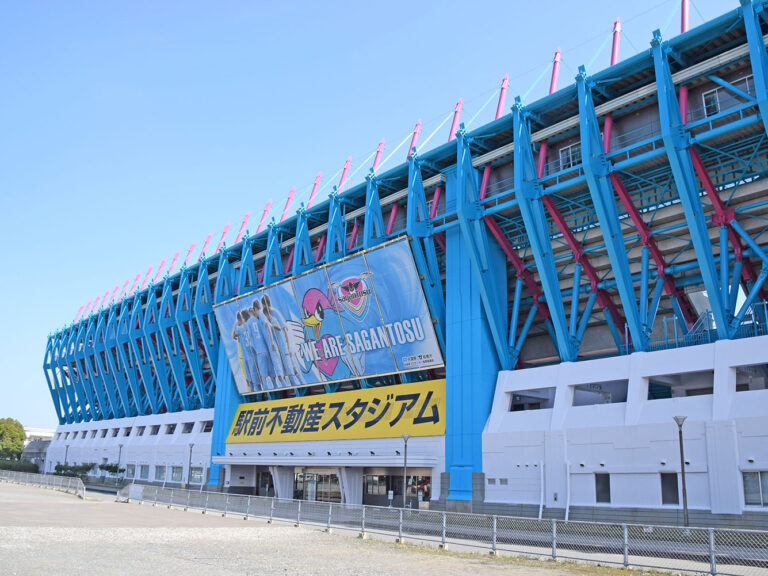
Ekimae Real Estate Stadium (Torisu Stadium)

Torisu Stadium, which is adjacent to JR Tosu Station and is officially named "Torisu Stadium". It is the home stadium of the J-League professional soccer team "Sagan Tosu", and various sports competitions including soccer are held. The supporting columns of the lively steel-framed three-story stand are based on copper swords from the ruins of the city, and the viewing stand is the largest in the prefecture with a capacity of 24682 people. The field is a well-maintained natural lawn.

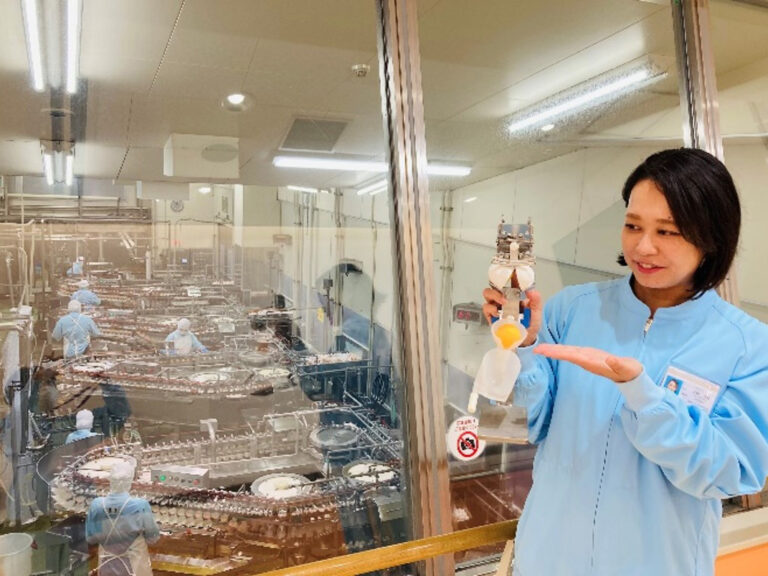
Kewpie Tosu Factory

One of Kewpie's open kitchen (factory tour), which is carried out in three plants nationwide. The target is elementary school students and above (elementary school students and below are accompanied by parents), and the required time is about one hour. You can learn about the history of Kewpie and the secrets of mayonnaise, and watch videos about how to make mayonnaise and vegetables. The highlight is that about 600 eggs are broken in one minute. Adults and children are sure to be surprised at the speed of their own "high-speed egg cutting machine". A gift of souvenirs after the tour.

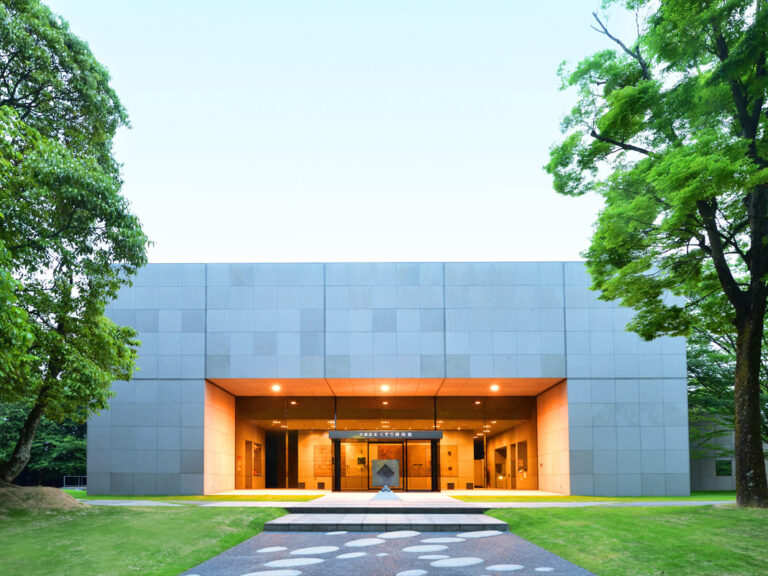
Nakatomi Memorial Museum

A rare museum with a theme of "kusuri". The eastern part of Tosu, Saga Prefecture, became the territory of the Tsushima clan in the 4th year of Gyeongsang (1599), and the origin of "Tashiro Shōyaku", one of the four major Japanese medicines sold in the Edo period. In the hall, the pharmaceutical and peddling materials of "Tashiro Shōyaku", an important tangible folk cultural property of Saga Prefecture, as well as a valuable sample of raw drugs, an exhibition of pharmacies of the 19th century London, the outdoor is equipped with a medicinal botanical garden where you can see about 350 species of medicinal plants throughout the year. The building was designed by Italian sculptor Ceccobo Nanotte, who worked on the basic design, and a relief produced by him, "Seeds of Life," is displayed in the hall.

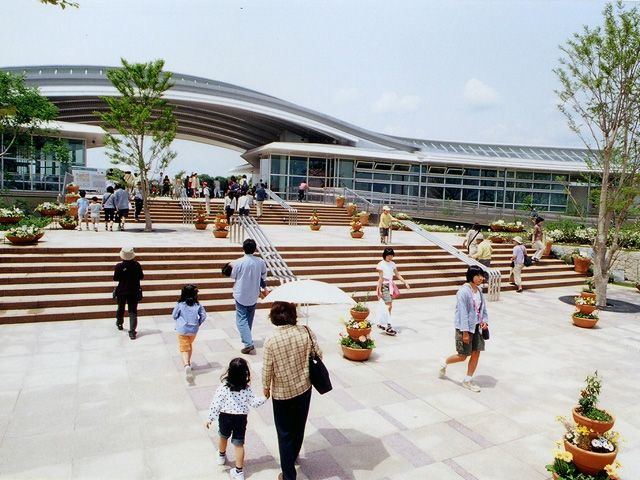
Historical Park Center

It is located at the east entrance of Yoshinogari Historical Park. It serves as a comprehensive guide for the park. In the guidance room, the site is introduced in the footage. There is also a store selling corner for restaurants and souvenirs, and a tourist brochure corner around the area. It is also the entrance to Yoshinogari.

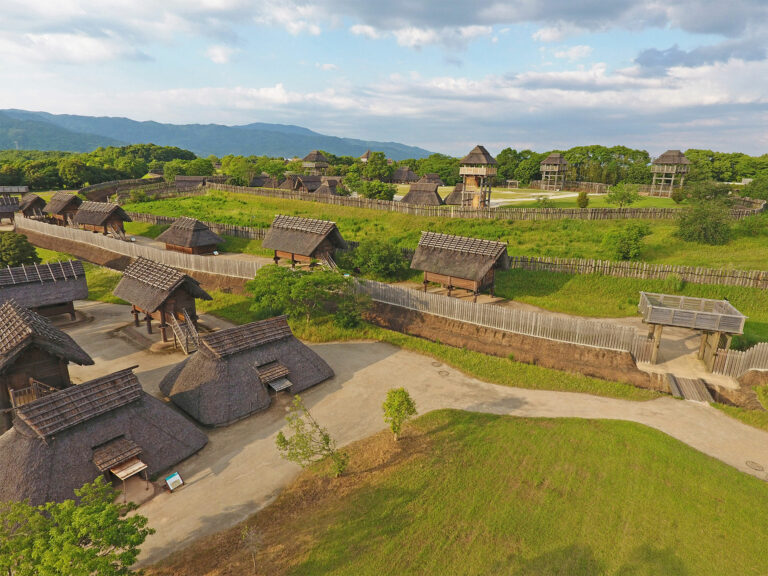
Yoshinogari Historical Park

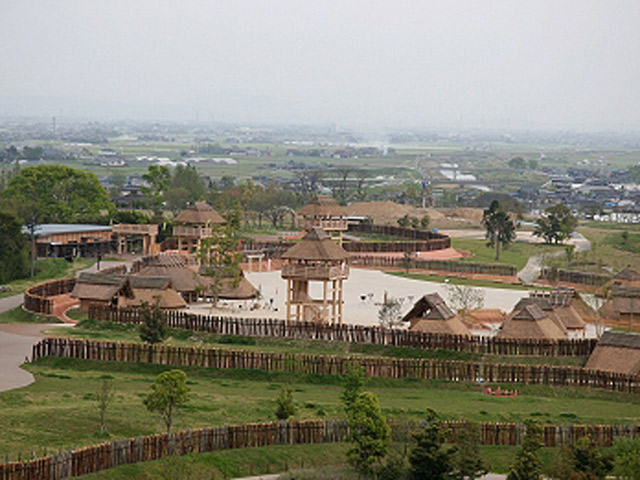
A park that has been restored and maintained the largest Yōyō period bunch settlement in the "Yoshinogari Site", a special historical site of the country. It spans the city of Kanzaki and the town of Yoshinogari, where numerous ruins of the pit house, the ruins of the high-floor warehouse, and the tomb of the kamekametto [kamekambo] have been restored, and there is a view reminiscent of the godai country described in the "Weishi Wajinden". You can tour the south inner/north inner/kura and the city/north penhill tombs, exhibition rooms, etc. I am surprised by the scale of the building, such as a building with a height of 10m or more, and a huge main hall with 16 pillars with a diameter of 40-50cm. In the park, experience programs such as "making of magatama" are held, and play equipment and lawn squares are also provided.

South inner section

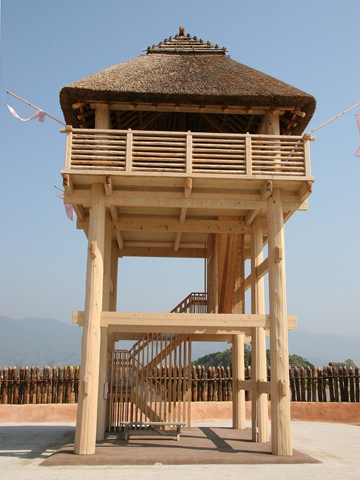
The tower in the southern inner section of the bunch settlement zone of Yoshinogari Historical Park. The giant tower, with a floor height of 6.5m and a height of 12m, was built by bringing together the wisdom and power of the people of the Yayoi period, and was built by assembling a large tree with a hole in it. There are small settlements and land suitable for making rice around them, and it is believed that they were used to monitor the approaching "kuni".

South inner/hole dwelling

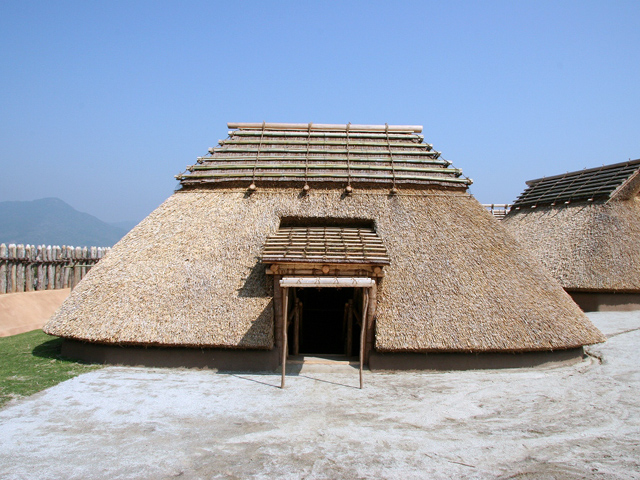
A pit house in the southern inner section of the bunch settlement zone in the Yoshinogari Historical Park. What is being restored at the Yoshinogari site is from the late Yayoi period, supported by only two pillars. Inside the residence, it is rectangular in shape. There are measures to respond to the environment, such as digging down the floor surface for about 1 to 1.5m to enrich the soil around the area to prevent the infiltration of water. There are also steps on both sides of the room, which are said to have been sleeping places, called betting letters.

South inner section

It is located within the Bunch Settlement Zone of Yoshinogari Historical Park. It is thought to have been the site where the Ruler Stratum lived, and four monotome towers and ten pit dwellings have been restored. It is believed that there were actually more buildings.

Exhibition Room

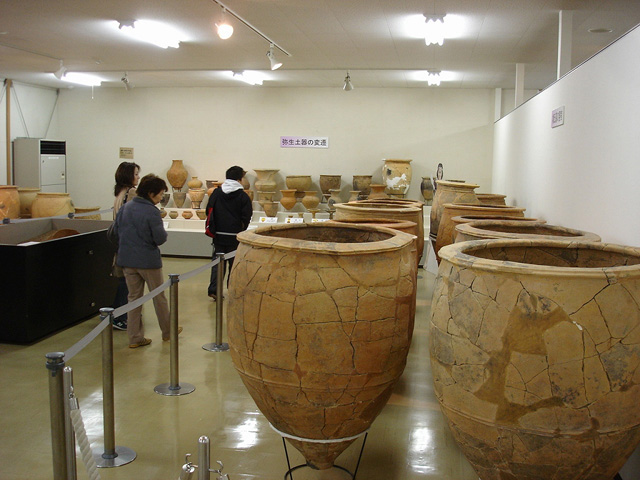
吉野ケ里歴史公園の環壕集落ゾーン南内郭横にある展示室。出土品をぜひとも自分の目で見てみたいという人はここへ。ここでは、稲穂を摘む石包丁、食料貯蔵用の素焼きの土器などの日常使われていた道具から、位の高い人が葬られた墳丘墓から出土した管玉[くだたま]などのアクセサリー類まで展示品は100点以上。実際に出土したものや復元された模型などが展示されている。

Contact Us: Business & Personal Inquiries

By proceeding, you agree to our Terms of Use And confirm you have read our Privacy Policy .

Notes

· We are available for inquiries 24 hours a day. Responses will be provided between 9:00 and 18:00 (including weekends, public holidays, and year-end/New Year holidays).
· Depending on the nature of your inquiry, it may take some time for us to respond.

RURUBU & ALL WAY JAPAN
Privacy Overview

This website uses cookies so that we can provide you with the best user experience possible. Cookie information is stored in your browser and performs functions such as recognising you when you return to our website and helping our team to understand which sections of the website you find most interesting and useful.