 English
  Japanese
  Chinese (China)
  Chinese (Taiwan)
  Korean
 Nanzenji Temple
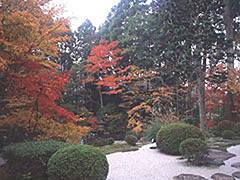
The tower of Nanzen-ji Temple, which includes the Karesansui Garden and the Ike-Izumi Kaigai Garden in the vast grounds.

The tower of Nanzen-ji Temple, which includes the Karesansui Garden and the Ike-Izumi Kaigai Garden in the vast grounds.

Ōmotoyama of the Rinzai sect Nanzenji school. In Shōyo 4 (1291), the palace of Emperor Kameyama was converted into a temple with the Daimei Kokushi at Kaesan. The building at the time of its founding was burned by the soldiers of the Onin Rebellion, and the present-day gaiji was rebuilt after the Momoyama period. The 22m-high Sanmon of the National Designated Important Cultural Property was rebuilt in Kanei 5 (1628) to mourn the general priest who had been killed by Takatora Todo in the asaka Osaka clan. He is famous for his scene in the Kabuki "Toromon Gosangiri", where Ishikawa Goemon is seen in the first name line of "Kakei Kana, Kakei Kana". The national treasure, Hōjō, which consists of Ohata-jō and Fushimi-jō-jō, which were relocated from the Imperial Palace Hall, is a work by the Kano school, including Kano Eitonori and Kano Yuyu, and the National Designated Important Cultural Property. The Hōjō garden of the national designated Meishatsu Kobori's garden is also stunning.
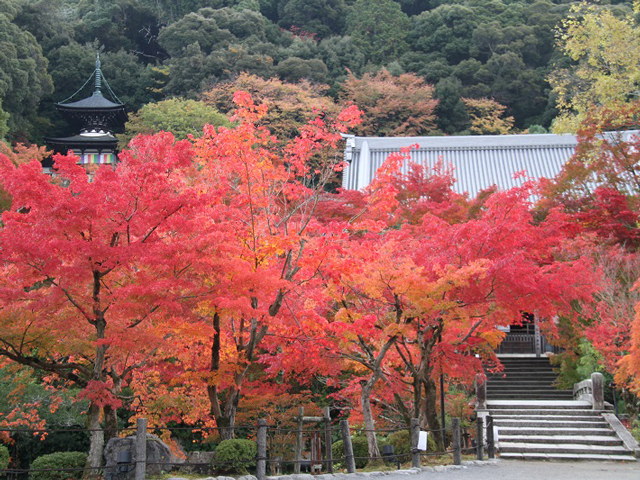
It is known by the name of Eikando, and is also known as a famous spot of autumn leaves. In the early Heian period, it was founded by the priesthood of Shinshōjo, a disciple of Hiroho Daishi, but was later referred to as Eikando as a place for the training of the Nenbutsu, for his achievements in saving the people. The main statue of Amitabha Nyorai (Important Cultural Property) is a figure that looks backward to the left, and is also called "Mireari Amitabha".
The tower of Nanzen-ji. It is said that the Buddhist temple [Suden], which was heavily used by Ieyasu, moved the temple in Kitayama. There are the gorgeous Tōshō-gū (Important Cultural Property) and the Yūshū-no-bashi-no-bashi (Important Cultural Property), as well as the garden of Karesansui (Special Meishatsu) with Tsurushima and Kamejima on the white sand.
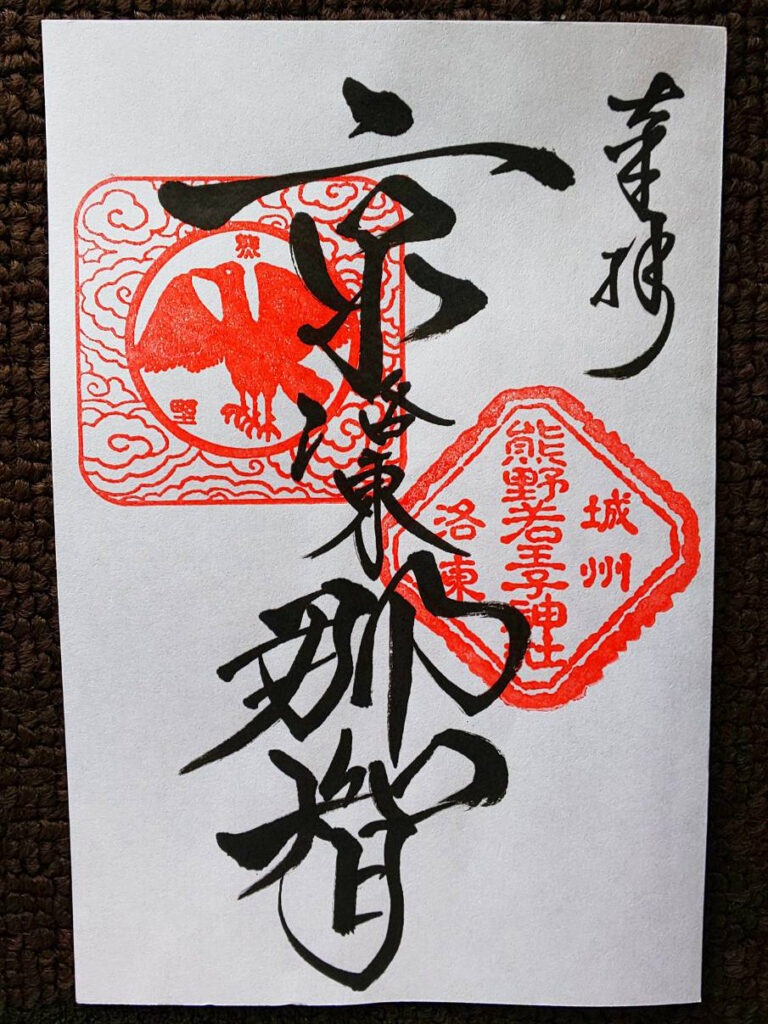
Along with Kumano Shrine and Shin-Kumano Shrine, it is counted in Kyoto Sankumano. There is a 400-year-old Nagi tree standing in the precinct. Due to the fear of falling trees in September 2017, it left 2m50cm to cut down.
He gathers faith as a god of sick heirin, health and longevity, and good-care. The Koma mouse in the precinct is named after the myth that the mouse saved the great power lord. In addition to Komasaru and Komasaru, Tokon Komami will greet you. Camellias, plums, cherry blossoms, shiyoka, and other seasonal wildflowers can be enjoyed on the grounds.
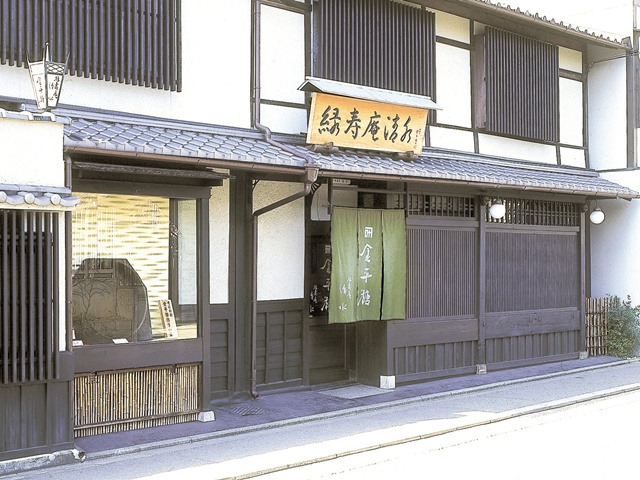
Kōka 4 (1847) The only specialty store in Japan to manufacture and sell only one house in Kyoto, continuing to protect the skills of Ichiko-Sōden. There is no recipe for gold sugar, and the condition of gold sugar, which changes depending on temperature and weather, is determined using the five senses, such as the sound of falling down in the kettle, and one type is handmade over 16 days. It took 20 years to learn the technology of sugar-only gold-sugar, and it made it possible to create more than 60 types of gold-sugar sugar, reversing the common sense of making sweets, which does not crystallize when the ingredients are added to sugar. In addition, "Ginza Greenjuan Shimizu" challenges a new form of gold sugar that blends tradition with innovation.
Speaking of Hachibashi, it is a representative of Kyonnamuka, but this is a long-established company of Hachibashi, which has been around 330 years old. During the Edo period, in memory of Hachibashi Kenkyo (Yatsuhashi Kenkyo), who was said to have been the ancestor of koto, he sold dried sweets similar to koto, named Hachibashi. 1 bag from 432 yen to 594 yen with paste.
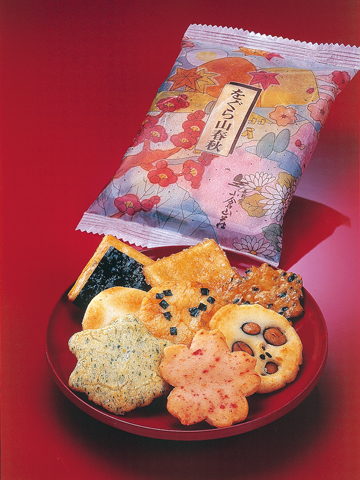
A famous store of Okaki, the birthplace of Nagaoka-Kyo, Kyoto. There are a selection of elegant okaki and hail, which express the world view of "Kokura Hyakunin Isshu". Ogura Yamakunju is a representative product that is made by packing eight types of hail with motifs such as cherry blossoms, maple and moon in one bag. Easy to distribute, easy to use and easy to use. I want to enjoy the Kyoto sipping, which is filled with dozens of different types of sweets, such as hail, egg rice crackers, and bean sweets.
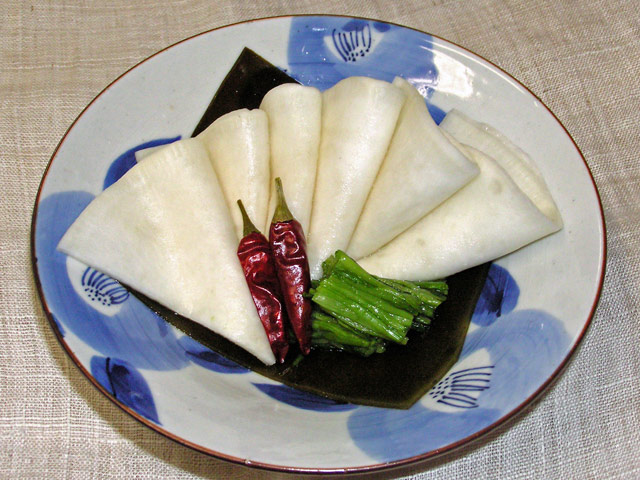
A long-established Kyoto pickle that adds a unique twist to traditional handmade techniques. "Senbun", which represents winter, 1080 yen, can be seen from 1000 to 1728 yen, and can be used to pick fresh crepe rape flowers, which are representative of early spring. A tongue spelling that can be bought all year round, such as 540 yen. In addition, the company manufactures and sells four seasons of Kyoto pickles. Local shipping is possible (by cool flight).