Archives: Travel Post

Shirakawa Dori

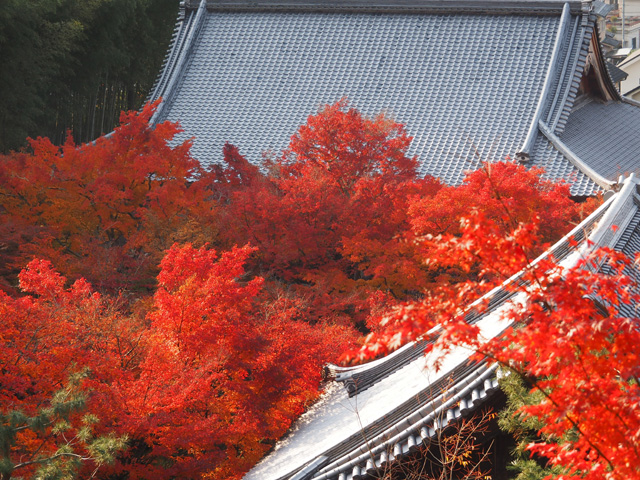
A street that runs north-south through the hem of Higashiyama. From Ginkaku-ji-do, the north is called Kita-Shirakawa, and the street trees of ginkgo biloba are beautiful across Shugakuin-do. The neighborhood, which sees the mountains of Hiei to the east, is lined with stylish restaurants and cafes, boutiques and various shops, and is popular with young people as a fashion street alongside Kitayama-dori. There are many antique shops and ethnic restaurants, and the atmosphere in which Japanese and Western, tradition and innovation are integrated is attractive. Just looking at the store and walking will be fun. There is Kyoto University of Art and Design in Kamikachi along the street, so there are many art students, and they are always full of life.
Shugakuin Palace

A remote palace built in Manji 2 (1659) by Emperor Go Mizuo. Three gardens are arranged on a vast site spread over the foothills of Mount Hiei, which are tied together by pine trees, the Chūgō-gū, and the Kamigami-gū. The place where you enter the Omotesangate is the Shimori Palace, and there is a sukiya-style view of Jugetsukan. In the following Nakabinomiya, the palace is stunning with its brilliantly decorated guests, and I want to remember to see one of the three shelving of the world. Kamigong is a large garden with teahouses centered on Yudong Pond. The view from Neighbor-tei standing on the side of the mountain is wonderful. The best spot you want to visit by all means.

Manshuin (Bamboo Inner Moken)

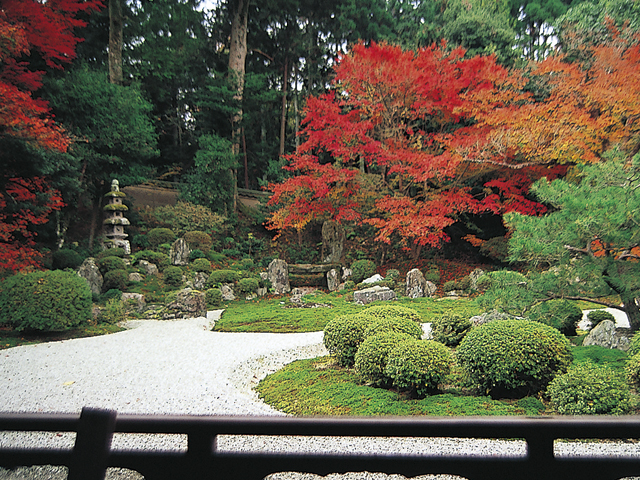
Originally located in the west pagoda of Mt. It was built in this area. There are two main seats in the sukiya-style Daishoin (Important Cultural Property), and it is also referred to as the "Small Katsura Palace" because of the influence of the Katsura Palace in the design of the parapet of the swastika of the partition. The following Oshokuin (Important Cultural Property)'s Fuma-e-e is reportedly Kanō Yuyusaku, and during the twilight there is an incongruous shelf called "Manshuin Shelf", built with ten types of parquet trees. In front of the shōin, the Karesansui Garden (Meishatsu) is particularly beautiful when the azalea in May and the autumn leaves in November. The Hachimado Tea House (Important Cultural Property) is reportedly a taste of Kobori-shuju.

Hyakunen Chion-ji Temple (Hyakunen-san)

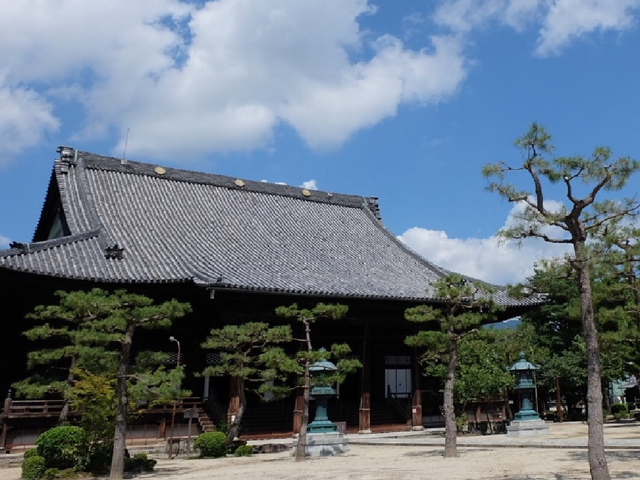
Omotoyama of the Jodo sect, whose predecessor was Kamo Shakado, the site of the Honen Jōjin. It is said that the plague was prevalent during the Great Earthquake, and that the Eighth Seisen Aku-Yuen Jinjin was able to quell the plague by chanting the Nenbutsu of Hyakuen by royal decree, and that Emperor Go-Daigo received the name of Hyakuen. In the precinct, there is a Mikage-do, which enshrines the image of Honen Jojin, on the front side, and the Sakka-do, the main temple, on the east and Amida-do, on the west. On the 15th of every month (August only 25th), there is a sukekai, and at the memorial service at Mikage-do from 13:00, a large memorial ceremony is held. Also on the 15th of every month, a "handmade market" is held where about 350 handmade items are opened.

Eight major shrines

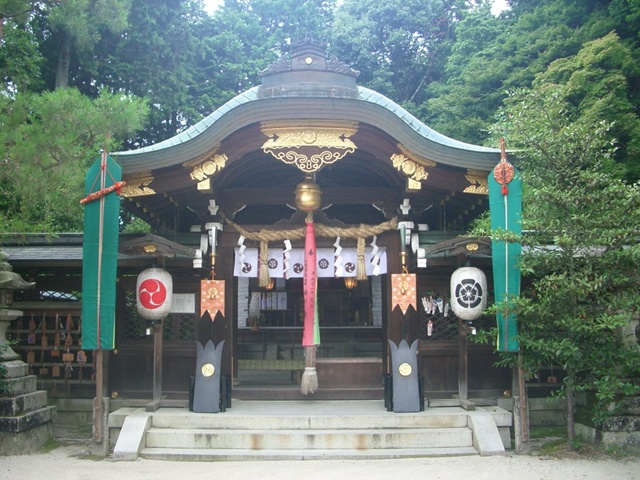
In the second year of Nagahito (1294), the marriage deity of Sōyōshi [Susano no Mikōto] and Princess Inada [Inada Hime no Mikōto] was the god of the marriage. It is reported that Miyamoto Musashi had a duel with Yoshioka Ichimon in the 9th year of Keijō (1604) under the Ichimatsu of the temple located in the precinct.

Akayama Zen-in

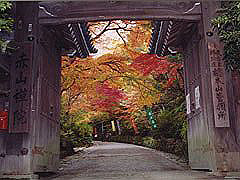
In Ninhe 4 (888), it was founded as the head of Hieizan Enryaku-ji Temple. Since it is located in the northeast of the Imperial Palace and hits the Demon Gate, it has protected the Imperial Palace since ancient times as a prayer office for repelling and evil, and has also attracted people's faith widely. The main shrine is written as "Imperial Castle Omotemon", and a statue of the monkey of Hiyoshi Taisha, which guards Mount Hiei, sits on the roof of the shrine. This is also the temple of Fukurokuju, one of the Seven Lucky Gods of the City, and the popular figure of Fukurokuju is popular.

Sendo of Poetry

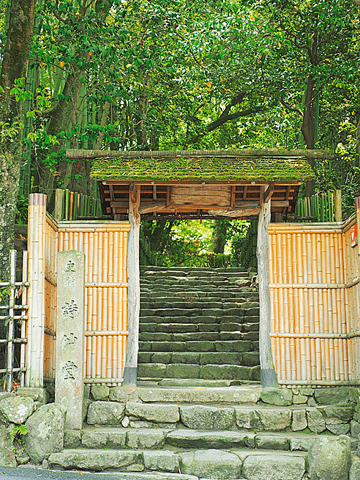
A mountain villa built by Ishikawa Jozan, a former vassal of Tokugawa Ieyasu, in the early Edo period, in Kanei 18 (1641). It is now a temple of the Zen sect. When you enter the building while looking up at the small tower, the shugetsuro, there is a space between the Poesen, from which the temple is named. The "Chinese Thirty-Six Poesen Statue", a portrait of 36 Chinese poetics painted by Kanō Yuyu, is displayed on the four sides of the wall. It is said that Jozan was also a master of the garden, and his elegance is remembered from the stunning Tang-sama garden with white sand. In the garden, Shishi-odo (Sosui) [Sozu], which is said to be the creator of Jozan, is also arranged, and is beautiful in the four seasons with satsuki, hydrangea, and autumn leaves.

Eunkang Temple

Enkoji School, built by Ieyasu Tokugawa to develop his teaching and education, has begun. After the Meiji era, it was a specialty dojo for the Rinzai nun until recent years. There are more than 900 pieces of old documents in the collection. You can see 54,000 pieces of wood type, Japan's oldest (Important Cultural Property), such as "Takebayashi Zupingfeng (Important Cultural Property)", and "Yonesan Suizuzu" by Tomioka Tetsusai. As the garden enters the mountain gate, the Karesansui "Tōryū" spreads out in front of the eyes, and when it passes through the Saranaka gate, there is the "jushino garden", famous for its moss and autumn leaves. It exudes the silence of Rakuhoku along with Suikoto Cave and Suryu Pond.

Ichijoji downhill pine

A pine tree on the path to Sōsendo, which is transmitted to the place where Musashi Miyamoto and the younger brother of Seijuro Yoshioka, who served as the Kendo Shinnan of the Ashikaga Shōgun family, had a duel, and a monument of "Miyamoto-Yoshioka Duetonochi" stands, saying that it was originally planted as a signpost to Mount Hiei.

Kyoto Chidori and Ginkaku-ji

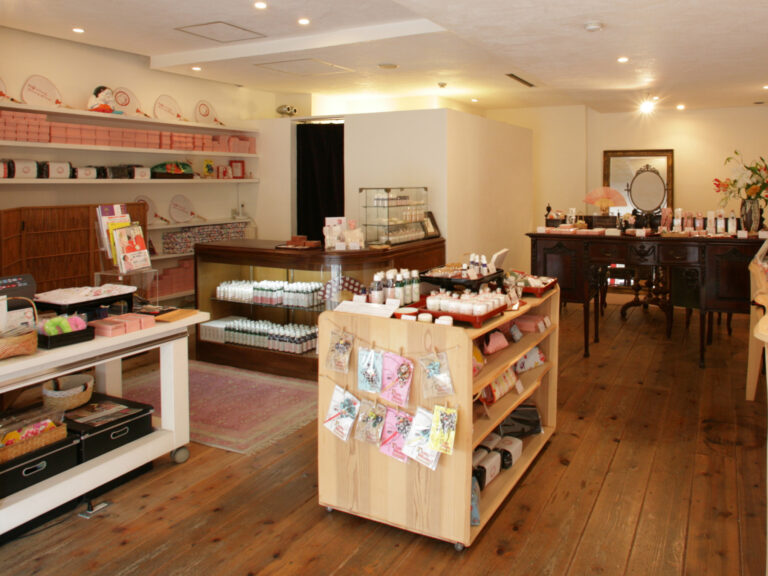
They are full of Japanese accessories and organic cosmetics using only natural materials. All of them, including the popular lip balm, are perfect for souvenirs because the packaging is pretty.

Contact Us: Business & Personal Inquiries

By proceeding, you agree to our Terms of Use And confirm you have read our Privacy Policy .

Notes

· We are available for inquiries 24 hours a day. Responses will be provided between 9:00 and 18:00 (including weekends, public holidays, and year-end/New Year holidays).
· Depending on the nature of your inquiry, it may take some time for us to respond.

RURUBU & ALL WAY JAPAN
Privacy Overview

This website uses cookies so that we can provide you with the best user experience possible. Cookie information is stored in your browser and performs functions such as recognising you when you return to our website and helping our team to understand which sections of the website you find most interesting and useful.