Archives: Travel Post

Oharai Town

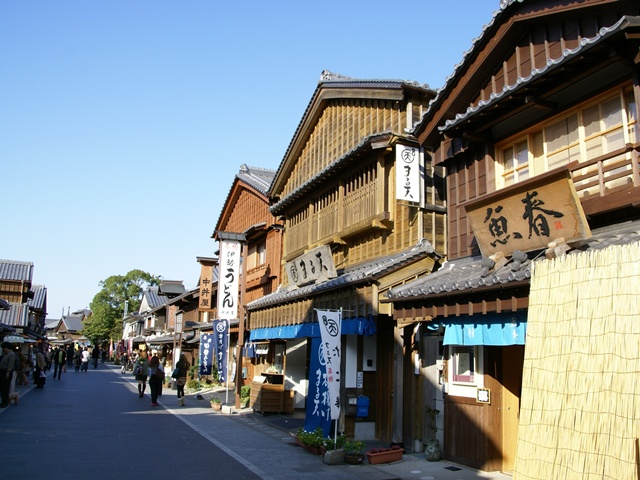
The town of Oharai has received a large number of visitors along the cobblestone streets with a unique style of architecture, a gabled and wife-in-house style. On the street about 800m long, there is a souvenir shop and a restaurant, including the Akafuku main store, and in one corner there is also a Yokocho, a recreation of Iseji from the Edo period to the Meiji period. Let's enjoy walking around after the visit.
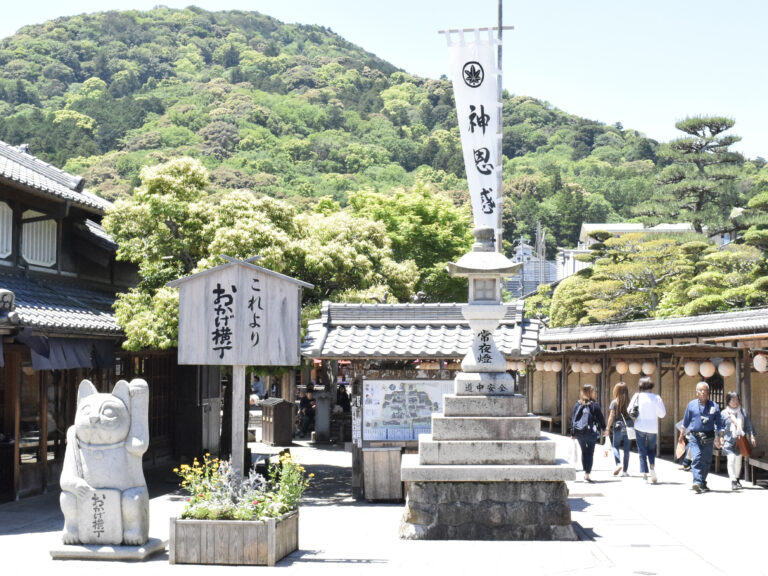
Thanks, Yokocho.

It was relocated and recreated the architecture of Iseji during the Edo-Meiji period. It is lined with about 50 shops. "Momen and Indigo" is a store that sells artifacts and accessories of Matsusaka Kongen. There are only unique shops, such as the "Light Shop" with various candles, the "Yoshitosho Fukutei" with 1,000 kinds of beckoning cats, and the "Shishu Hirakiya", which sells dried sharks and shark sauce. In "Sushiku", you can taste beef bowls in "Pork", where you are stuck in the dishes of Ise Meo [Ise Bito], and the anecdote of having abandoned the pork remains. There is also a memorial hall showing works by Sachiko Yamaguchi and Tomikiro Tokuriki, who are closely related to Ise. On Saturdays, Sundays and holidays, you can enjoy the performance of Japanese drums by Shinon Taiko at the Taiko Park in Yokocho.

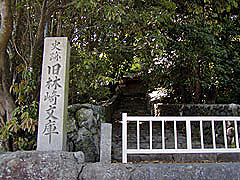
Former Hayashizaki Bunko

The school building of the Inner Temple, with Okada Bunko as its predecessor, was established during the North-South Dynasty. He was re-founded in the third year of Chasei (1686) and moved to his current location in the third year of Genroku (1690). There are clerics, auditoriums, and private schools, and scholars who have visited the shrine have given lectures and donated books. It was designated as a historic site in 1954. The collections have now been moved to the Jingu Bunko. Open to the public only for certain periods in April and September.

Masamiya Uchimiya

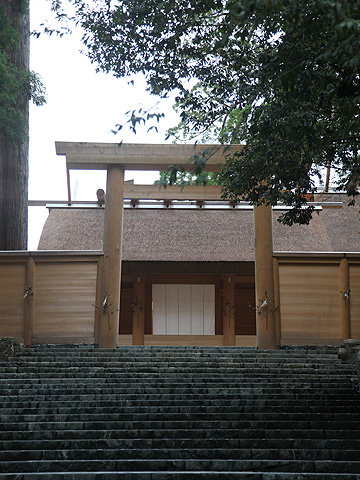
The approach to the road. It is located above the stone steps of more than 30 steps and enshrines the Atenshō Omikami, the priest of the Inner Palace. As with the Outer Palace, the general worship is in front of the silk-no-horo at the outer-tamakigaki [Tonomagaki] Minami-gomen. On the other side of the four-fold fence, you can only worship the thatched roof of Shinmeizo's main shrine, the glowing Senki and the bonetsuki. A shrine was built on the west site adjacent to the 62nd year of 2013 (2013).

Inner Palace Kagura

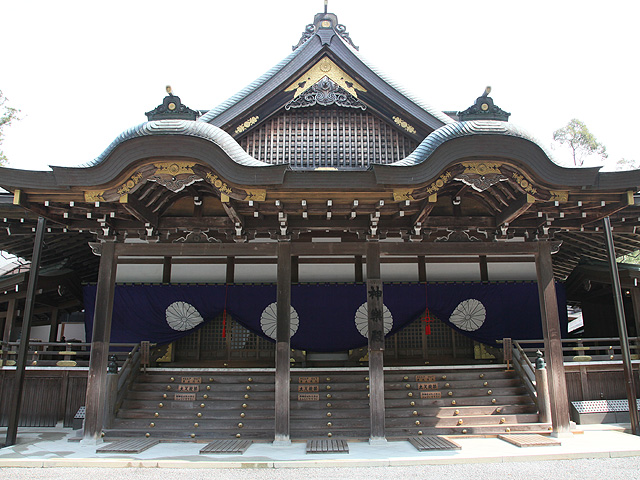
The copper-thatched, Irimoya-style buildings stand facing the approach to the approach; the kagura-den, the gokuden [mikenden], and the shinding hall are lined up; the prayers of the gokagura and gokura are performed, and the awarding of the gokigaku is performed.

Sarutahiko Shrine

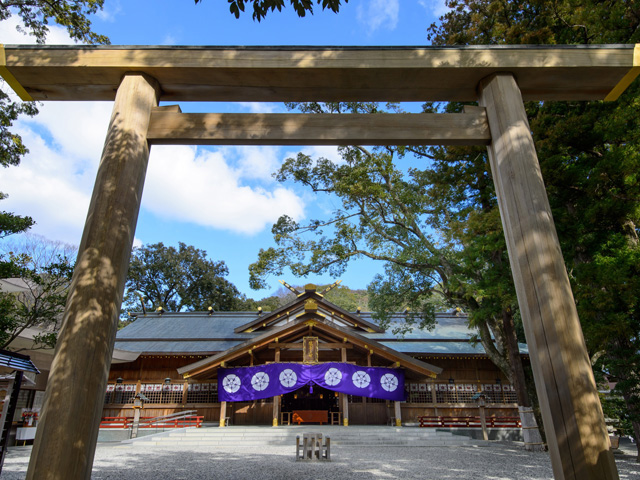
A shrine that enshrines Sarutahiko Okami, who served as a directions guide, during the time of Tensun's descent. It is widely revered as the "Michihiraki no Okami", which leads to the good side of Wan Time. There are sacred virtues such as azimuth and traffic safety. The shrine was renovated in 2014. Every year on May 5, the Mita Festival (Omita) is held to pray for a good harvest.

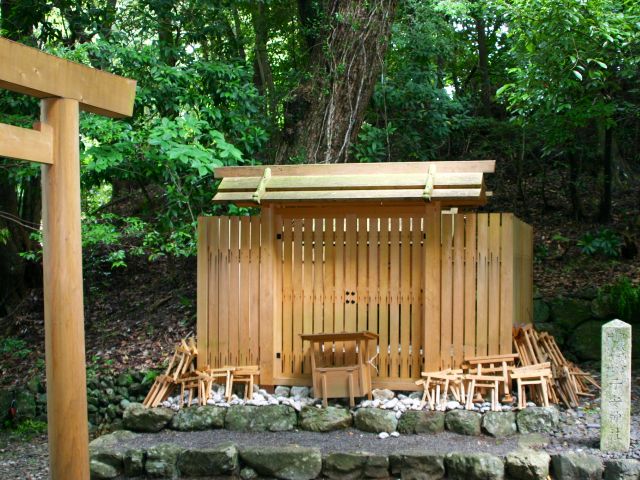
Koyasu Shrine

It is one of the jurisdictions of the Inner Temple, and enshrines Kihana Kaiyahime [Konohana Sakuya Hime no Mikoto]. It is said that it was originally the god of the land of Ujikan, and is still widely believed by locals as the god of asunder and child-giving.

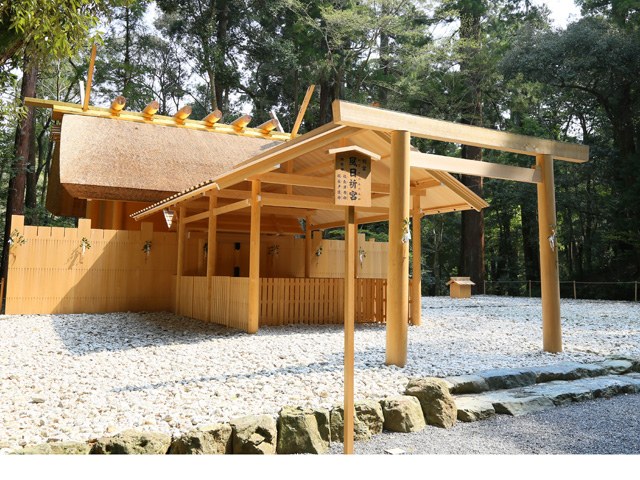
Wind Day Prayer Palace

A branch of the Isetsu River, a branch of the Isetsu River, is located across the Fuchichi Prayer Palace Bridge over the Shimaji River. It enshrines the god of the wind, Shitsuchō Tsuhikōmei [Shinatsuhiko Mikoto] and Shitsuchō Tobekōō [Shina Tobekōkō]. It is located in a forest of thick old trees, and the view from the bridge is beautiful, especially during the autumn leaves.

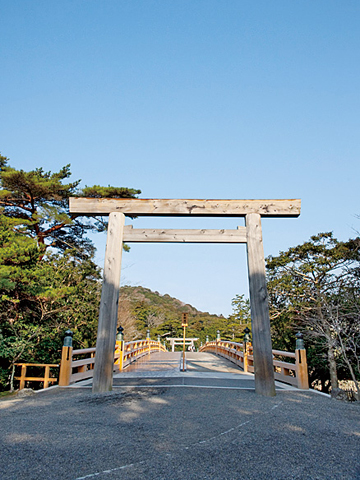
Uji Bridge

A cypress-built bridge over the Fifty-Five Suzukawa. Cross this bridge into the sanctuary of the Inner Palace. The torii standing on the west side of the bridge have the wing-holding pillars [Munamochibashira] of the Sōgū-gū-gū, which were dismantled at the time of the Sōgū-gū, while the torii of the east-bai have the wing-holding pillars of the inner-gū-gōden reused. The two removed torii are again transferred to Oiwake Seki and Shichiri in Kuwana. On the day of the winter solstice, the sunrise is just above the center line of Ujibashi.

Ise Shrine Inner Palace

The Inner Palace is officially called the Imperial Shrine (Kōtai Jingu), and it enshrines the Amaterasu Omikami (Amaterasu Omikami), the Imperial God. About 2,000 years ago, at the time of Emperor Tarin, the princess, Waimei [Yamato Hime no Mikoto], traveled around the country, and it is said that the land of the Gozenza of Amaterasu Omikami was set here.. The imperial palace area is as large as 55 million square meters. Place Summary One hour.

Contact Us: Business & Personal Inquiries

By proceeding, you agree to our Terms of Use And confirm you have read our Privacy Policy .

Notes

· We are available for inquiries 24 hours a day. Responses will be provided between 9:00 and 18:00 (including weekends, public holidays, and year-end/New Year holidays).
· Depending on the nature of your inquiry, it may take some time for us to respond.