Archives: Travel Post

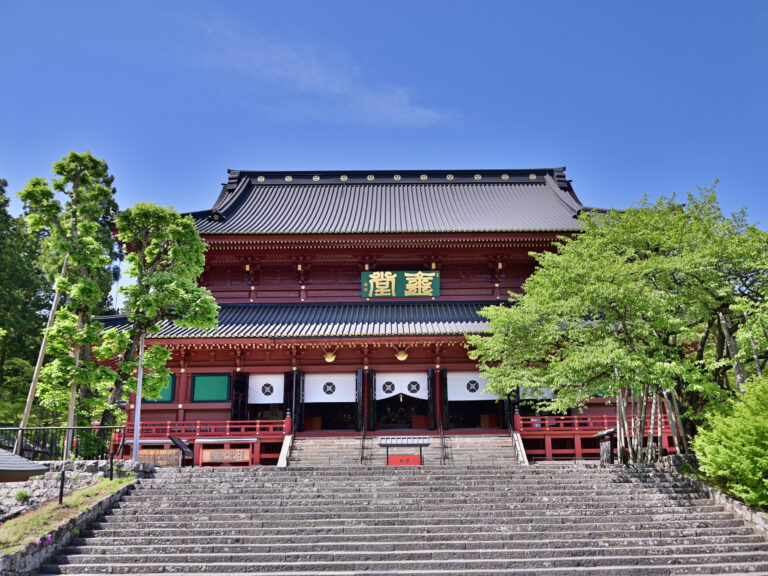
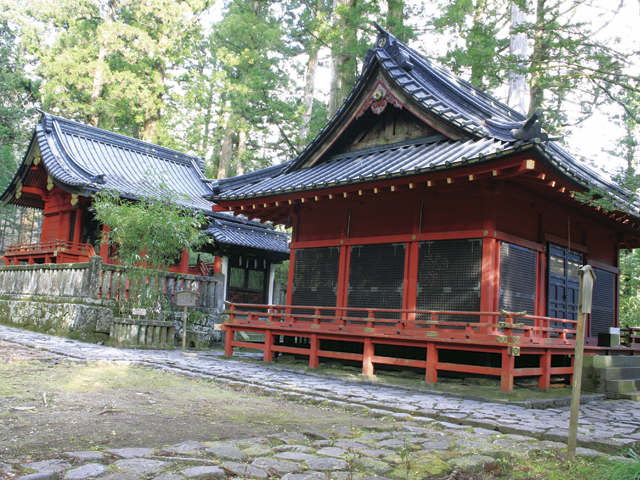
Nikko Tosho Palace Prayer Hall

It stands on the other side of the Kagura-den in the precincts of the Tosho-gong, along the corridor. It was once called the Hōma-dō, and before the Shōdō Order of Shōdō, the Hōnji-gō of the Nikkō-dō, used to perform the Hōma Shūjō for the Tōtō Taihei prayer, but is now the place to perform prayers and the Shōzen wedding ceremony.
Sunkong Dongshang Palace Tang Gate Tong Fence

A fretwork fence (national treasure) extending from the left and right, from the main gate of the main office, the Tang Gate, which stands in front of the Hall of Worship, in the Dongsheng Palace. You can see a graceful, graceful pattern based on black, with gold decorative fittings on black lacquer, and a fretwork sculpture of wild birds and water birds symbolizing peace.

Nikko Dongshang Palace Tang Gate

It is the main gate of the main temple and the main hall of the main hall of the Tōshō-gū, and the gate post is decorated with a dragon and a dragon built of parquet of Karaki. The front and rear of the roof are "Tsukuga" (also the theory of the Chinese lion), the right and left are placed with a dragon of fin [fin] cut, and the transom is stunning with sculptures related to the Chinese story.

Nikko Tosho Palace Kagura

Located on the right hand side of Yangming Gate, in the Dongsheng Palace precinct. The interior is divided into two rooms with a 7m square entrance house, with the front being the stage and the back being the costume. The front of the north-facing stage is Jikarato [Sankarado], and the remaining three sides are Shitomido [Shitomido], which is built so that the stage can be seen from the surroundings. Peony on the parapet, chrysanthemum arabesque on the long press [Nageshi], thin carving of a flower basket on the lower side of the western side of the line [Renjimado], patina of the continuous window, black columns, red-painted round edges, etc. The contrast of colors is beautiful.

Nikko Tosho Palace front gate

On the front of the Tosho Palace Five-storied Pagoda Square, standing on a megalithic stone wall, the octopine gate of Sōzō Ying's three-way house. At the time of the major reshuffled of Kanei in Kanei 13 (1636), it imitates the three-wing construction [Mitsumune-zukuri] of the turning gate of Nara Todaiji Temple. The back is decorated with a golden guardian dog, the upper part of the pillar, including a baku and an elephant, it has 66 carvings. In addition, on both sides of the gate, a pair of King Nioh statues of "A" [A], "Unn" [Yup] are enshrined. Also known as Sōgun, Niōgun.

Nikko Tōshōgū Mishuisha

A building with a neat atmosphere at the corner of the sando, past the god stable inside the Dongsheng Palace. In Genwa 4 (1618), it was a dedication by the Saga feudal lord, Nabeshima Katsumo, featuring a structure that supports a luxurious roof of Karakaze copper panned with 12 granite prisms. At that time, the principle of a revolutionary siphon was applied, and the mechanism is that water always spews out of a water plate made of granite. The carvings of Hiryu and Tatsunami and carp, all of which are sculpted after water.

Nikko Tōshōmiya Okusha

The Torii can be seen as they walk through the Higashinomiya precinct, through the Sakashita gate, and ascend the steep stone steps of 207 steps in a majestic atmosphere with old cedar trees. From here is Okusha, and behind the black-lacquered worship hall, a 5-meter-high treasure tower made of gold, silver and copper alloyed by Tokugawa Ieyasu sleeps, is enshrined.

Nikko Tosho-miya Ichino Torii

Standing at the entrance to the Tosho-gong, the 9m high and the largest stone Myojin Torii in Japan at the time. It is one of the leading Oishi Torii in Japan, along with Yasaka Shrine in Kyoto and Tsuruoka Hachiman Shrine in Kamakura. In Genwa 4 (1618), it was dedicated by Kuroda Nagamasa, and on the front is the royal price of "Tōterō Daitō" by Emperor Go-Mizuo Shinbumi. The Torii has an earthquake-resistant structure, with two pillars connected, and Kasaishi having three stones. The 10 stone steps in front of Torii have a width difference of about 1m between the lower and upper steps and a height of about 10cm, so they can be seen deep in perspective.

Nikkōsan Wōnji Temple

The temple towers under the jurisdiction of the Rennō-ji Temple are scattered throughout Yamauchi, the land of the Shinto-Buddhist religion. During the Heian period, he received the name of Manganji (Manganji) from the Imperial Court as the general name of Ichiyama, and later, it became the Tendai sect due to the coming name of Ennin (Ennin). During the Kamakura period, the Imperial Household was started, and it continued to flourish as a center of the Nikko Sansho-no-no-no-no-no-no-no-no-no-no-Kōno-no-Kōno-no-Kōjō faith. Hieizan Enryaku-ji [Hieizan Enryaku-ji], along with Toeizan Kanei-ji [Kaneiji], is counted as one of the three main temples of the Tendai sect. At one point, the temple was given a vengeance to Mangan-ji by the Shinto-Buddhist separation decree of the Meiji period, but the temple was revived in Meiji 16 (1883) and became the Runō-ji of today.

Takio Shrine

The Annex of the Futarayama Shrine, which enshrines the goddess of Mount Onamine, Tashishin Hime. About 1km north-west from the headquarters, you will find it as you follow the cedar-lined tree exploration road. After the visit, you should also check out the white thread waterfall, the bird of luck, and the Takio Sanbonsugi, which is 250-300 years old.

Contact Us: Business & Personal Inquiries

By proceeding, you agree to our Terms of Use And confirm you have read our Privacy Policy .

Notes

· We are available for inquiries 24 hours a day. Responses will be provided between 9:00 and 18:00 (including weekends, public holidays, and year-end/New Year holidays).
· Depending on the nature of your inquiry, it may take some time for us to respond.