Archives: Travel Post

Hoko Kaki Festival (Kora Taisha, Kawato Festival)
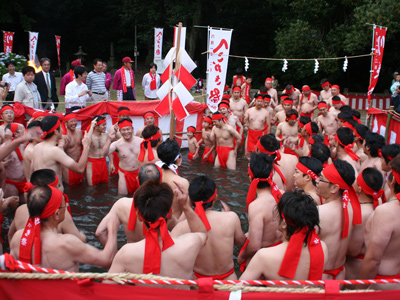
It is a famous festival for the great prayer of exorcism and evil exorcism. It is said that there will be more benefit if you wear red loincloths, shoulders, and other red objects, go through the khat, and receive a welcome. The Kayarukuri Shrine is held on both days (7 o'clock, 11 o'clock, 14 o'clock), and only one day prior to the shrine early in the morning, a "hekokaki" naked misogi is performed at the foot of the mountain, at the Ajimizu Mii Shrine in the morning. During the June period, the line around the shrine is changed to Akashide, and Oharai is also awarded a red towel as a special prayer application for the Kawato Festival. People who want to participate naked are required to make a reservation. * The contents may be canceled depending on the situation. Image courtesy:(C) Kora Taisha
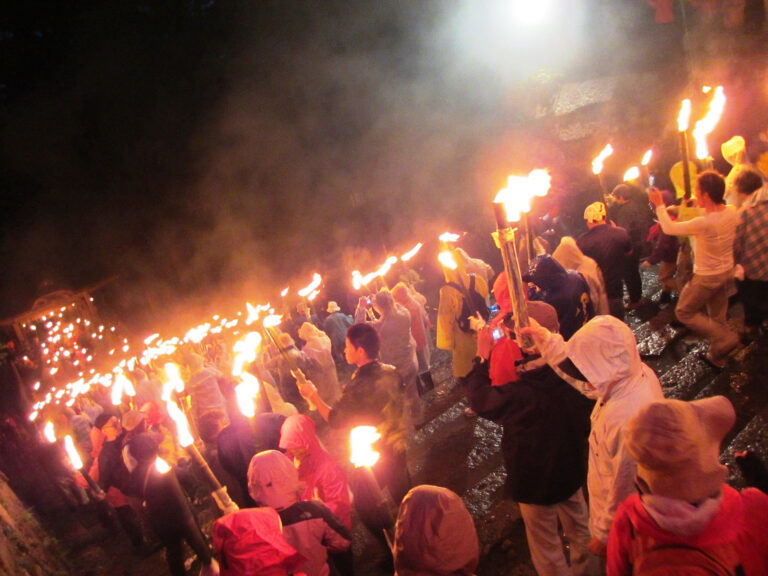
The 78th Oyama Summer Mountain Opening Festival

On the eve, a ritual is held at Okamiyama Shrine in conjunction with the Zail Festival. After that, the sacred fire is transferred to the torches, and the torches are carried out over about 1.4km. The next day, a summit festival will be held at the top of Mount Misan at 10 o'clock to pray for the safety of climbers in the year. Image courtesy:(C) Oyama Tourism Bureau

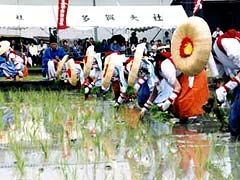
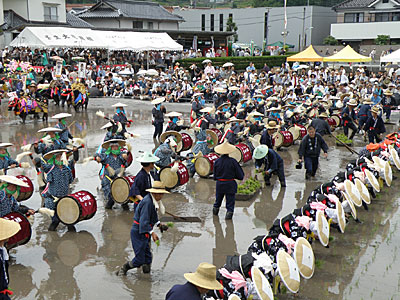
Hanada planting in Mibu

The country's important intangible folk cultural property, "Mibu no Hanada-ae", was listed as a UNESCO Intangible Cultural Heritage Site in November 2011. The Garden Emaki, which is made by a total of 100 people, including more than 10 decorated cows and 40 Saotome, is known as one of the nation's leading rice planting festivals. In addition, children's dwill be performed and the home flower dance will be performed. Image courtesy of Kitahiroshima Town Tourism Association

23rd SUN-IN Future Walk

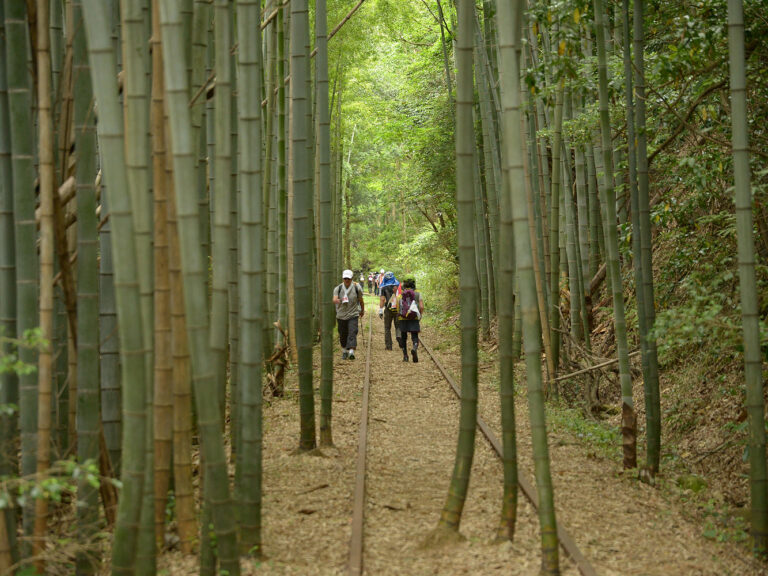
Future Walk is a tournament where participants and people along the course deepen friendship and interaction while experiencing the rich nature and history of the area through walking. You can fully feel the charm of central Tottori Prefecture. Image courtesy: Future Walk Executive Committee

Yumura Onsen Festival

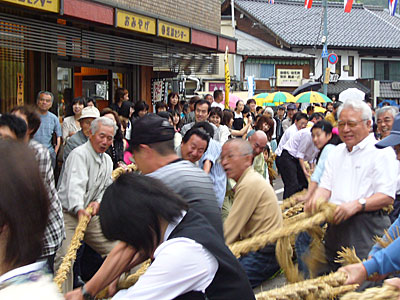
A festival to pray for the rich harvest and healthy growth of children along with the remembrance of the founder of Yumura Onsen, Jikaku Daishō. Started about 700 years ago, there is a style of tug-of-war of large irises that compete for the best luck in a Daitsuna braided with fragrant irises, and a style of shoi-buyu that puts the irises in a yūboshi. Also known as "Hanayu Festival". The giant irises tug-of-war, which measures about 50cm in diameter, 100m long and weighs 4 tons, is a masterpiece.

Kyoto wood noto

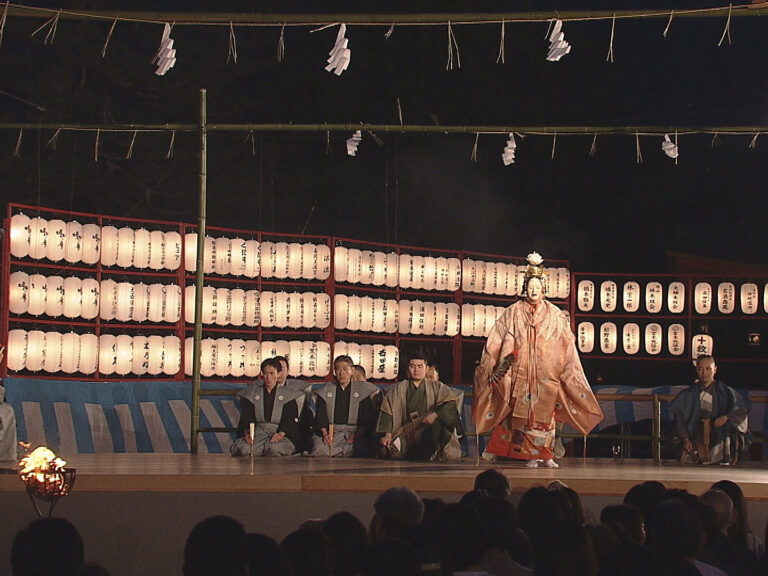
It began in 1950 with the co-sponsorship of Kyoto City and Kyoto Noh Rakkai, and is now a wind poem of early summer. In the evening, a bonfire is lit in the darkness, and a special Noh stage comes up in the black night as the shrine of Zhu-ji at the Heian Shrine is projected. It is a luxurious thing where you can enjoy Noh and Kyogen by the Kanze, Kongo, and Okura schools, and every year more than 3,000 spectators come and get drunk in the mysterious world of Noh. Image provided:(C) Kyoto Noh Association

Nioh Park Festival

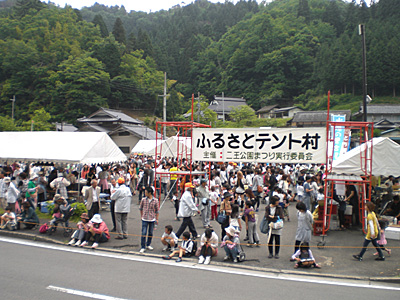
A major event in the Okukamabayashi area of Ayabe City. Mock shops of the vaunted specialty, brought from their respective settlements, are out and crowded with many visitors. The Niangomen climbing race is also held, and adults and children can enjoy all day long. On the day, because of traffic restrictions, race participants can not participate in the race unless they enter the venue by 8 o'clock.

Mita-planting festival

An event to plant rice to pray for a good harvest and offer it to God. About 60 Saotome in scarlet and light blue hakama figures perform rice planting in Kanda, which is about one of them, to go along with the idyllic rice peter. The main shrine festival is 13 o'clock, and the rice peter is 14 o'clock.

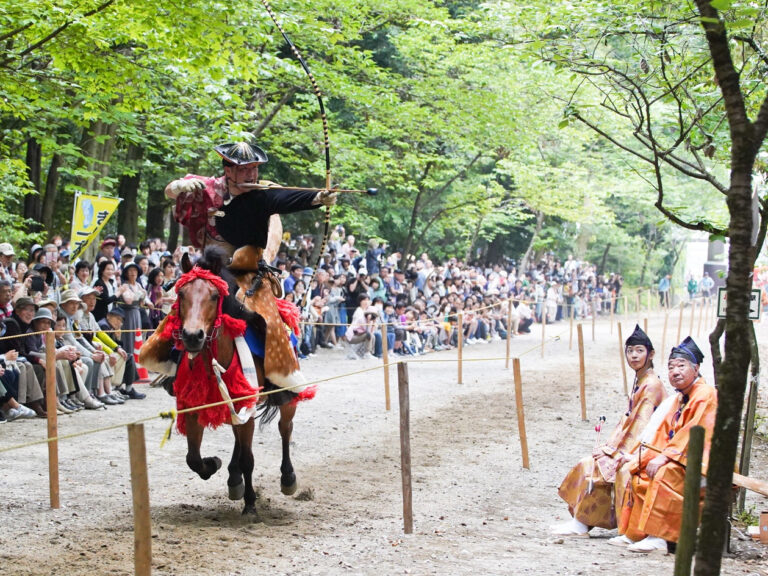
Omi Shrine "Ryūgama"

At the time of the reign of the god of the Omi Shrine, in remembrance of the story of a hunter who hunted in Gamono on an occasion, the Takeda-ryū Kamakura school's ryūbama shrine is performed. After the ritual in the main shrine, "Kōya Consecration Guru", the line goes up to Omotesando, and an archer on several horses shoots at full speed from a horse sprinting at full speed, shooting arrows at three points. Held from 12:30 to 14. Light rain.

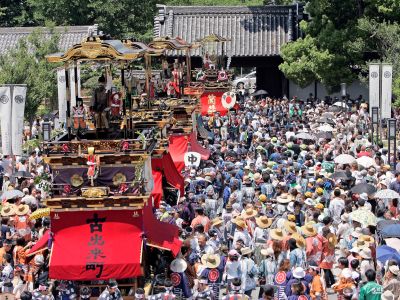
Tokugawa Garden Mountain Car

Five floats of Shikagojin, Kawasui, Wang Xizhi, Yutori, and Shinno-Ku, which are transmitted to the town of Takemachi and Tsutsui, converge in the Tokugawa Garden to show off their karakuri.

Contact Us: Business & Personal Inquiries

By proceeding, you agree to our Terms of Use And confirm you have read our Privacy Policy .

Notes

· We are available for inquiries 24 hours a day. Responses will be provided between 9:00 and 18:00 (including weekends, public holidays, and year-end/New Year holidays).
· Depending on the nature of your inquiry, it may take some time for us to respond.

RURUBU & ALL WAY JAPAN
Privacy Overview

This website uses cookies so that we can provide you with the best user experience possible. Cookie information is stored in your browser and performs functions such as recognising you when you return to our website and helping our team to understand which sections of the website you find most interesting and useful.