English
  Japanese
  Chinese (China)
  Chinese (Taiwan)
  Korean
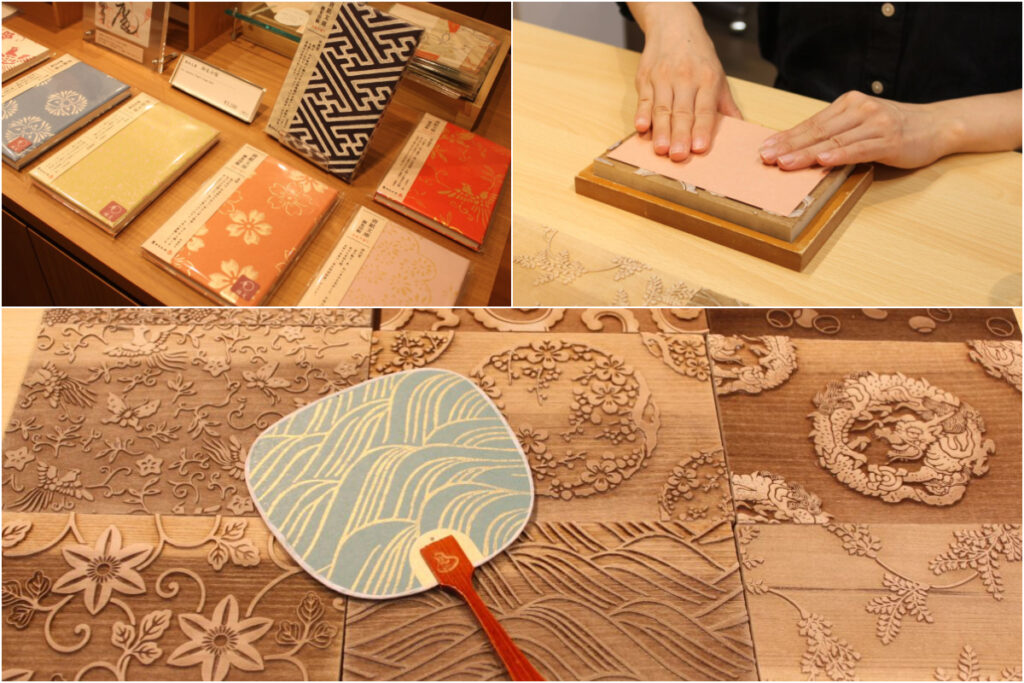
"Kyokarakami" is made by putting the paint on the "pangki", which is a sculpture of the traditional Japanese pattern, and carefully dragged it up one by one with the palm of your hand. "Karamaru" is a workshop & shop where you can feel free to experience the skills of craftsmen that have been handed down carefully since ancient times. It is very close to the Buddhist temple in Karasumaru, Kyoto. Original items with plenty of Japanese tastes are also pleased with Kyoto souvenirs and petit gifts.
Craftsmanship handed down for more than 100 years
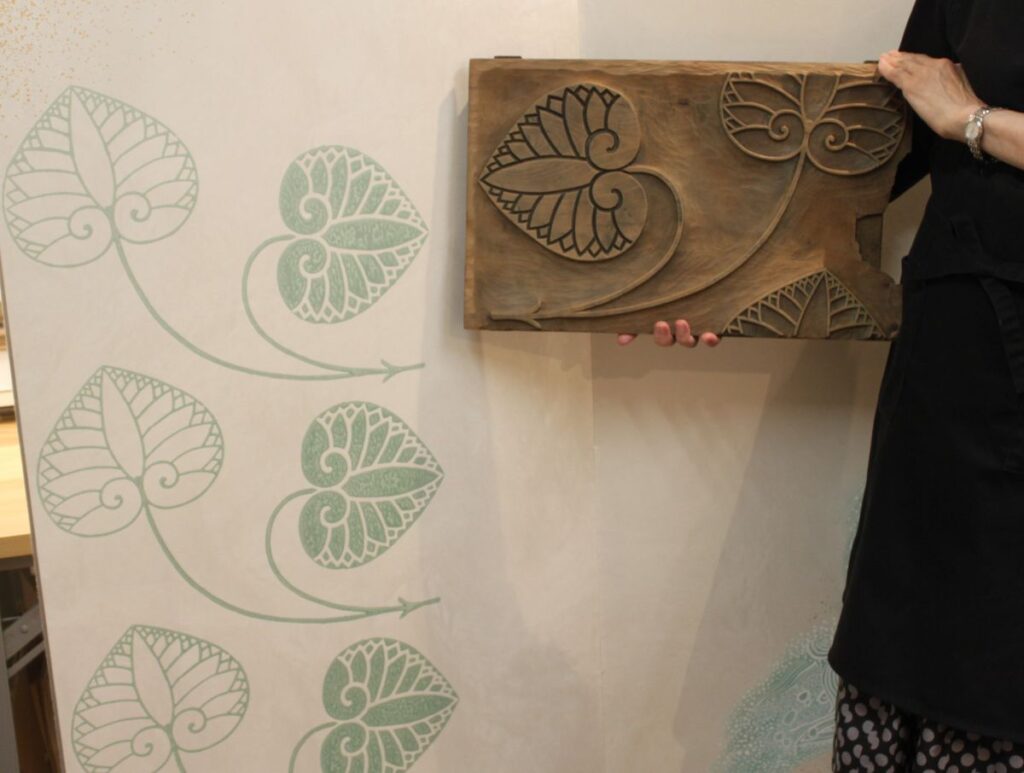
“Kyo-kami”, which is characterized by soft colors, has been mainly used as bran paper and wallpaper. There are about 300 variations of the solid “woodblock”! It is a traditional Japanese craft that has been handed down carefully for more than 100 years.
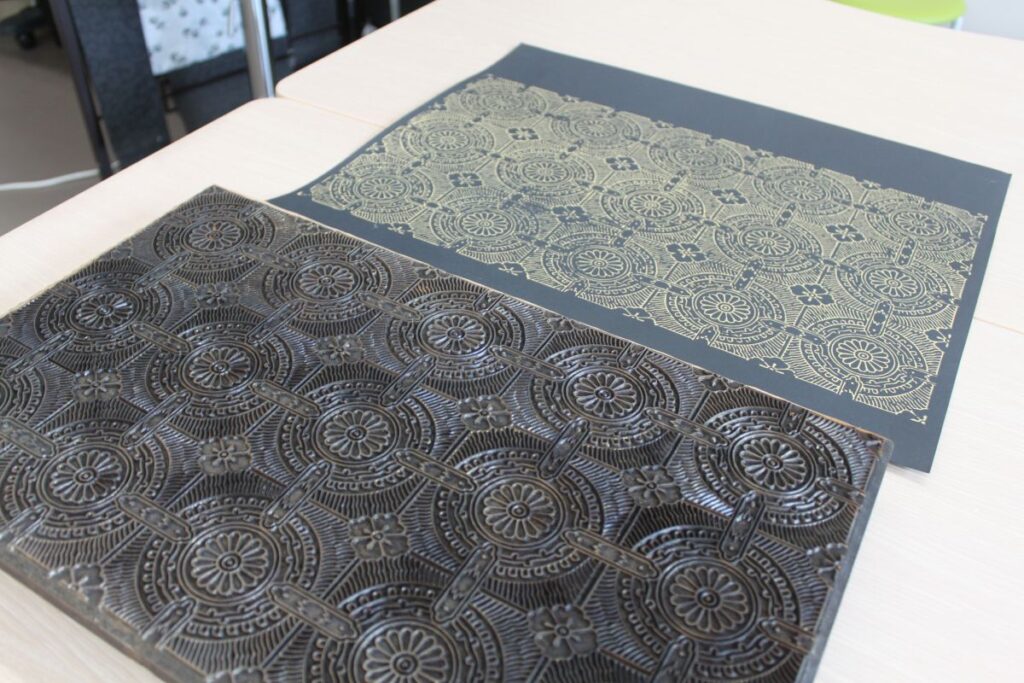
The second floor of the "Karamaru" is the Tang Paper Workshop where artisans work. Among the varied experience courses, there is also a menu where you can tour the procedure up close.
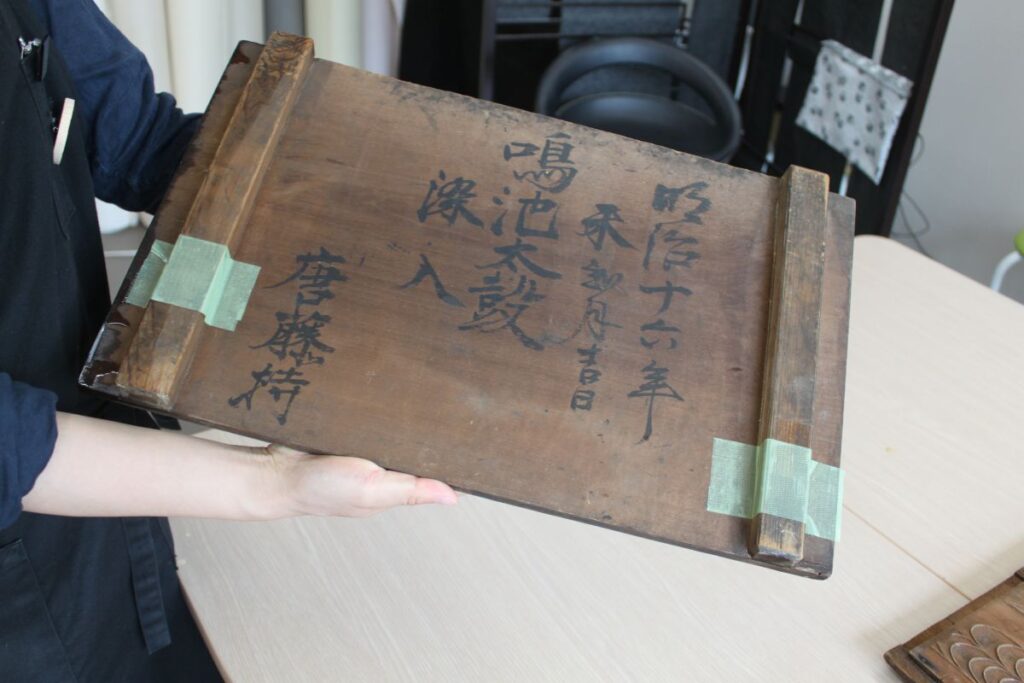
I showed you the back of a woodblock with a delicate Tang paper pattern carved. It shows the age and the name of the pattern and the name of the owner, and you feel the history.
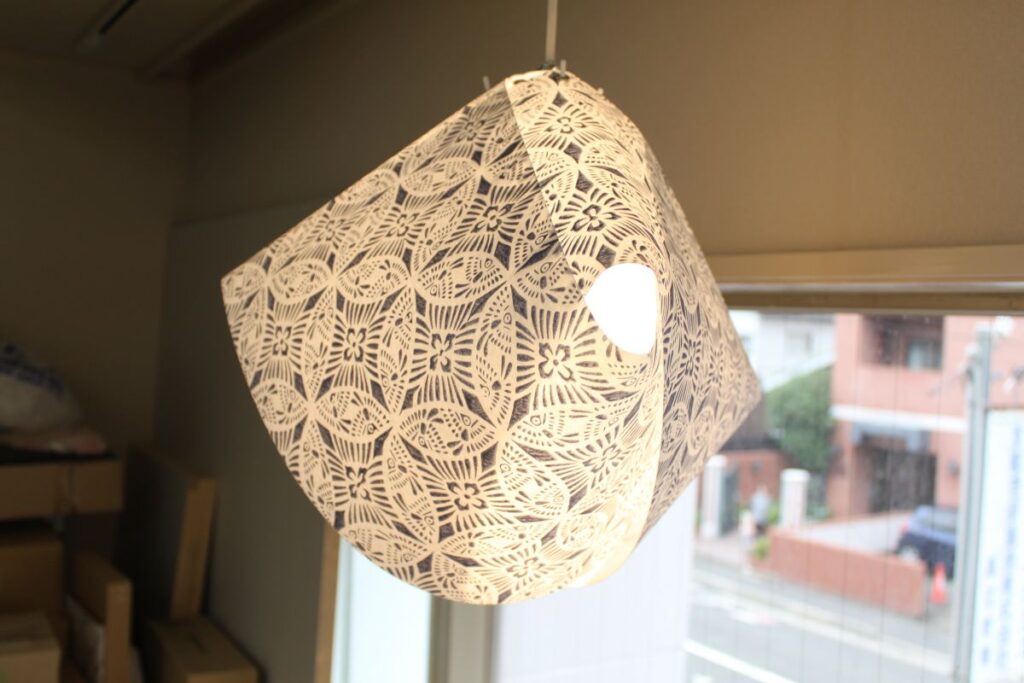
Lamps using Kyoto Kami are also full of taste! You can also enjoy shopping for cute paper items at the first floor shop.
Experience the world of "Kyoto Kami" with a casual experience course
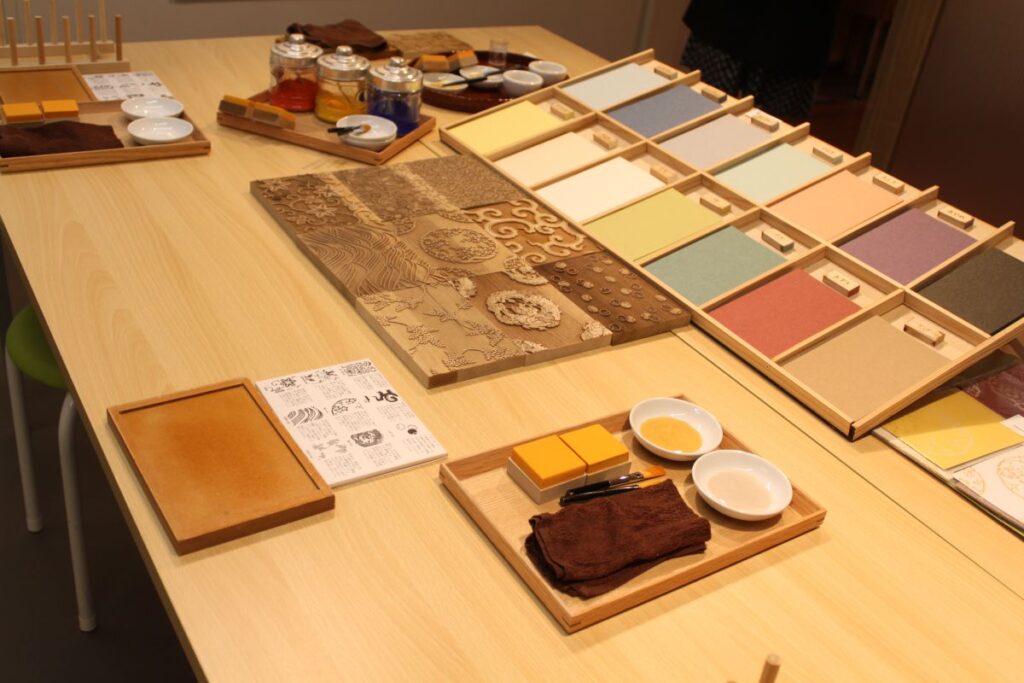
"Because it's so precious, why don't you go and experience postcard making," said Mr. Tanigawa, the store manager. While pounding, he goes to the experience workshop at the back of the store on the first floor. It's a challenge to "postcard-dragging experience," in which a pattern of Tang paper is used on a postcard.
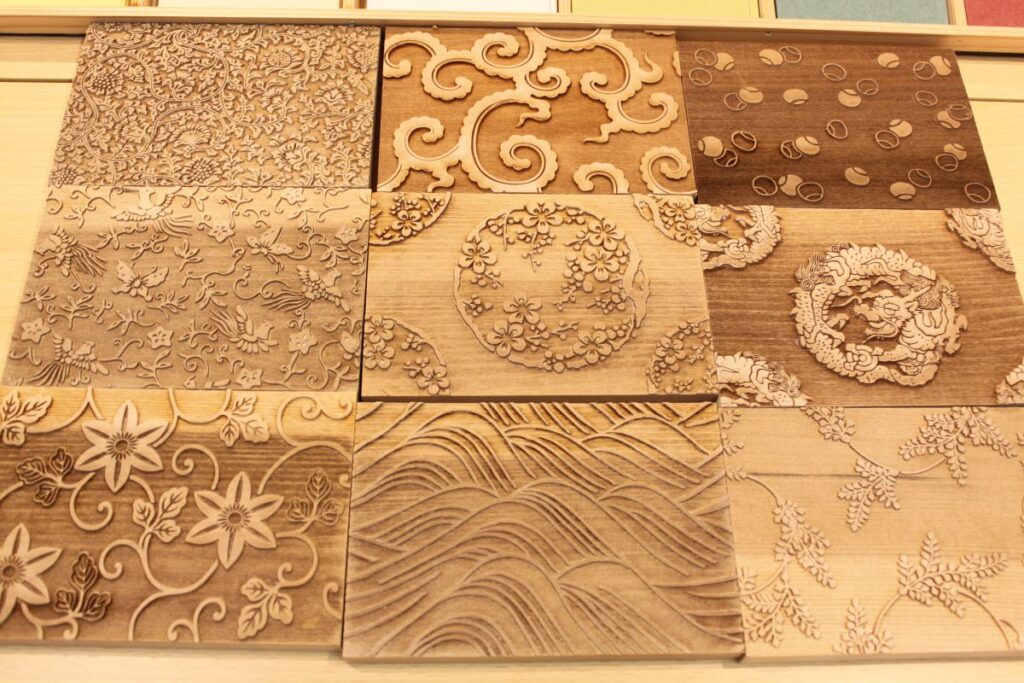
There are 9 types of 16 cm × 11cm miniature woodblocks. Flowers (arabesque), birds (phoenix), butterflies, large clouds and dragons, and large waves painted by Ogata Korin, a painter representing the mid-Edo period. When I'm looking at my hand, I feel like I'm nostalgic.
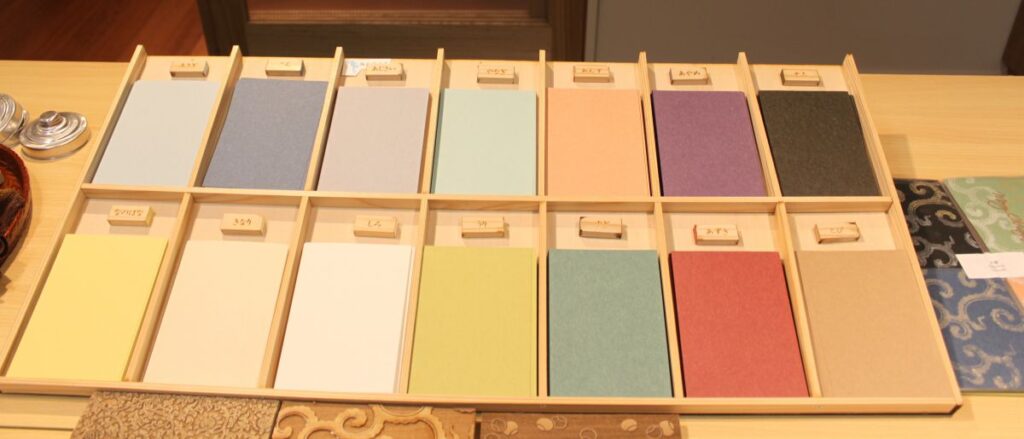
Once you 've chosen a woodblock, the next is a postcard. From basic things such as "Kinari" and "Anzu", there are always more than 10 kinds of colors, such as seasonal "Hydrangea". It is also a fun time to think about the combination of design and color! The casual experience course is about 1 hour process, you can make 6-7 postcards. You can take the finished work back on that day.
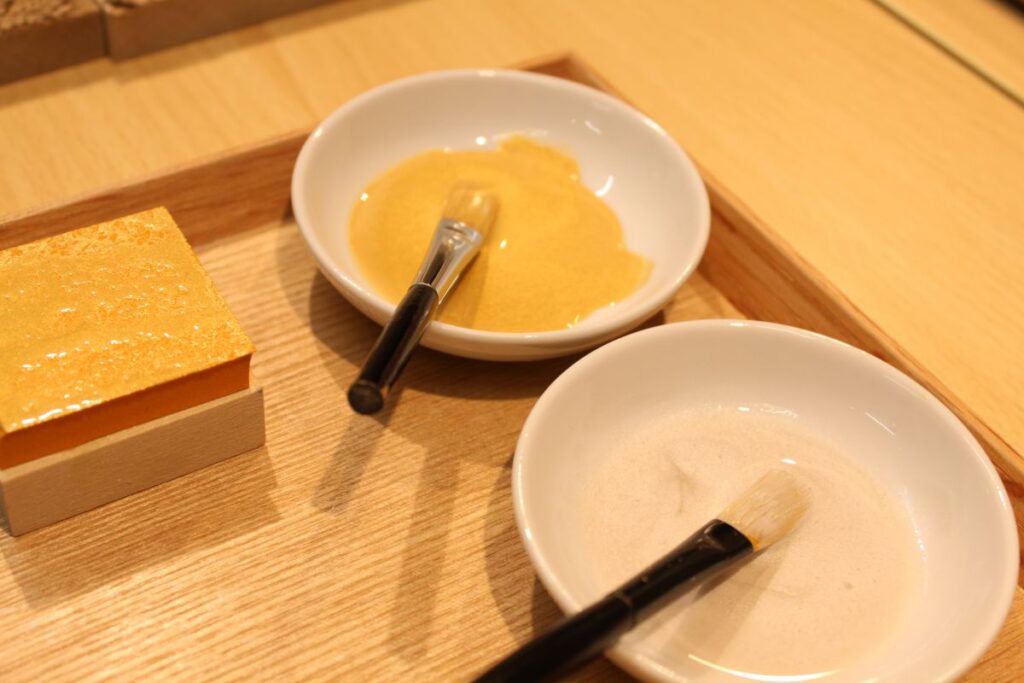
Two types of paint used are the basic colors of gold (top) and kira (bottom). Kira is "mica (unmo)", which is made by shattering granite crystals. As the name suggests, it is shimmering.
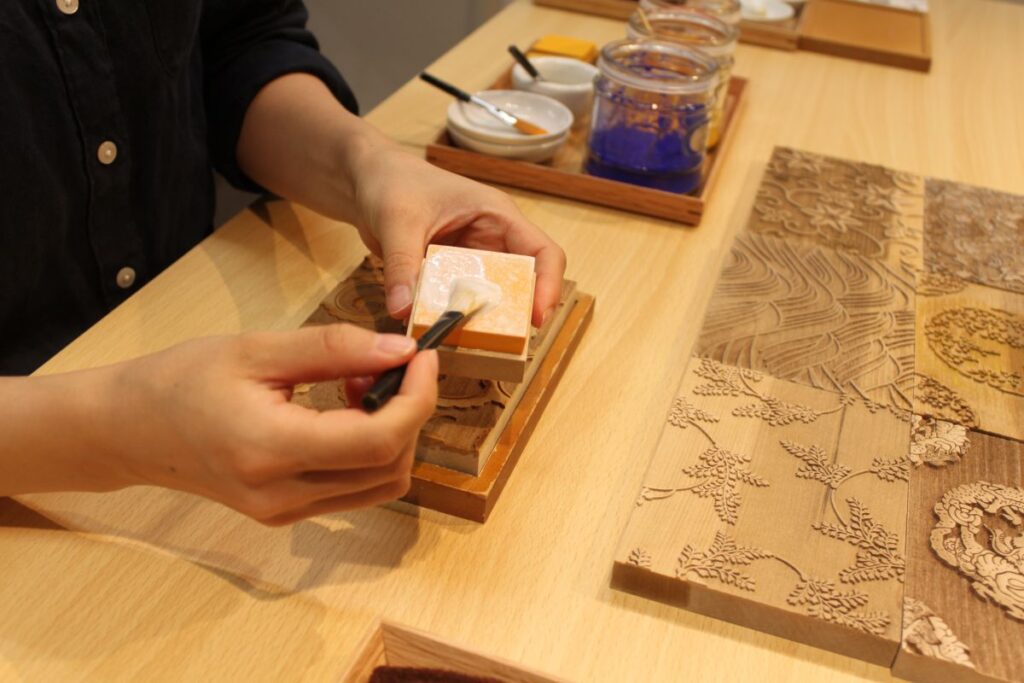
Once you 've picked the paint, it's time to start! First, put the paint on a dedicated stamp. It's OK if you can use a small hake and apply it all over it.
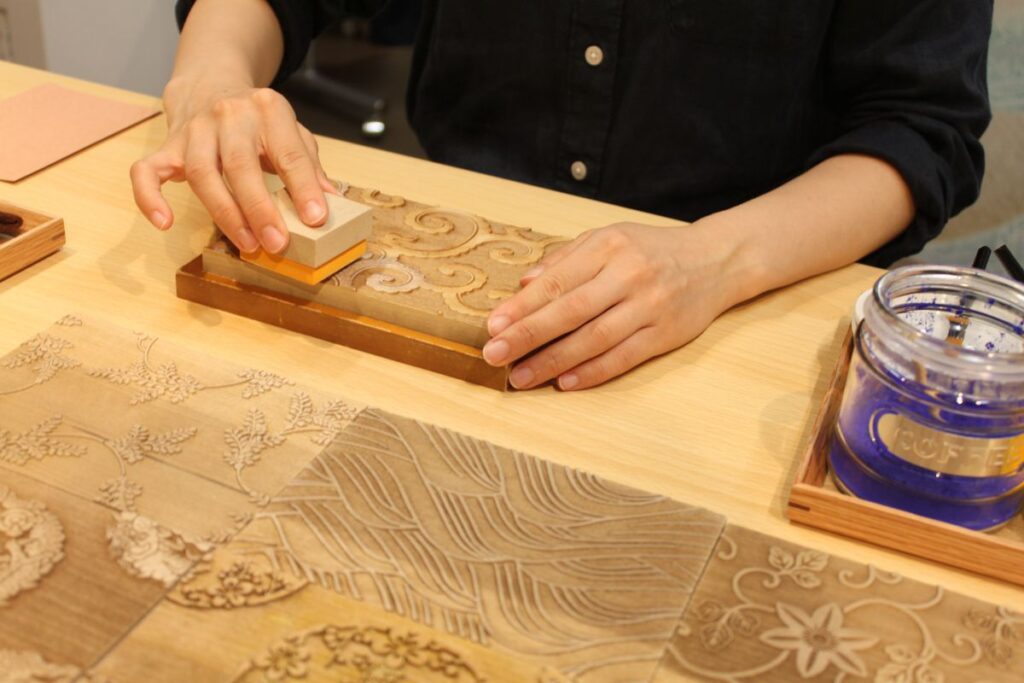
Now, let's put the color on the woodblock. While making sure that there is no unevenness in the paint with the pompom and the rhythm.
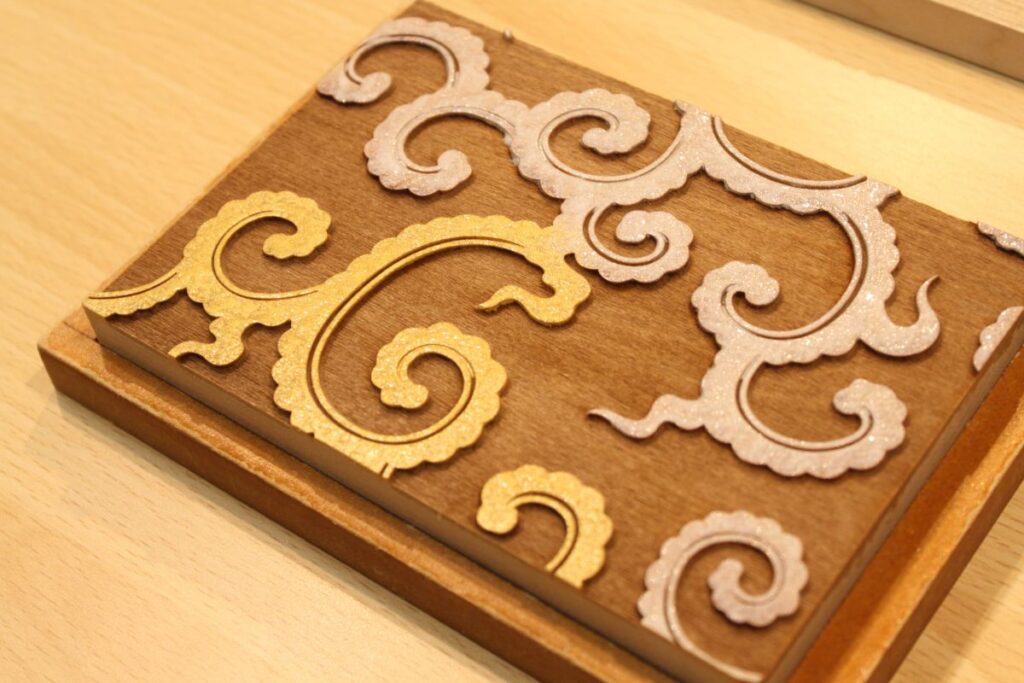
Gorgeous with two colors of gold and kira in the "big cloud" pattern drawn freely! I am looking forward to the completion.
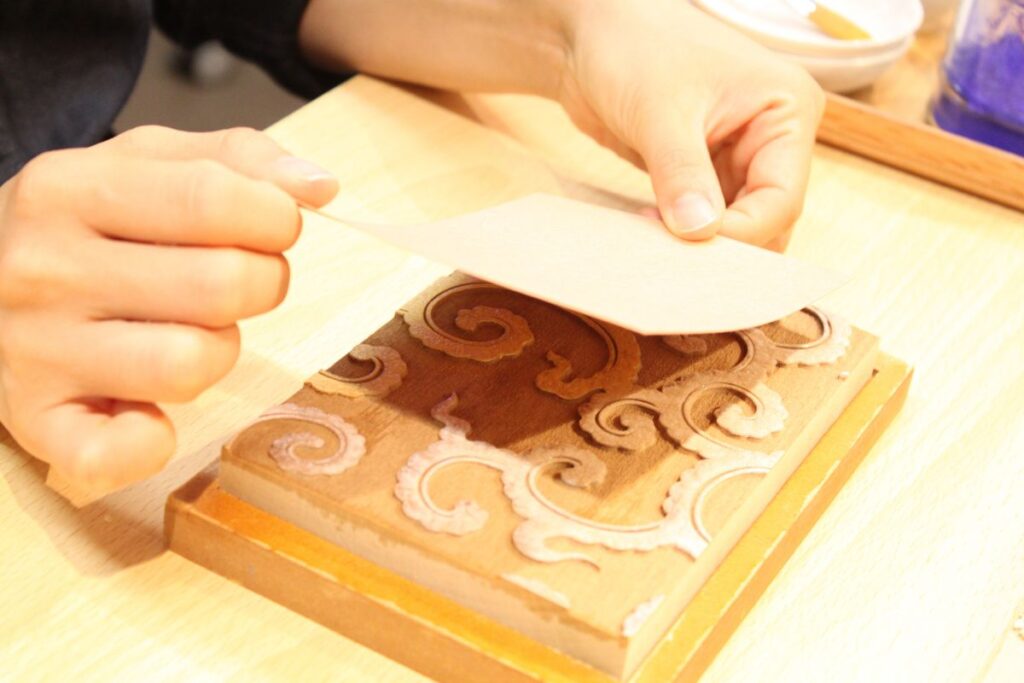
Gently put the postcard down, and I'll move the colors down.
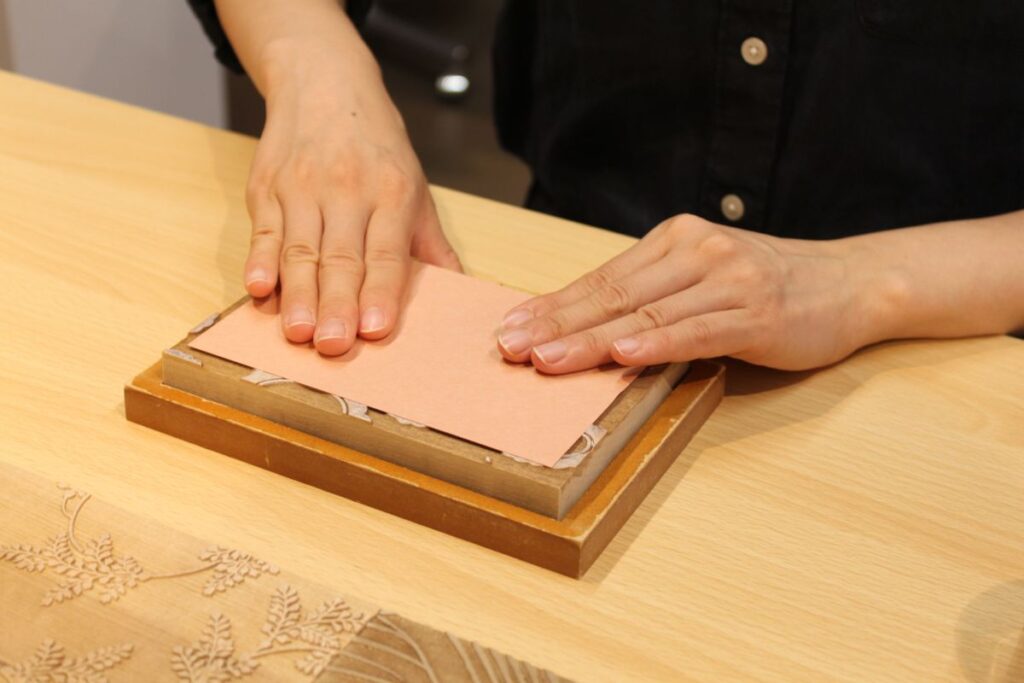
It is common to use "baran" in prints, but here it is to apply it with your hands instead. We use three fingers to gently pressure the postcard, taking care not to slip. People's hand is the point of the gentle texture peculiar to the local area from Kyoto.
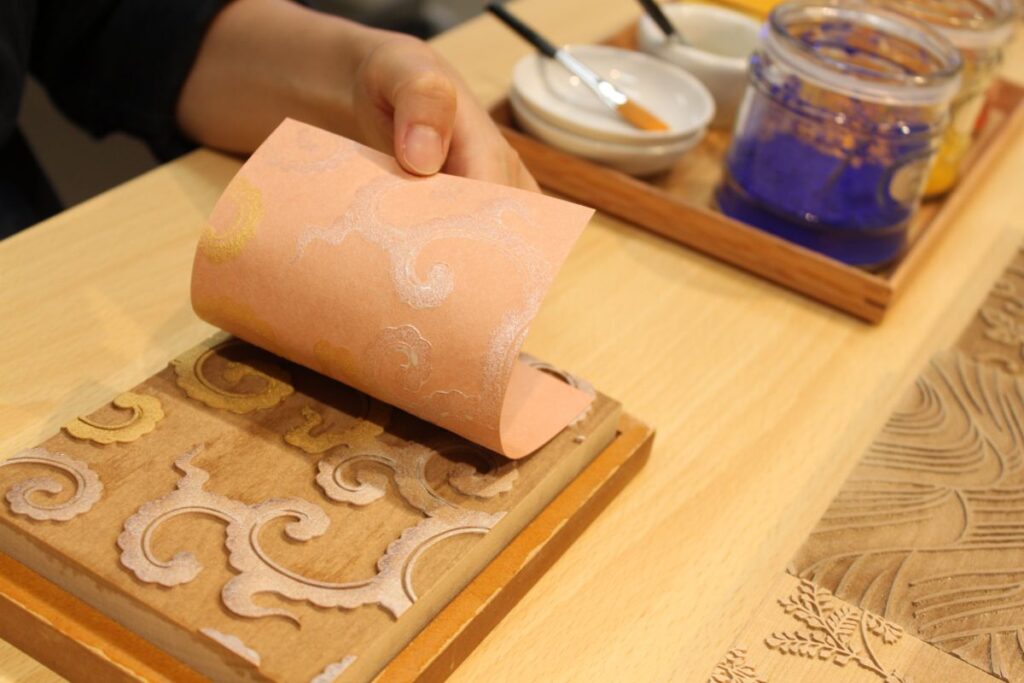
I wonder if it's done well? It's a moment of pounding. After this, if you do "twice" while dividing it into left and right halves, it will be completed! Let's enjoy until the last step.
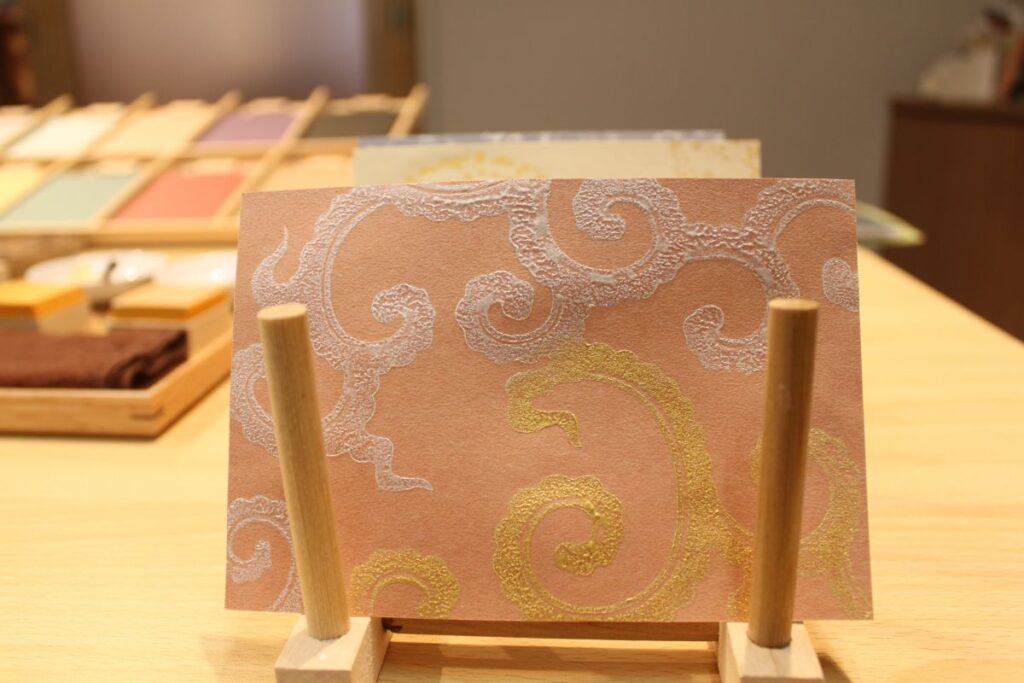
When the paint is dry, you can put it in the original paper case and take it home on the day.
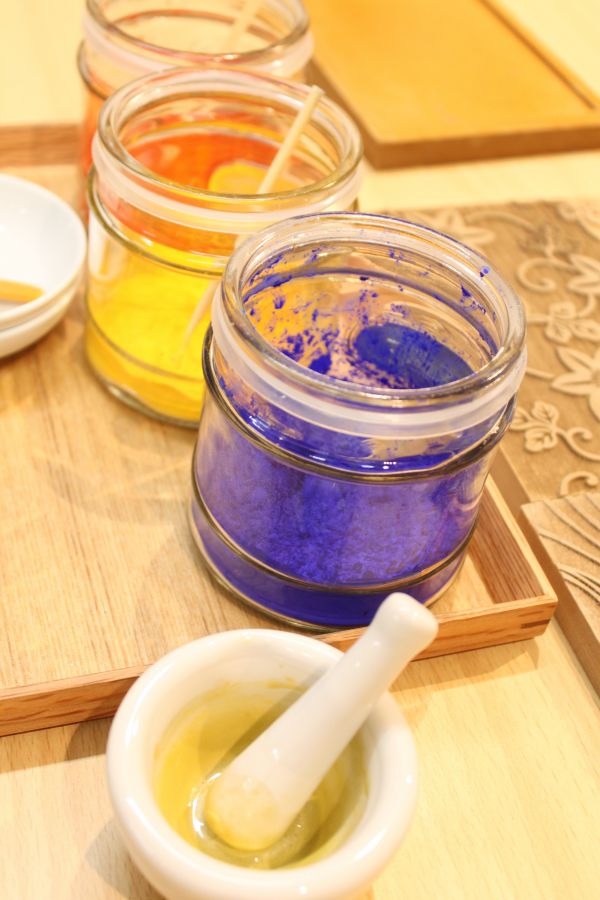
Red, blue, yellow, all of them are beautiful with bright colors! You can also create your favorite color by preparing this “pigment”.
Put a little pigment in a mortar and mix it with a pestle (nyubachi). With force so that no particles remain. After mixing the right amount of blue and yellow, a green with a calm texture is formed.
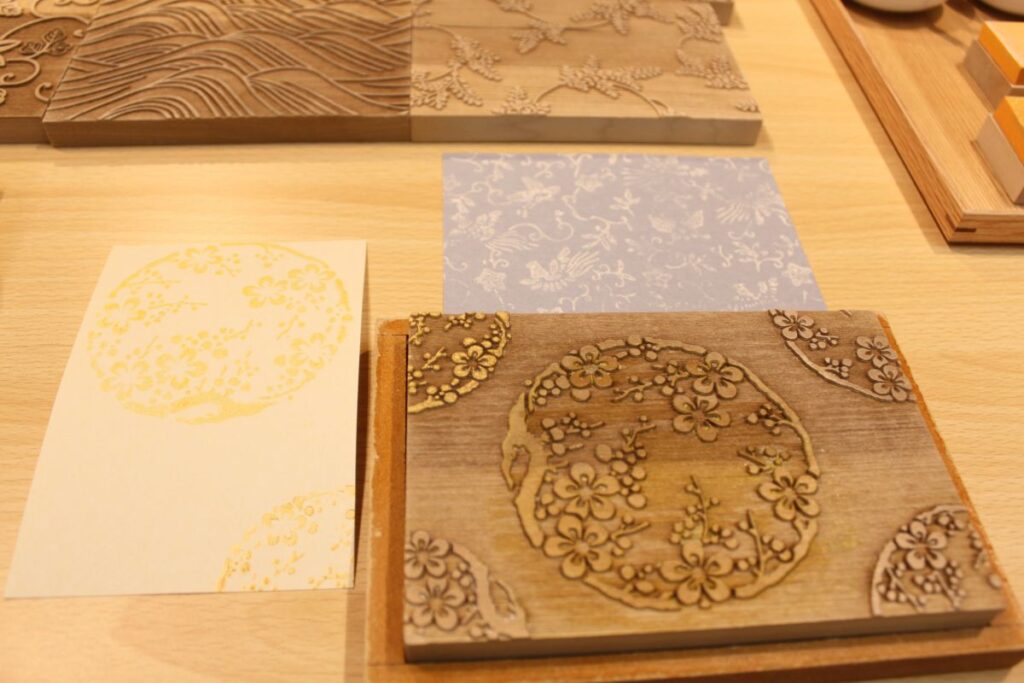
The combination of the Tang-paper pattern, postcard and paint, each is free! "Even if you choose the same pattern or postcard, it is interesting to show your personality in your work," says Tanikawa. Completely original, by all means enjoy the infinity variation!
* "Postcard experience" 3000 yen/Monday to Saturday (closed on Wednesday) at 14:00, 16:00 (about 1 hour)/1 to 8 people (full reservation system/same day reservation is also possible if there is vacancy)
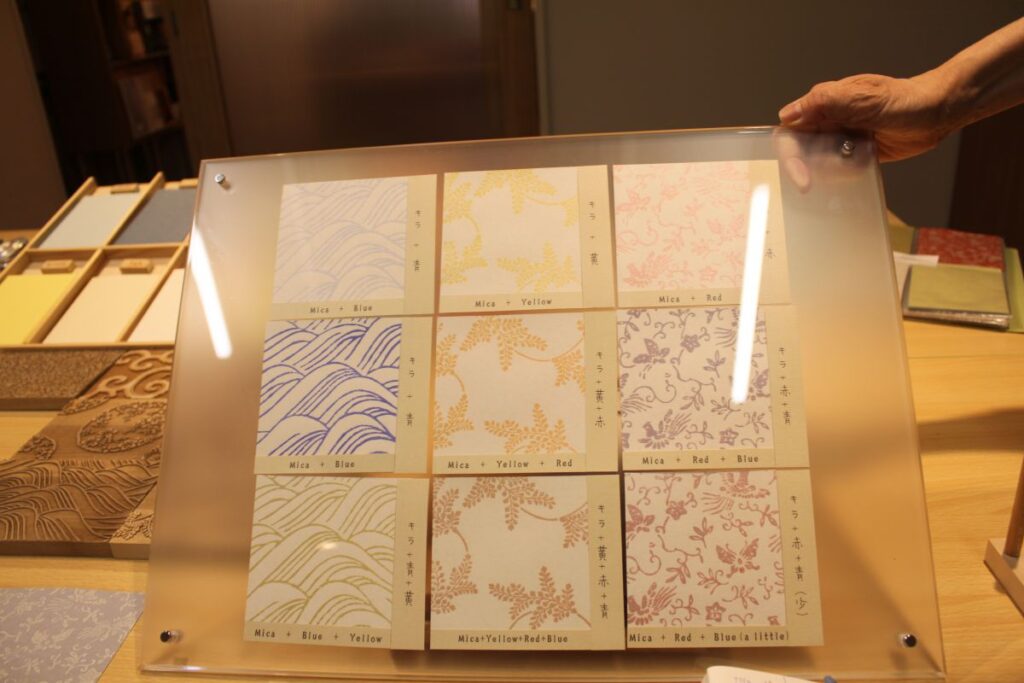
From elementary school students to their 80 s, it is a popular experience course from a wide range of students. It is OK for both people and their friends and wai. For memories of Kyoto sightseeing, it is likely to be pleased to bring it back and put it in a frame and decorate it with a message!
Cute wooden stamps and paper items
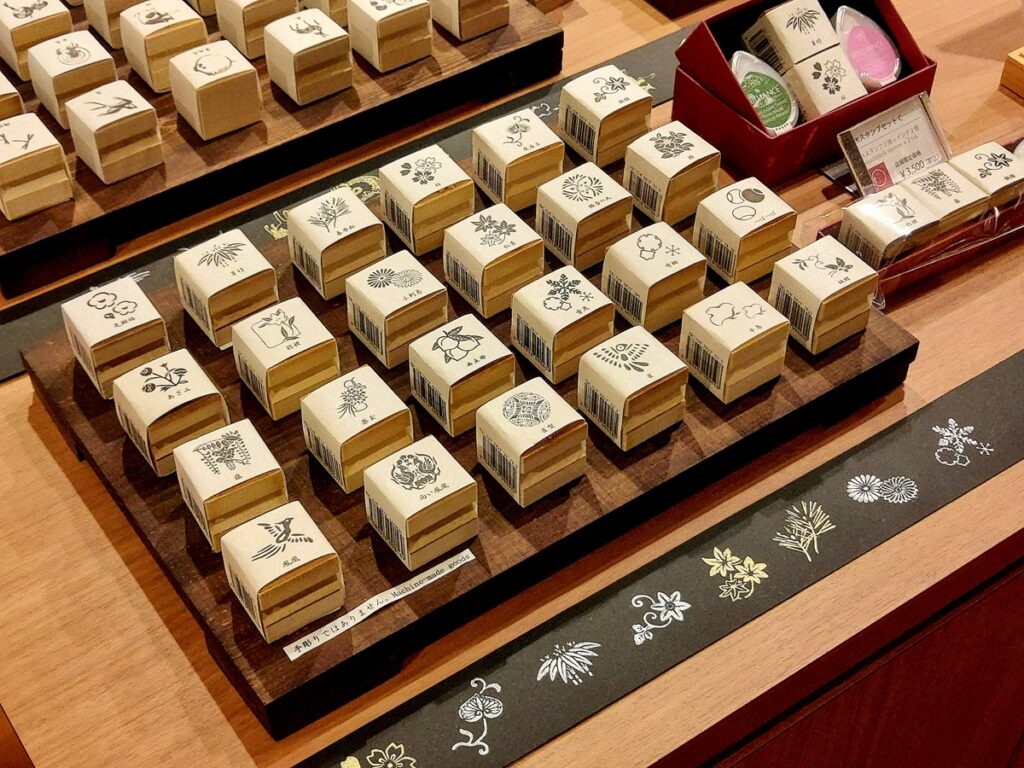
Enjoy shopping at the first-floor shop, including colon and cute wooden stamps! People are buying adults for Kyoto souvenirs and petit gifts!
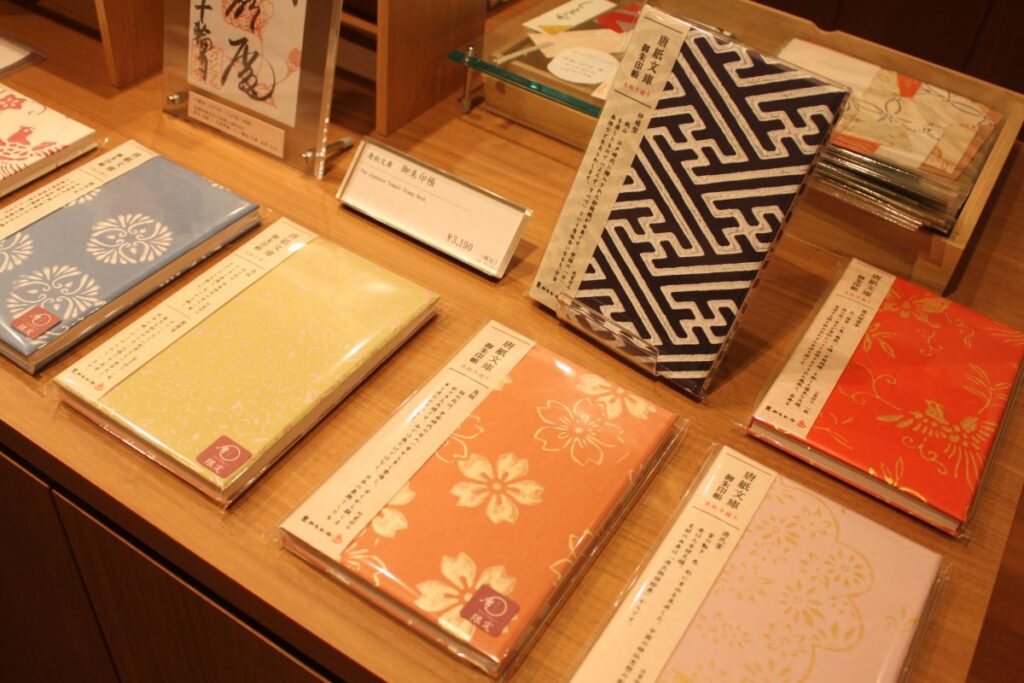
The popular red stamp book for girls is also so stylish when you use the Kyoto kami! It seems to be even more fun to visit the shrine buddha.
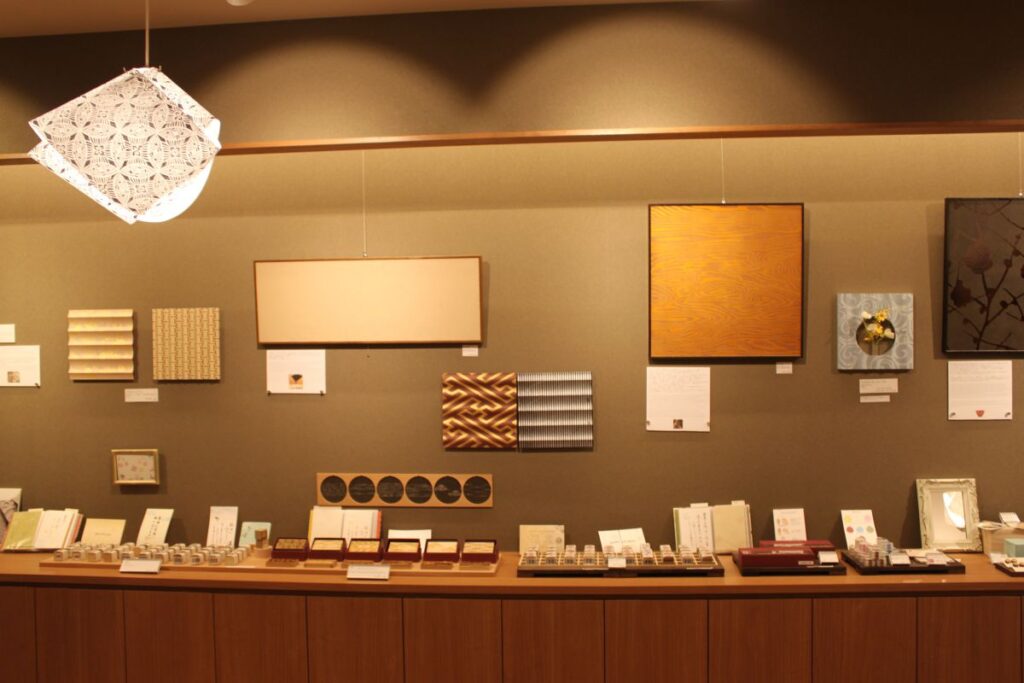
Other original items such as pochi bags and stationery boxes, as well as accessories and specialty coasters are available only at Coco.
The experience studio & shop, which is filled with the thought of "I want you to feel the kami from Kyoto", is popular, including easy postcards, workshop tours and panel making experiences! It is sure to be a memory of Kyoto sightseeing.
■ Karamaru
Address: 460 Takatsuji-dori Yanagi, Shimogyo-ku, Kyoto, Kyoto, Japan
TEL:075-361-1324
Opening hours: 10-17: 30
Holidays: Wednesday (closed days and holidays)
- This article is created based on the contents of "Rurubu & more."
- The data listed is as of May 2025. Prices, business hours, regular holidays, menus, etc. may change or may not be available due to temporary holidays. Please check in advance when using it, as the content may change.
- The holiday of stores and facilities omits the year-end holiday, Obon holiday, Golden Week, and temporary holidays in principle.
- The published fees are in principle the fee including consumption tax that we have confirmed at the time of the interview, and the entrance fee is the adult fee if there is no special mention.
- In principle, the published times are open (hall) to closed (hall). Please note that the last order or entrance (hall) time is 30 minutes to 1 hour before the normal closing (hall) time. The last order is denoted LO.
- For the spring quality and efficacy of the hot springs listed, manuscripts are prepared based on answers from each facility.