Archives: Travel Post

Waterways

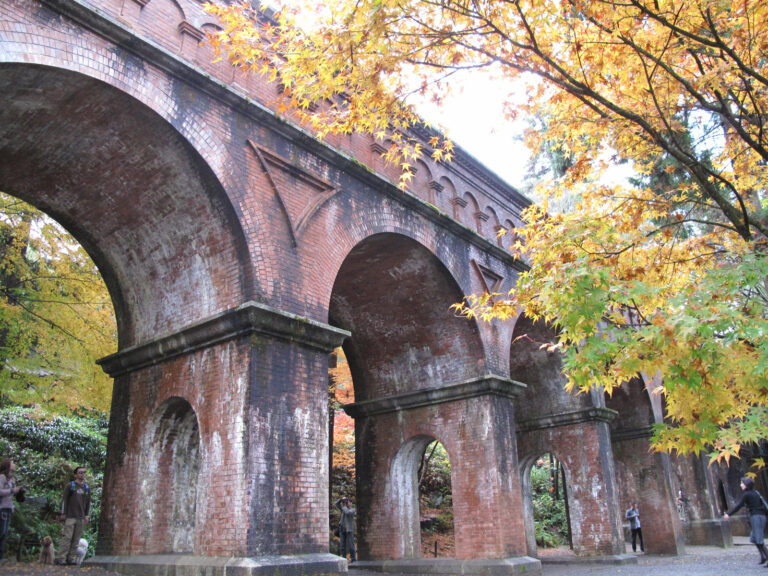
A brick arch bridge across the Nanzenji precinct. Total length 93m. Part of Lake Biwa Canal, completed in 1890, was designed and designed in consideration of the surrounding landscape. It has also been designated as a national historic site. If you go through the bridge and climb the stone steps, you will find Nanzen-in.
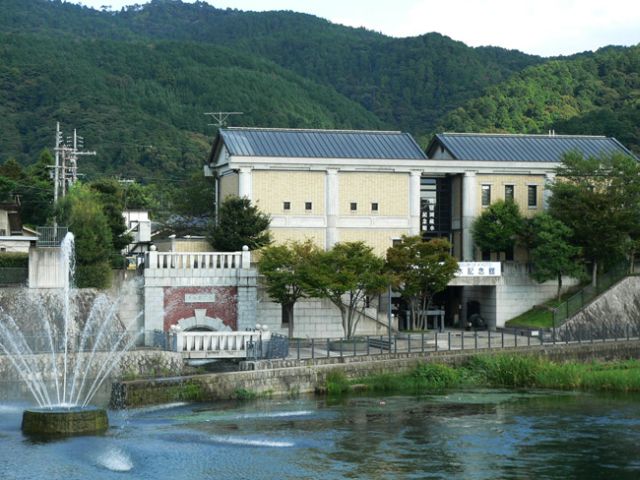
Lake Biwa Canal Memorial Hall

A memorial hall standing on the canal under the Keage Incline, which displays the design drawings of the canal construction and dioramas and models of the area around Keage from the Taisho period, and tells the history of the Lake Biwa canal to the present day.

Baisha Village Zhuang Hashimoto Kanyuki Memorial Hall

The garden of a mansion run in 1916 (1916) by Sekiyuki Hashimoto, a Japanese painter who was active in the Kyoto art pit of Taisho and Showa Shōwa, under his own design, was opened to the public. The entire site covers 10,000 square meters and the garden section is about 7000 square meters. In the park, there is a large painting room of 50 tatami mats, a tea room of Yuntokuin Yo, and a large number of fine stone art from the Heian to Kamakura period collected from all over the country. In the exhibition room, Kanyuki's works and his collection of items are exhibited from time to time.

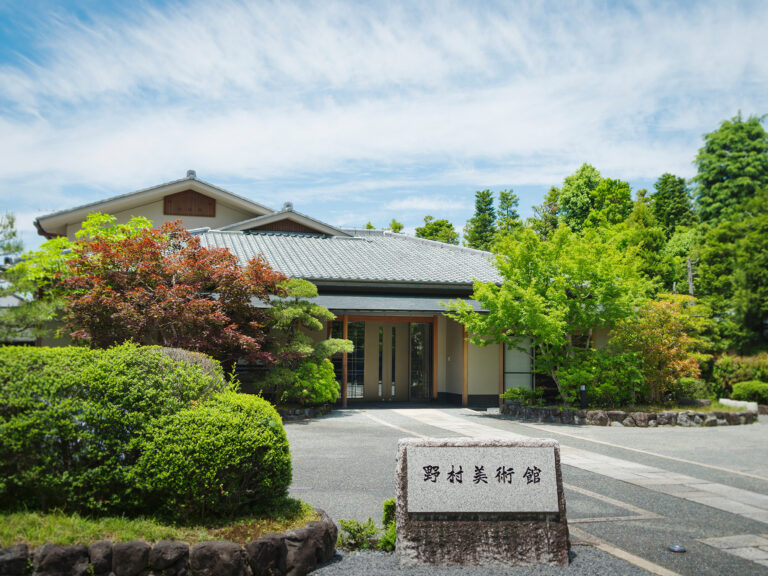
Nomura Museum of Art

The second generation of Nomura Zhakkoku, a collection collected by Tokushichi Nomura from the Meiji era to the Showa era was exhibited. Tokushichi is a sukiya who calls his name Tokuan, and partly because of his familiarity with the road of Fenga, his collection covers about 1700 items, including tea utensils, Noh costumes, Noh masks, paintings, and books. Among them are 7 items of important cultural objects, such as the Yukimura brush "Fudō-zu" and the Daokokushi Sumi-ku, and 9 items of important art.

The path of philosophy

Daijiyama, famous for his Kyoto summer style poem "Five Mountains". At the foot of it, along the canal of the Lake Biwa Canal Branch, a walking path of about 2km leading from Wakaojibashi to Jodo-ji Bridge is the "path of philosophy". It is said that this name was given by philosophers Kitaro Nishida and Gen Tanabe who walked while indulging in thoughts. It has been selected as the "100 Roads of Japan", and in the spring it is possible to create a tunnel of cherry blossoms, including the Kanyuki cherry tree donated by the Japanese painter, Sekiyuki Hashimoto, and in the autumn it is possible to enjoy stunning autumn leaves such as Japanese maple. There are venerable temples and shrines along the road, including the Wakaoji Shrine, the Aikonji Temple and the Anraku Temple. There are many fashionable cafes and shops in the surrounding area.

The No.

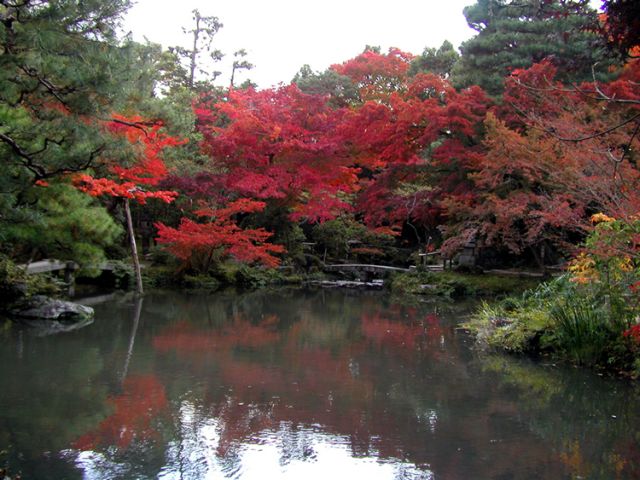
A villa built in 1896 by the Meiji and Taisho sensei, Yutomo Yamagata. The grounds include a garden, which is said to be a masterpiece of modern Japanese gardens, and a wooden main house and tea room, as well as a brick Western theater. In particular, the garden (Meishatsu) was designed and directed by Aritō himself, and was made to garden by the seventh generation Ogawa Jibei. It is a Japanese garden in the Meiji era that is full of plenty of wildness with Higashiyama as the main mountain and the water of the canal. From the cafe of the main building, you can drink tea slowly while looking at the garden.

Honen House

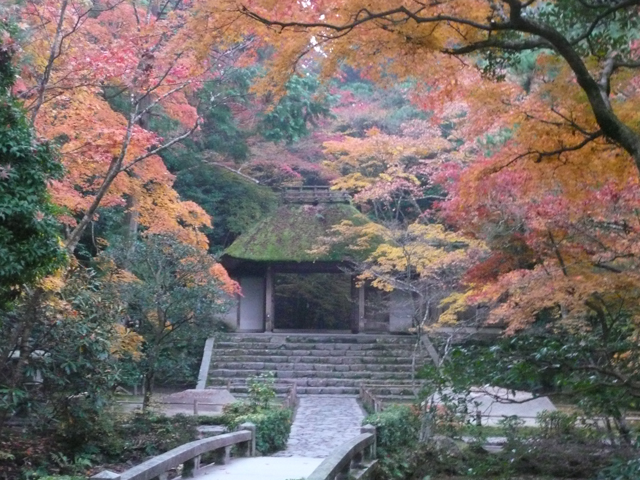
A famous temple where Honen a superior raised the lantern of a dedicated Buddha. The main hall, the temple, the temple, the temple, and the bell tower stand in the secluded precinct. As you pass through the thatched mountain gate, there is a sandstone (white sand pit [Bikusadan]) on both sides of the approach to the road. The pattern drawn on the sand represents the flow of water, and it is said that passing between them will purify the mind and body. There is a beautiful Ikeizumi-style garden in the back. It is also famous as a place of camellia.

Nanzenji Temple

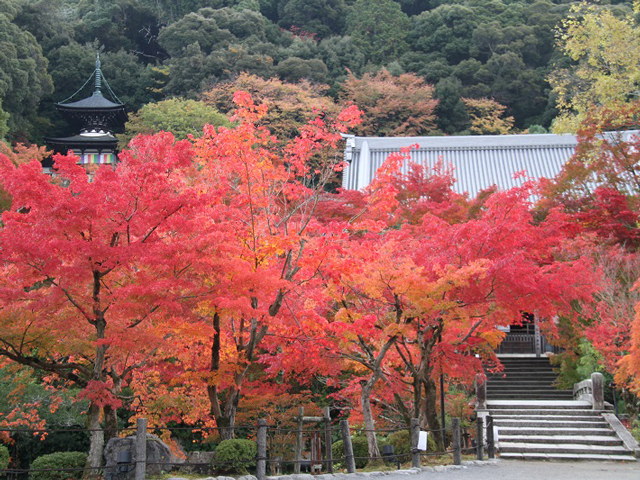
The tower of Nanzen-ji Temple, which includes the Karesansui Garden and the Ike-Izumi Kaigai Garden in the vast grounds.

Nanzen Temple

Ōmotoyama of the Rinzai sect Nanzenji school. In Shōyo 4 (1291), the palace of Emperor Kameyama was converted into a temple with the Daimei Kokushi at Kaesan. The building at the time of its founding was burned by the soldiers of the Onin Rebellion, and the present-day gaiji was rebuilt after the Momoyama period. The 22m-high Sanmon of the National Designated Important Cultural Property was rebuilt in Kanei 5 (1628) to mourn the general priest who had been killed by Takatora Todo in the asaka Osaka clan. He is famous for his scene in the Kabuki "Toromon Gosangiri", where Ishikawa Goemon is seen in the first name line of "Kakei Kana, Kakei Kana". The national treasure, Hōjō, which consists of Ohata-jō and Fushimi-jō-jō, which were relocated from the Imperial Palace Hall, is a work by the Kano school, including Kano Eitonori and Kano Yuyu, and the National Designated Important Cultural Property. The Hōjō garden of the national designated Meishatsu Kobori's garden is also stunning.

Zenrinji Temple (Eikando)

It is known by the name of Eikando, and is also known as a famous spot of autumn leaves. In the early Heian period, it was founded by the priesthood of Shinshōjo, a disciple of Hiroho Daishi, but was later referred to as Eikando as a place for the training of the Nenbutsu, for his achievements in saving the people. The main statue of Amitabha Nyorai (Important Cultural Property) is a figure that looks backward to the left, and is also called "Mireari Amitabha".

Contact Us: Business & Personal Inquiries

By proceeding, you agree to our Terms of Use And confirm you have read our Privacy Policy .

Notes

· We are available for inquiries 24 hours a day. Responses will be provided between 9:00 and 18:00 (including weekends, public holidays, and year-end/New Year holidays).
· Depending on the nature of your inquiry, it may take some time for us to respond.

RURUBU & ALL WAY JAPAN
Privacy Overview

This website uses cookies so that we can provide you with the best user experience possible. Cookie information is stored in your browser and performs functions such as recognising you when you return to our website and helping our team to understand which sections of the website you find most interesting and useful.