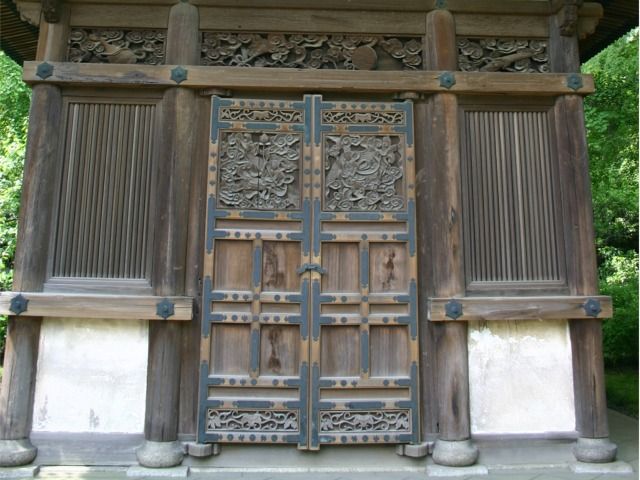
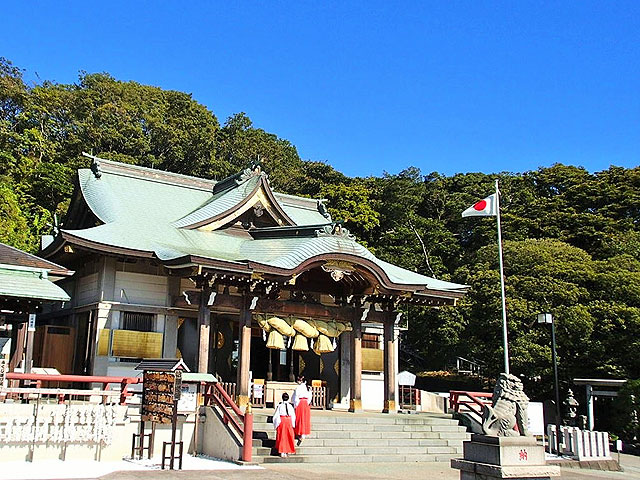
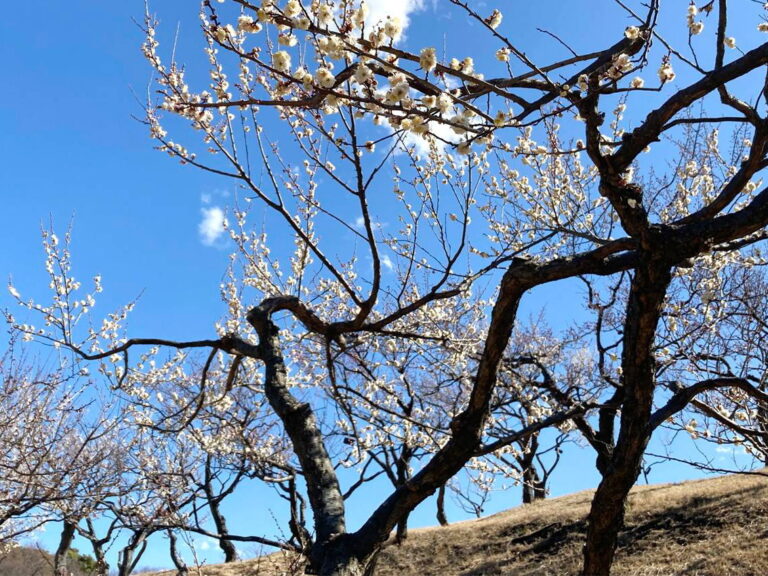
In the first year of Hirohito (810), Hiroho Daishi visited this place where the legend of the Japanese martial arts remains, and built a shrine, which is said to have been the case. Converted to Nichiren sect in the first year of Bunwa (1352). Just off the precinct rises Jyakshin of Hyakunori Nagi of Kanagawa. It was a bodhi-ji temple of the former lord, the Mumiya family, who recommended planting of plum trees, and later became known as Sugita Bairin. The number came to more than 30,000 shares, and was introduced in Issai Sato's "Sugita Village Kanmemi" and Hamami Shimizu's "Sugita Diary", and was visited by many Kanmei and Bunjin ink customers as a plum spot that was also known to Edo. The first Utakawa Hiroshige depicted the appearance of Kanbai at the time in "Bushu Sugita no Bairin", and the Meiji era was visited by Empress Hideteru and Empress Shōken to Kanbai, and its remnants are still visible today.
 English
  Japanese
  Chinese (China)
  Chinese (Taiwan)
  Korean