Archives: Travel Post

Twentieth Slope

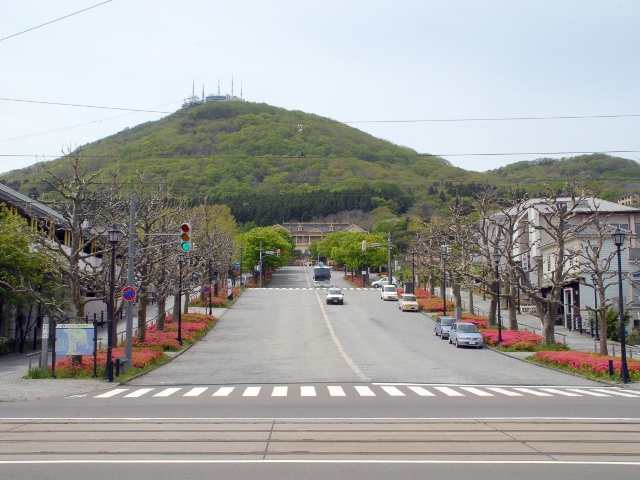
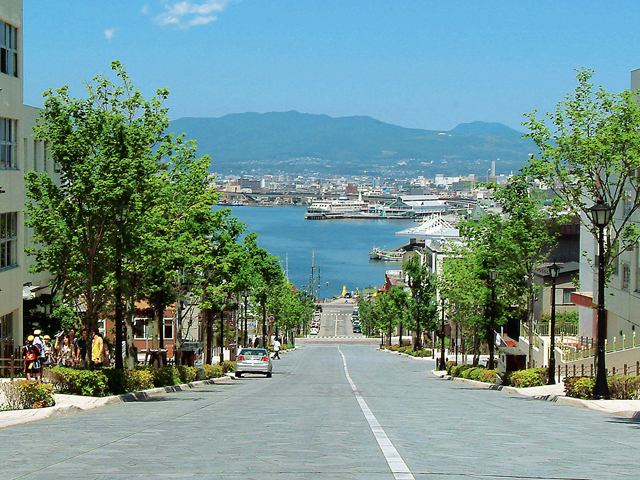
A slope with a width of twenty minutes (about 36m) as the name suggests, which was created as a fire break after the great fire of Meiji 12 (1879). In the past, there were many carpenters living on Sakagami, so it was also called "Carpenter Town Saka". The street trees along the road and the landscaped plants are beautiful, and Sakagami is home to the long-established restaurants Gōshōen and Higashi Honganji Hakodate Annex-in. If you follow Sakashita as it is, you will find it to Hakodate Asahi. It is lit up in winter and you can enjoy romantic illumination.

Chacha climb

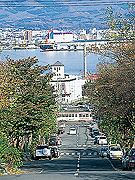
A thin, cobblestone slope that passes between the Church of St. John of Hakodate and the Orthodox Church of Hakodate and the Orthodox Church of Hakodate, at the end of the Great Misaka where the Catholic Hakodate Motomachi Church stands. Cha-cha is the Ainu word for grandfather, and this name comes from the appearance of old and young leaning forward and climbing this hill. As you walk up the slope and look back, you can see the outlandish cityscape of Hakodate, and in the fall, the autumn leaves of the street trees are beautiful, and the fatigue of climbing the steep slope also blows away.

Great Misaka

The origin of the name was that there was an inn called "Daisan" under the slope. It received high praise for its exoticism of Japanese-Western eclectic buildings and cobblestones, and was recognized by the Ministry of Land, Infrastructure, Transport and Tourism in 1987 as "Japanese Road 100". Historic buildings, such as the former Kamei House, a modern Western-style theater, the Oisansaka Building, a Japanese-Western eclectic building, and a retro-looking store, are lined up to make it a great location for walking around the town and taking a photo walk. From the Catholic Hakodate Motomachi Church, which stands at the end of the slope, it changes to a steep slope known as "Chacha Climbing".

Kōsaka

This name was given because there was once Yukimachi under the slope. It is slightly off the center of Motomachi and has a tight slope, but if you go up about 620m while looking at the former Russian consulate and old-fashioned bony shops on the way, you will be waiting for a spectacular view from Funami Park and Yamakami Daijinomiya.

Hōkoku Shrine Saka

A wide slope with shrubbery in the central reservation, extending from the Hakodate Tōkoku Shrine towards Hakodate Station. In the middle of the slope, there is a statue of Kahei Takataya, an Australian merchant who supported the prosperity of the Edo period Hakokan (now Hakodate). There are many quaint Japanese-style buildings, such as the long-established Japanese-style Japanese-style confectionery shop "Hakodate Senshu-an Sohonke Horrai-cho Honten" from the end of the Edo period, and the "Chabō Hishii", which utilizes the Tozo built by the end of the Meiji era.

Fishery

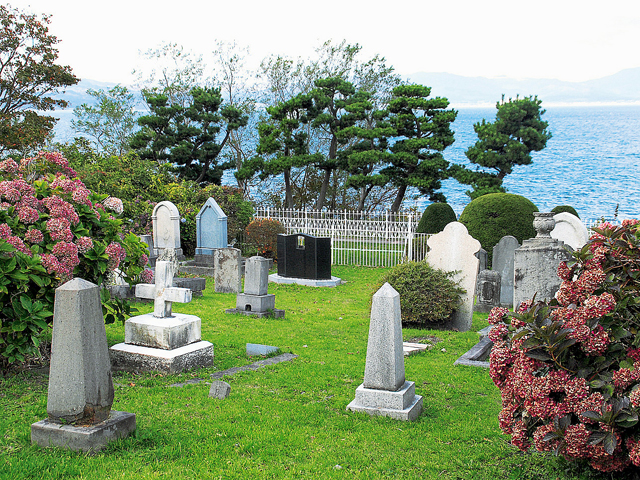
The slope that extends from the Hakodate Itsujima Shrine to the Foreign Cemetery near the front stop of the Hakodate Tenden at the end of the Hakodate Tenden. It is said that the origin of the name was the search for a group of fish from the top of the hill. When the Bententaiba was built in the late Edo period, it was also known as "Taimachi no Saka" because it was located in Taimachi, which was built from mining earth and sand. In the upper part of the slope, Teramachi-dori includes the Kōryū-ji and Shōmei-ji temples of the early Edo period related to the Hakokan War, and the foreign cemetery beyond that can be seen to the port of Hakodate or Komagatake if the weather is good.

Clam slope

The rustic atmosphere of the hill extending to the residential area of Horai, on the edge of Motomachi. When British and American scholars surveyed the midden in 1878, the name was derived from the fact that many clam shells were found around here. Along the slope, there are also the "Asari Honten" and "Sasaki Tofu", famous for sukiyaki, called the Meiji period, and the former rice grain shop building, which leaves the old-fashioned nazumai intact. Take a breather in the green belt where the literary monument of Katsuichiro Kamei, who was known as a proletarian literary critic, stands.

Mount Hakodate summit observation deck

You can enjoy the view from the summit of Mount Hakodate at an altitude of 334m, which can be said to be a symbol of Hakodate, including the unique terrain of Hakodate, which is sandwiched between Hakodate Bay and the Tsugaru Strait and constricted like the tail of a whale. During the sunny day, you can see the Tsugaru Strait and the Shimokita Peninsula of Aomori, with a 360-degree panorama in front of you. At night, the lights of the city spread in the shape of a fan, and in the summer, the fishing fire shines beautifully in the direction of the Tsugaru Strait. It takes about three minutes on the Hakodate Ropeway from Sanroku Station to the summit station where the observation deck is located. At the summit observation deck, there is a restaurant and a souvenir shop where you can enjoy a meal while watching the view below the window and the beautiful night view.

Gotenyama 2nd Battery Site

After the end of the Sino-Japanese War, the remains of five sites of the Hakodate Fortress, which were built over a period of little more than four years from the year of the Meiji 31 (1898) for the purpose of defending the port of Hakodate, etc. The site of the Gotenyama 2nd Battery, which remains at the location of the walking path from the Atsujiyama parking lot under the summit of Mount Hakodate, is a rare surviving feature of the time, and was selected as a Hokkaido Heritage Site in October 2001. In addition, 77 facilities have been built at Mount Hakodate, including an ammunition depot and an observation station, and they have a valuable history of the present day.

Monument of the first step in Hokkaido

Hakodate, which became the gateway to Hokkaido after the Meiji era. The monument located at the base of the Higashihama Pier (former pier), which was said to have been used at the time of landing by many visitors since then, was erected in 1968 to commemorate the 100th year of the Kado Road. The design was Nobumichi Akashi, a native of Hakodate who was a professor at Waseda University at the time. The white Ikari and white large brown bear monuments set against the backdrop of the port of Hakodate make you feel Hokkaido.

Contact Us: Business & Personal Inquiries

By proceeding, you agree to our Terms of Use And confirm you have read our Privacy Policy .

Notes

· We are available for inquiries 24 hours a day. Responses will be provided between 9:00 and 18:00 (including weekends, public holidays, and year-end/New Year holidays).
· Depending on the nature of your inquiry, it may take some time for us to respond.

RURUBU & ALL WAY JAPAN
Privacy Overview

This website uses cookies so that we can provide you with the best user experience possible. Cookie information is stored in your browser and performs functions such as recognising you when you return to our website and helping our team to understand which sections of the website you find most interesting and useful.