English
  Japanese
  Chinese (China)
  Chinese (Taiwan)
  Korean
■ A Unique System Where Even Judges Are Evaluated Ensures Fair and Impartial Assessment
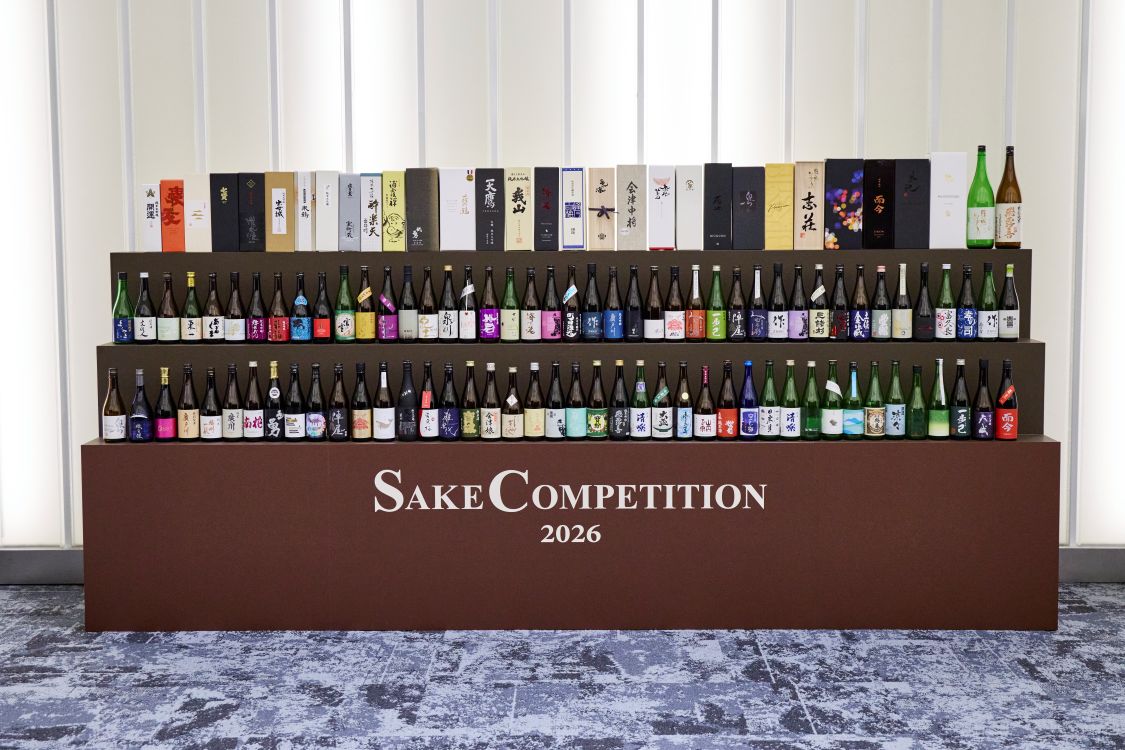
The “SAKE COMPETITION,” one of the world’s largest sake competitions, is leading the trends in the Japanese sake industry. Guided by the philosophy of “a competition designed to help consumers discover truly delicious ‘commercially available sake,’” it has been held since 2012, organized primarily by Hasegawa Sake Shop, a Tokyo-based sake retailer.
▼ SAKE COMPETITION:https://sakecompetition.com/
▼ Hasegawa Sake Shop:https://www.hasegawasaketen.com/
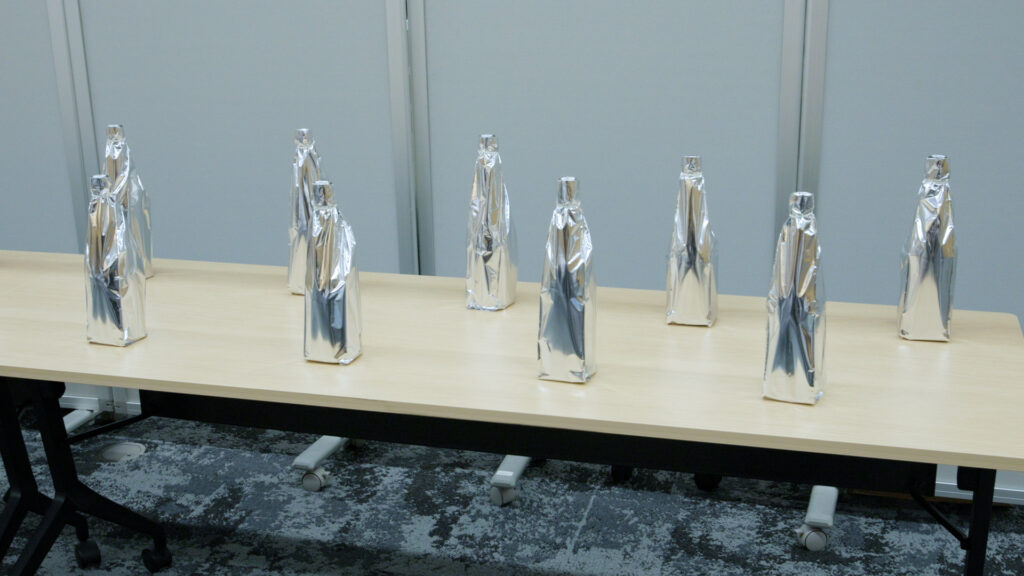
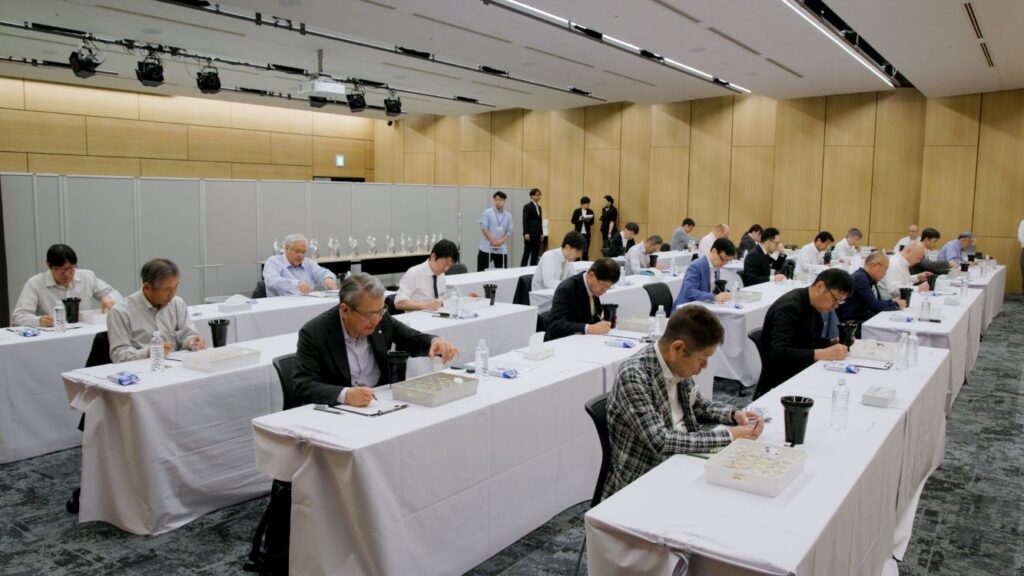
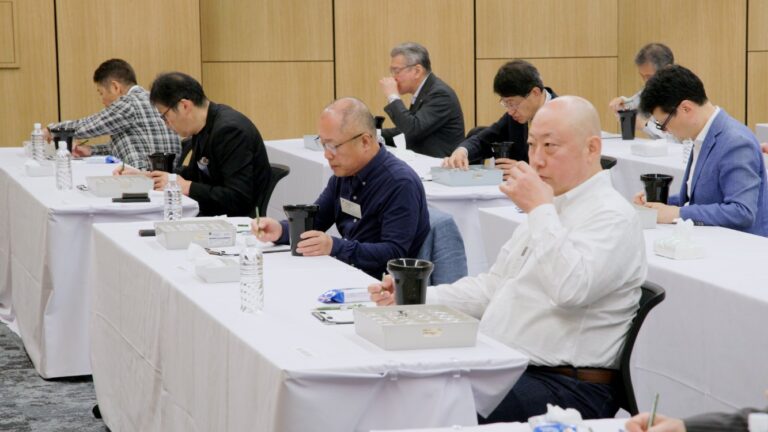
A key feature of this competition is the rigor of its judging process. To ensure evaluations are based purely on taste, free from any preconceptions, the competition employs a blind tasting format in which the brands are completely concealed. Notably, the judges themselves are also subject to evaluation; if their assessments are deemed inconsistent, they may be removed from the judging panel the following year. For this reason, industry professionals watch the judging results with bated breath every year. Top-ranked brands are known to experience a dramatic surge in sales, and in 2026, 1,139 entries were submitted from 367 breweries nationwide.
■ "Mimuro Sugi" Claims Titles in Two Categories for the First Time Since 2014
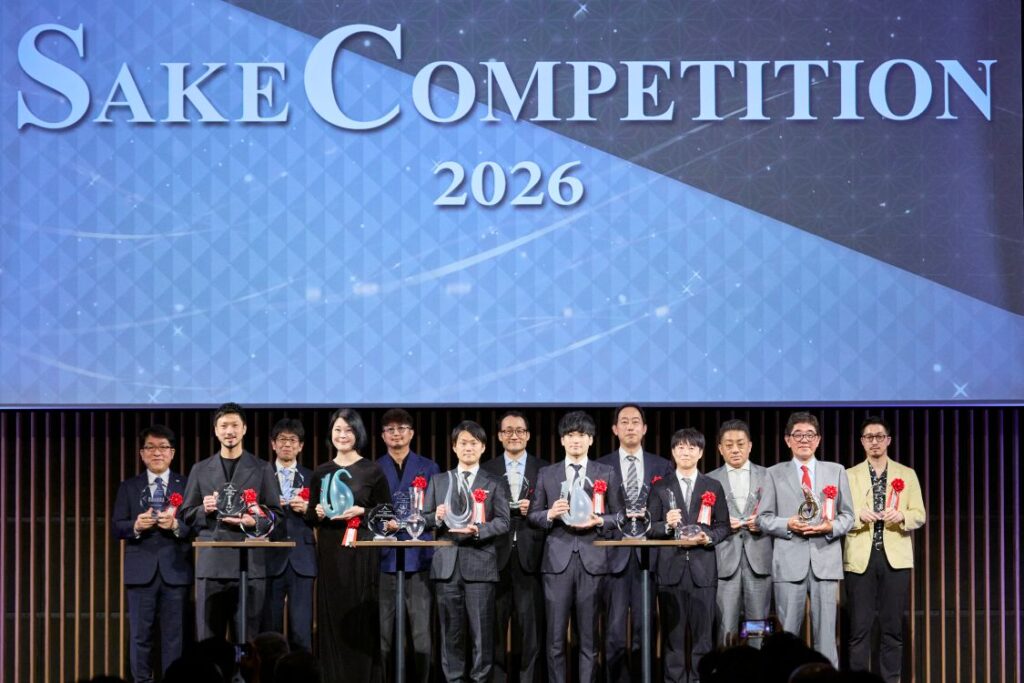
On June 10, 2026, the awards ceremony for the “SAKE COMPETITION 2026” was held at TAKANAWA GATEWAY CITY in Tokyo. Approximately 300 people, primarily sake brewers, attended the ceremony. When the results were announced—a moment that would determine the winners—everyone held their breath and listened intently, and the entire venue was enveloped in a palpable sense of tension.
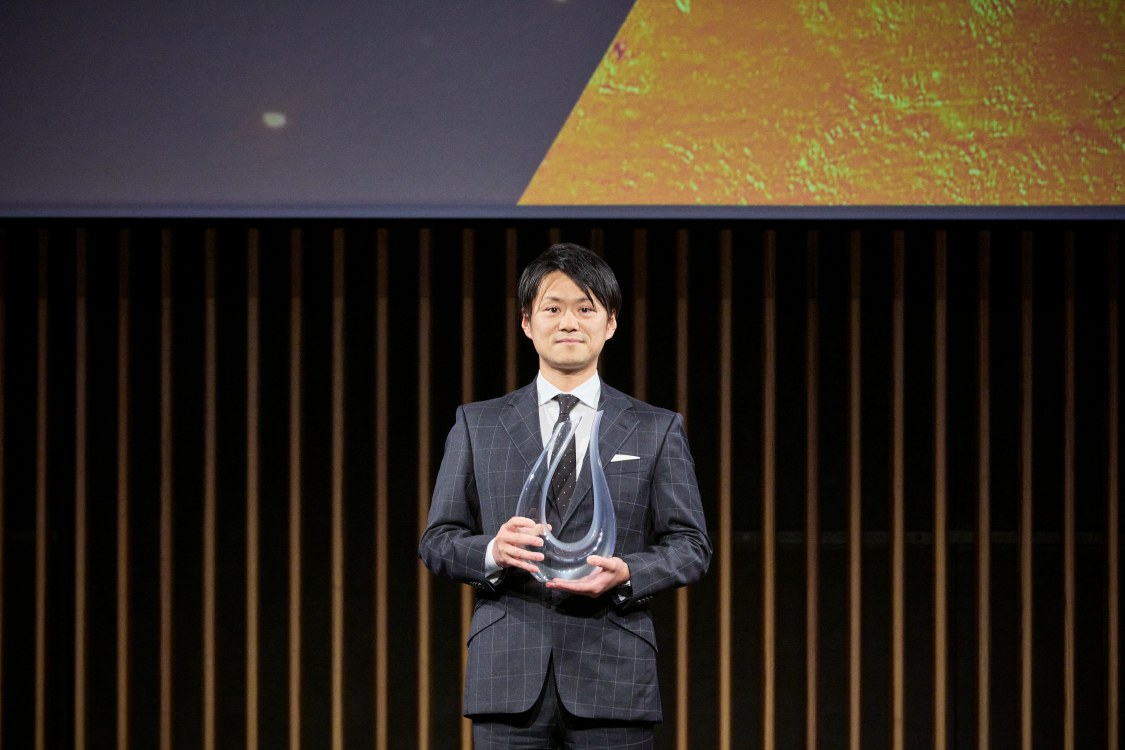
At this year’s awards ceremony, Imanishi Sake Brewery (Nara Prefecture), the brewery behind “Mimuro Sugi,” made an overwhelming impression and took the venue by storm . Not only did the “Mimuro Sugi Roman Series Dio Abita” take first place in the “Junmai Sake Category,” but the “Mimuro Sugi Roman Series Junmai Ginjo Yamada Nishiki” also claimed first place in the “Junmai Ginjo Category.” This “double victory” in the competition—a remarkable feat not seen since 2014—sparked a stir among the audience.
President Masayuki Imanishi, who joined his family’s business, Imanishi Sake Brewery, in 2011, is known for rebuilding the brewery, which was on the verge of closing due to massive debt. The driving force behind this turnaround was his unwavering commitment to producing high-quality junmai sake. Guided by the philosophy of “crafting light and delicious sake,” the brewery’s sake has a relatively low alcohol content of around 13%, yet delivers a fresh, juicy, and crisp flavor. It appeals to a wide range of people, from beginners to connoisseurs.
■ Days After a Devastating Fire, Sasa Masamune Brewery Earns Second Place in the Junmai Category to Loud Applause
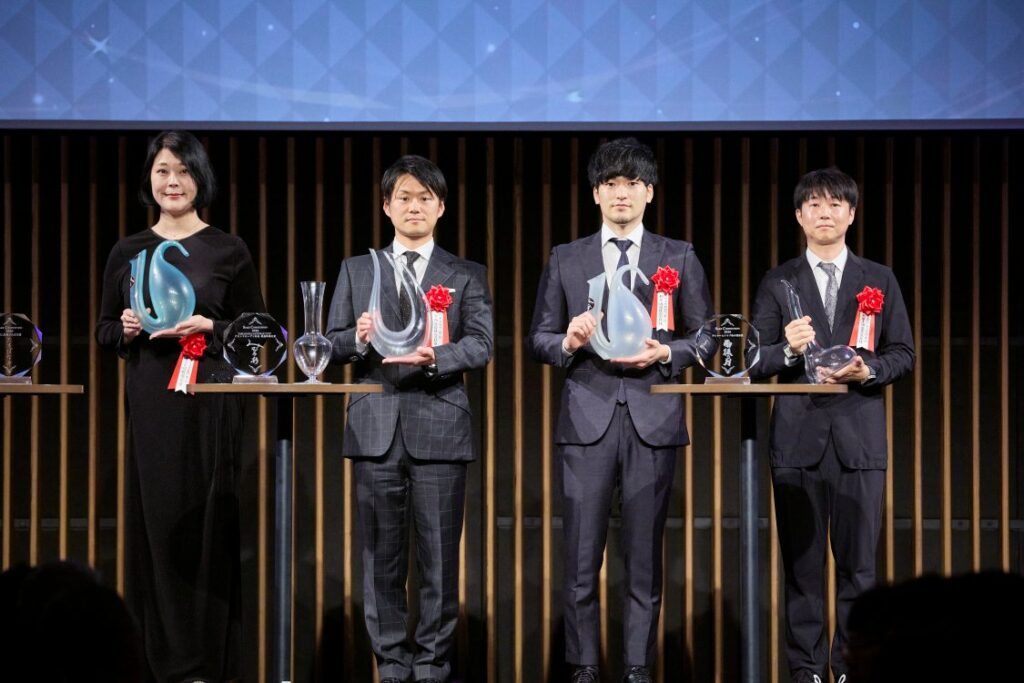
In addition, “Ugo no Tsuki Junmai Daiginjo” from Aihara Sake Brewery (Hiroshima Prefecture) was selected as the top winner in the “Junmai Daiginjo” category; “Jikon Tokuto Omachi” from Kiyasho Sake Brewery (Mie Prefecture) was selected as the top winner in the “Super Premium” category; and “Tachibana-ya Junmai Ginjo” from Kawakei Shoten (Miyagi Prefecture) was selected as the top winner in the “Modern Natural” category.
The “Modern Natural” category is reserved for sake brewed using one of the traditional methods: Kimoto, Yamahai, or Bodai-moto. All of these methods rely on natural lactic acid bacteria rather than added lactic acid, requiring significant time, effort, and technical skill. However, an increasing number of breweries are taking on this challenge in pursuit of distinctive flavors—such as unique richness, umami, and acidity.
The announcement that sent the venue into a frenzy was that Sasamasa Sake Brewery (Fukushima Prefecture) had taken second place in the “Junmai Sake” category. This was particularly noteworthy because the brewery had suffered a fire just nine days before the awards ceremony. Approximately 3,000 square meters of brewery buildings and warehouses were destroyed by fire, along with about 25,000 bottles of sake stored on the premises. Furthermore, the brewery suffered catastrophic damage, losing even the tools essential for sake production.
However, starting the day after the fire, a wave of support quickly spread, driven by the desire to “rebuild Fukushima’s premier sake brewery.” Donations to the reconstruction fund established by the Fukushima Prefecture Sake Brewers Association have been pouring in at a pace exceeding expectations, and numerous messages of encouragement have been received from both within Japan and abroad. With inquiries about support also coming in one after another from overseas, it appears that the movement to support the reconstruction of Sasamasa Sake Brewery is gaining momentum.
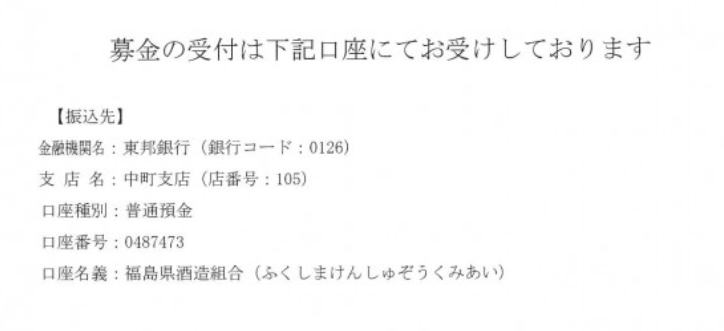
▼ Inquiries regarding donations:info@sake-fukushima.jp
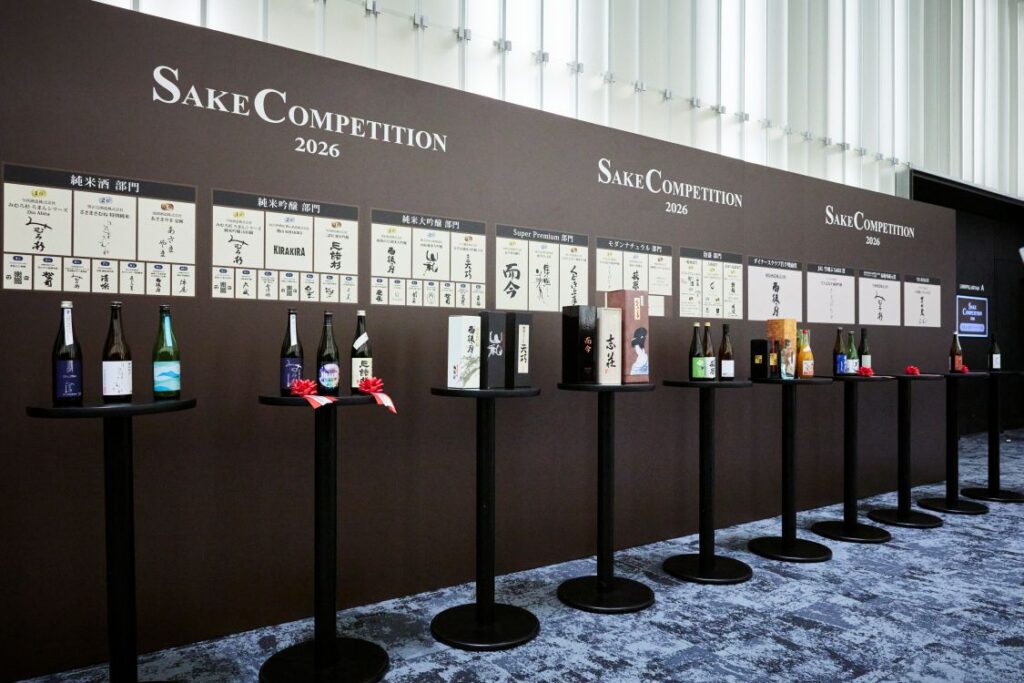
Covering the awards ceremony made me realize once again that the “SAKE COMPETITION” serves as a mirror reflecting the “present” of Japanese sake. While trends in sake quality and shifts in consumer preferences are reflected in the results, the breweries take these evaluations seriously and strive to reach even greater heights. Whether it’s the joy of winning or the disappointment of a narrow loss, it all feeds into the next round of sake brewing—the battle for next year’s top spot has already begun.
* This article is machine translated from Japanese to other foreign languages