Archives: Travel Post

Hinoe Castle Site

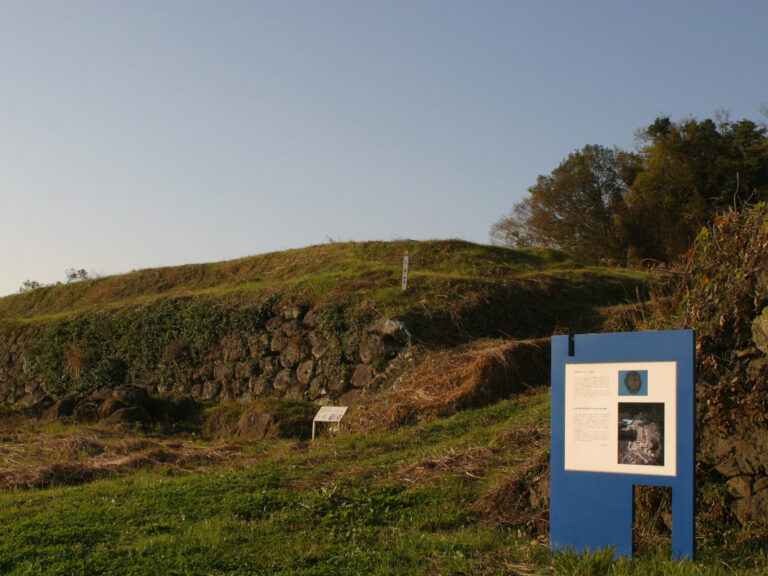
The remains of the Hizen Arima clan, who controlled the Shimabara Peninsula area. Harunobu Arima, who became lord in the second year of the former turtle (1571), became a Christian and received support from the Jesuits, due to the deterrence of the invasion of the Yongzōji clan. Later, Harunobu, as a Christian daimyō, gave the missionaries and others asylum even after Toyotomi Hideyoshi issued the Bantenlian Expulsion Order. It was here that the Christian culture blossomed. Harunobu renovated and renovated the castle, and a garden and tea room were also built, but Hinoe Castle was abandoned by Matsukura, who had been enclosed in the early Edo period. At the tip of the hilly area, at the top of Shiroyama at an altitude of about 80m, the Honmaru remains, such as Nino Maru, Sannomaru, and Demaru, which take advantage of the natural topography. Stone steps using tombstones such as the five-wheeled pagoda and the Baojin-India Pagoda, stone stone walls made with unique techniques in the south, ruins of the stilted building, and a large amount of earthworks, tiles, ceramics, etc. have also been excavated, it has been designated a National Historic Site.
The original castle site

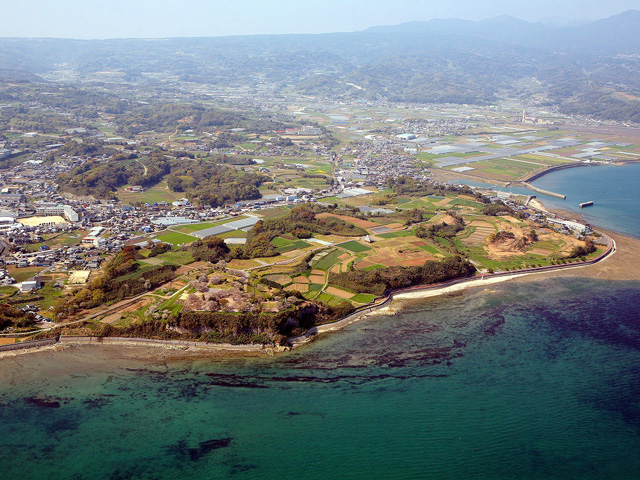
The castle remains on a hill at an altitude of 30m that protrudes into the Ariake Sea. In the year of Gyeongsang 9 (1604), Arima Gizumi as a branch of the Hinoe Castle as a castle. At 1.3km north-south and 0.5km east-west, the site of the castle consisted of Honmaru, Ninomaru, Sannomaru, and Amakusa Maru, which were surrounded by stone walls, and was a castle using masonry techniques from the Sengoku period. The castle was abandoned in Gyeongsang 20 (1615) after the fall of the Christian daimyō Arima Harunobu. In the Shimabara-Amakusa Rebellion (Shimabara Rebellion) of Kanei 14 (1637), about 37,000 people of the people were stuck for 88 days and fought against the shogunate forces of about 120,000 or more, after which they were wiped out. A number of shells, human bones, and crosses have been excavated from the castle site, and the Honekami Jizo, who collected and served a number of grave monuments and stone statues and bones said to belong to the great general of the riot, Shiro Amakusa, tells of the former tragedy. It is a country-designated historic site, and is also a constituent heritage of the World Cultural Heritage Site "Hidden Christian Related Heritage of Nagasaki and the Amakusa Region".

Hayasaki Peninsula

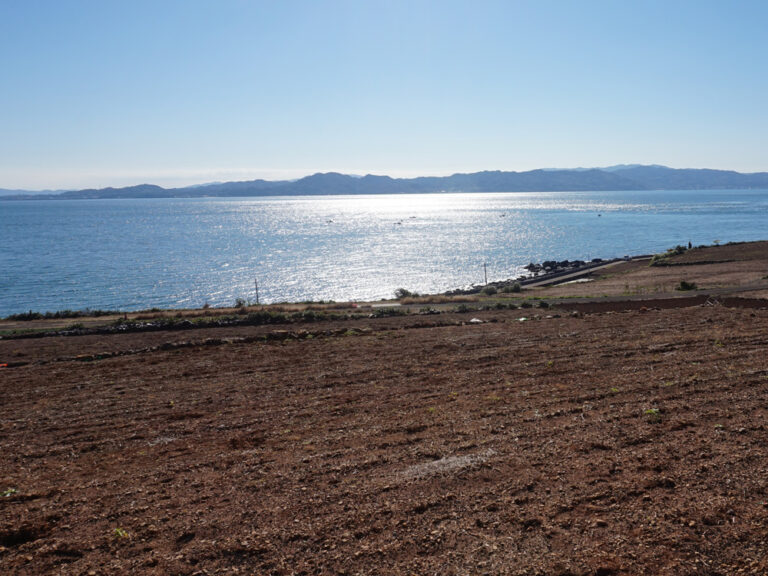
The best view of the Shimabara Peninsula. The fast tide of Hayasaki Seto, which flows like a river. A group of giant trees of Ako, hundreds of years old. Potato field using natural terrain. The landscape of the Hayasaki Peninsula was created by local people using the volcanic eruption and its ejecta. The volcanic island has reclaimed the sea to create a fast tidal flow, creating a rich sea with many fish. In addition, volcanic ejecta has become red-brown soil after millions of years, growing agricultural crops and giant trees. The volcanic eruption that gave birth to the Shimabara Peninsula about 4.3 million years ago is the source of the Hayasaki Peninsula's unique culture and history.

Hayasaki Coast

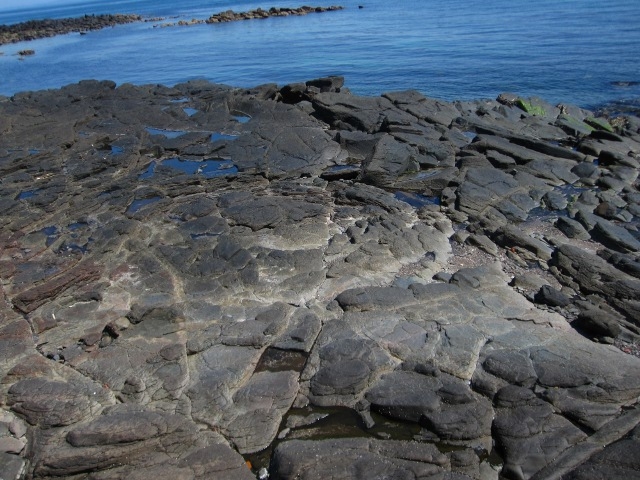
About 4.3 million years ago, an undersea volcano eruption occurred near the Shimabara Peninsula. At first, the magma and seawater were touched, causing a number of severe explosions, which shattered the magma into pieces. After the mountain grew and the magma stopped interacting with the seawater, lava flows calmly flowed over the surface. The black rock-like rocks that spread along the Hayasaki coast tell us that the Shimabara Peninsula was born by a volcanic eruption like the one currently occurring on the island of Hawaii.

Mount Ido

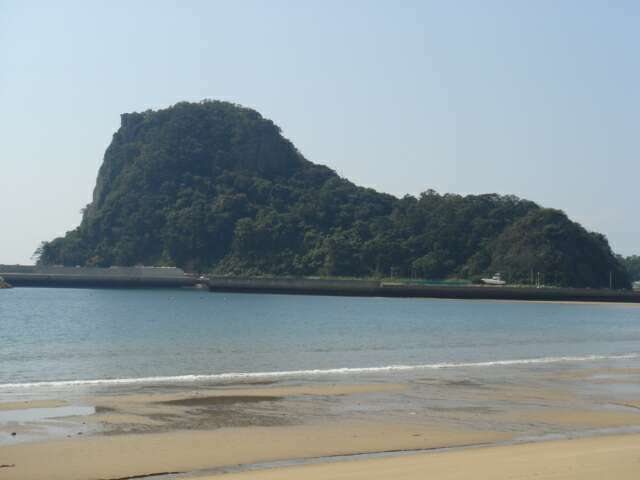
A small mountain at an elevation of 97m along the seafront facing the Heavenly River. It is a rocky mountain made of tuff breccia, and is designated as a national natural monument as "Iwatoyama" due to the fact that it has about 190 types of plants such as tabunoki and Inumaki, and rare plants such as Ako and Appenaceae. There is a cave at the entrance of the mountain climbing, and there is a tomb of the monkey and a cave dedicated to several stone Buddhas called Ana Kannon. There is a history that even the Buddha statues hidden in this cave were destroyed by Christians during the rise of Christianity. The peak on the eastern side of Mount Ido, which is called Zazen Stone, is a scenic spot where you can take a view up to Amakusa on the opposite bank. It is a 15-minute walk from the entrance of the Gankoji Temple to Zazen Stone.

Longshi Coast

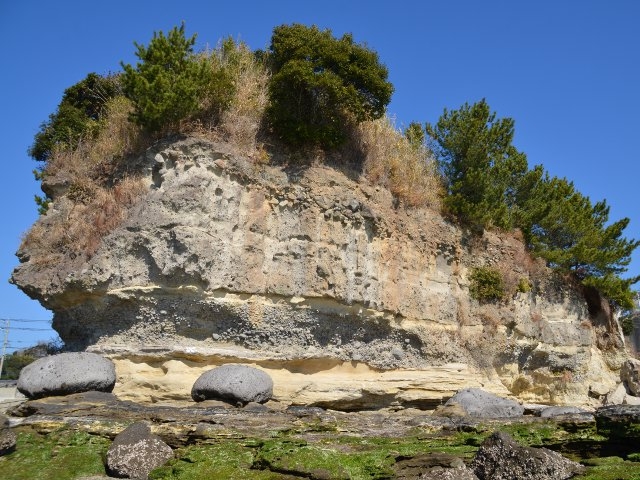
There is a shrine called Kotohira Shrine on the Yongshi coast, which is a cape-shaped topography that protrudes into the sea. The people of this town, which had many fishermen traveling to the pelagic fishing industry, had erected a shrine at the end of the cape to pray for the safety of long trips. It was the ejecta from the earliest eruption of Unsen Volcano, which began about 500,000 years ago, and the flow of the river that created the cape suitable for building the shrine. The surface of the Unzen volcano, which was created by the volcanic activity for tens of thousands of years, was cut by the river and became a cape that protruded into the sea, and above it was the place of God to support the hearts of fishermen fighting in the rough seas. The Kotohira Shrine continues to pray for the safety of the fishermen, still quietly.

Hamano River Spring

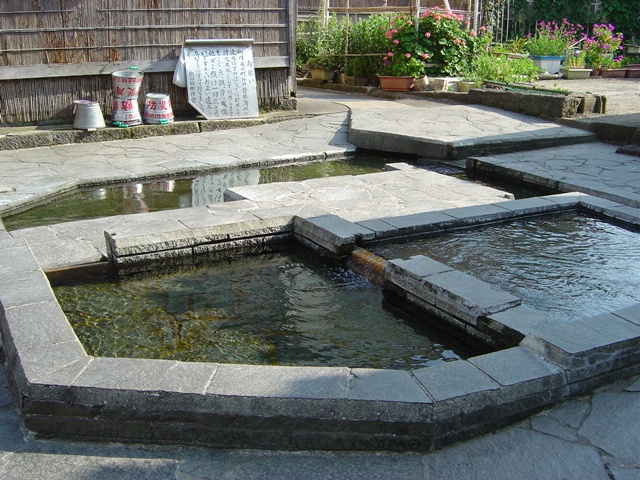
One of the main washing sites still used as the living water for citizens. Washing sites are divided by purpose of use, such as drinking, food, dishwashing, washing, etc. In the adjacent "silver water", the "kanzarashi" using spring water can be tasted.

Shimabara Onsen yutorogi no yu

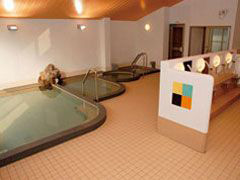
A day-trip hot spring facility in the center of Shimabara, where each man and woman have different yūfune inner baths, such as a medicinal bath and a water bath, and a sauna is also provided. Yugoi is a wide resting place to unwind.

Confectionery.

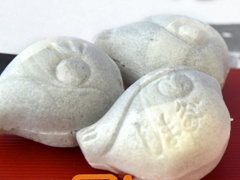
With plenty of homemade tsubuan, Ganba-chu is a popular product since its inception. You can always taste hot hot in a special container that warms up with steam when you pull the pimps on the package.

Leading tourist guide gatekeeper

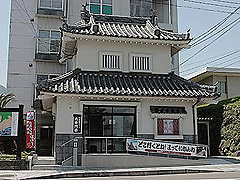
There are a number of attractive courses, such as a castle town walking course and a volcano course, that can be freely arranged according to time and wishes. Price is 1500 yen per guide (as transportation), up to 20 people. Book up to a week in advance. In the case of more than 20 people and others need consultation.

Contact Us: Business & Personal Inquiries

By proceeding, you agree to our Terms of Use And confirm you have read our Privacy Policy .

Notes

· We are available for inquiries 24 hours a day. Responses will be provided between 9:00 and 18:00 (including weekends, public holidays, and year-end/New Year holidays).
· Depending on the nature of your inquiry, it may take some time for us to respond.

RURUBU & ALL WAY JAPAN
Privacy Overview

This website uses cookies so that we can provide you with the best user experience possible. Cookie information is stored in your browser and performs functions such as recognising you when you return to our website and helping our team to understand which sections of the website you find most interesting and useful.