Archives: Travel Post

Guidance Yamashiro Township

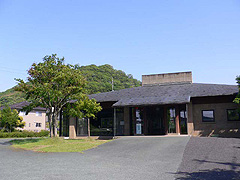
Commentary using panels, footage, and models of the surrounding remains, including the Yamashiro Futakozuka Kofun mound, which rises just off the corner, and the large-scale mound Oba Chicken mound, and the Yamashiro mounds. A three-dimensional paper play of the Izumo myth can be seen in the hall. Also nearby is the trailhead of Mount Chausu, which is written in the "Izumo-kuni Fengdo" as "Kananabinu".
Matsue Vogel Park

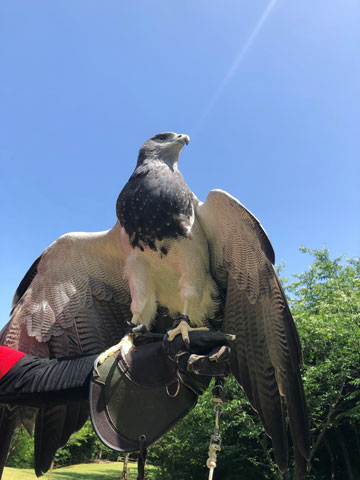
One of the largest flower and bird theme parks in the country facing Lake Shinji. A must see an indoor garden with about 1000 varieties of begonias all year round. You can also interact with birds of the world in various places in the park, including two greenhouses of water birds and tropical birds. The only facility in the Chugoku region to display the bird "Shoebill", which is talked about by its characteristic appearance or immovable.

Furusoshi Park, Shimane Prefectural Kofun no Oka

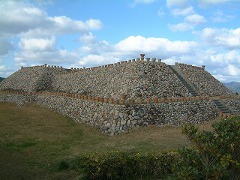
The park is set up on a hilly area with a view of Lake Shinji, west of the city of Matsue. Furumen Park, which contains large and small burial mounds such as the Ubagaya Kofun group, which is around the 5th century, including the relocation and restoration of the Furusoshi Otani No. 1 mound, which looks like a pyramid. You can take a leisurely walk with your family.

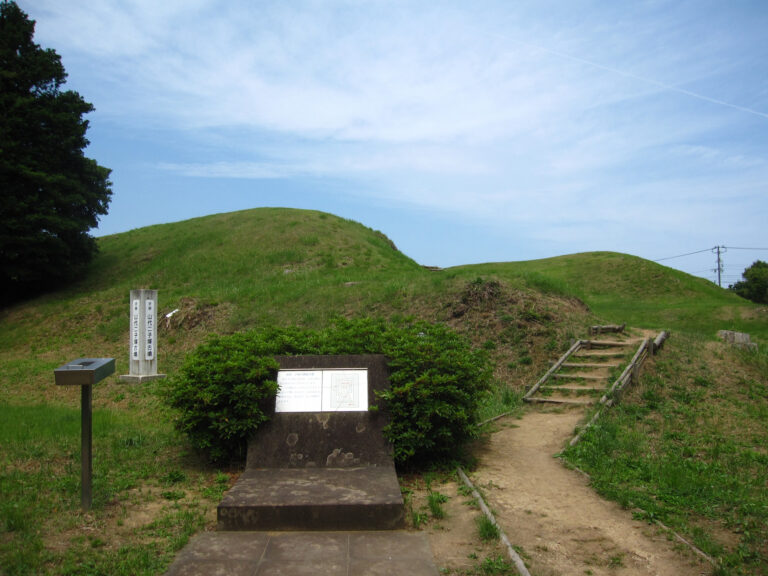
Yamashiro Futakozuka Kofun

With a total length of 94m and a height of 9.5m in the rear part, it is one of the largest in Shimane Prefecture (historical site). It is known that for the first time the name of "anterior posterior mound" was used in 1925. In addition to seeing the shape of the front and rear, you can also visit the interior. The "Guidance Yamashiro no Sato", located near the hem of the burial mound, offers exhibition commentary on the types and structures of the burial mound in the area, as well as models of the construction process.

Grass mounds

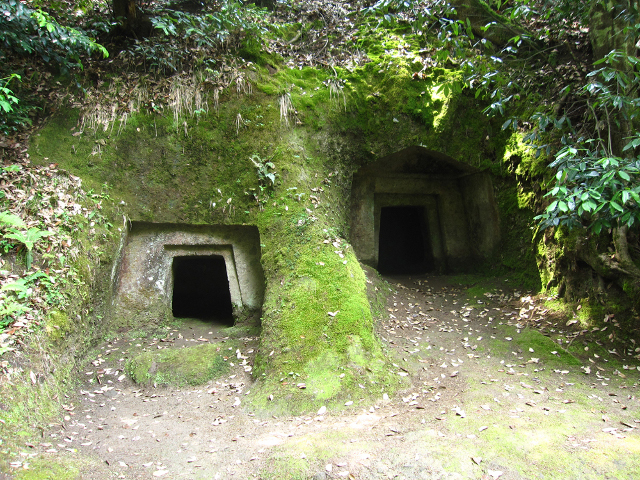
The largest group of burial mounds in Shimane Prefecture, where a total number of more than 200 burial mounds are densely packed, including the Abudani Kofun (Yokoana Tomb Group) and the Nishi-Hyakutsukayama Kofun Group, the Higashi-Hyakutsukayama Kofun Group, the Ogusa Iwafune Kofun and the Kotenjin Kofun Group. It was created in the middle to late period of the Kofun period (5th to 7th centuries). In addition, numerous archaeological sites and burial mounds, such as the site of the Izumo Kokufu and the site of the Izumo Kokubunji Temple, are scattered throughout the area of the hill. A free rent-a-cycle is also available at the Yakumo Standing Wind Hill Exhibition Learning Hall.

Tawa Mountain Historic Site Park

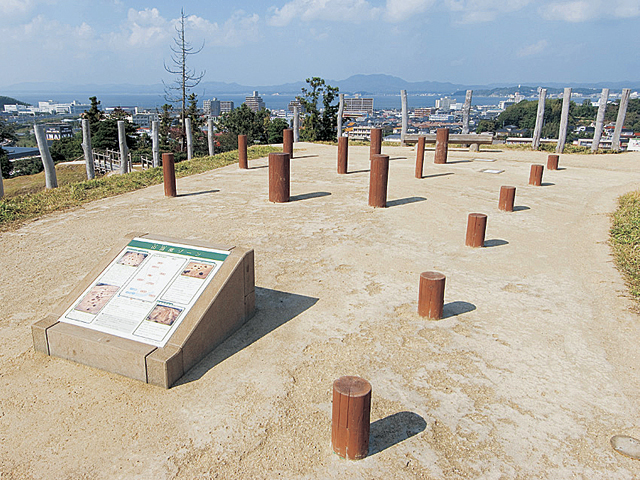
A historic site park that has been maintained and restored to the site of a bunched settlement from the Yayoi period. This settlement is surrounded by triple bunches, and has a unique shape throughout the country, and is a site with many mysteries, which is also referred to as a site for rituals and a castle site. A large part of the park has been designated a National Historic Site.

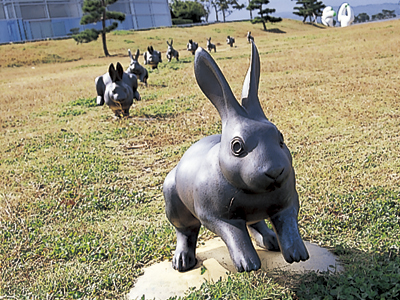
Lake Shinji Rabbit

On the grass on the shore of Lake Shinji in front of the Shimane Prefectural Museum of Art, the Prons statue of 12 rabbits, which continues with a curve, is described as "Shinji Lake Usagi" (written by Satoji Yabuchi). It is said that good relations and happiness soar when you offer a sea shell to the statue of the second rabbit from the front and gently turn to the west.

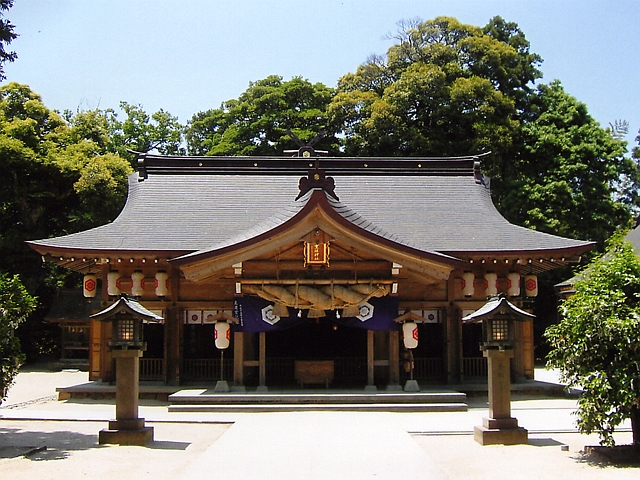
Yaegaki Shrine

A shrine dedicated to the main shrine of Taisha-zo, which enshrines Susano-no-Miko and his wife, Inata-no-Hime-no-Miko. In the treasure collection, you can see a wall mural of Yamato-e style, which is said to be a work of the Heian period. In the forest at the back of the precinct, there is a mirror pond where it is said that Inada Shimomei is reflected, and the speed of the edge is divulged by the sinking speed of 100 yen of fortune-telling paper with coins.

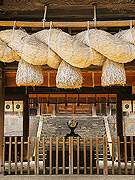
Mei Nai Shrine

It is a shrine located at the foot of the east-south side of Mount Chausu (the name of Hinō), and is surrounded by Izanagi no Mikoto. The precinct, wrapped in a quiet air at the old shrine, which also appears in the "Izumo-kuni", calms the mind. It is said that it used to be near "Jinai no Waterfall", which is called Shinsui.

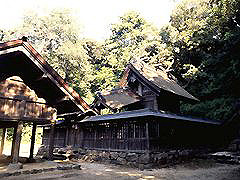
Iya Shrine

Izananami, the god of the birth of the country and the birth of the gods, is the god of the festival. In the back of the shrine, surrounded by a forest with a severe sign, there is a main shrine made of Taisha. It appears as "Ikuya no Yashiro" in the historical book "Nihonkōji" alongside the Kojiki, and is considered to be the oldest shrine in Izumo in the literature. It is good to contact in advance when visiting.

Contact Us: Business & Personal Inquiries

By proceeding, you agree to our Terms of Use And confirm you have read our Privacy Policy .

Notes

· We are available for inquiries 24 hours a day. Responses will be provided between 9:00 and 18:00 (including weekends, public holidays, and year-end/New Year holidays).
· Depending on the nature of your inquiry, it may take some time for us to respond.