Archives: Travel Post

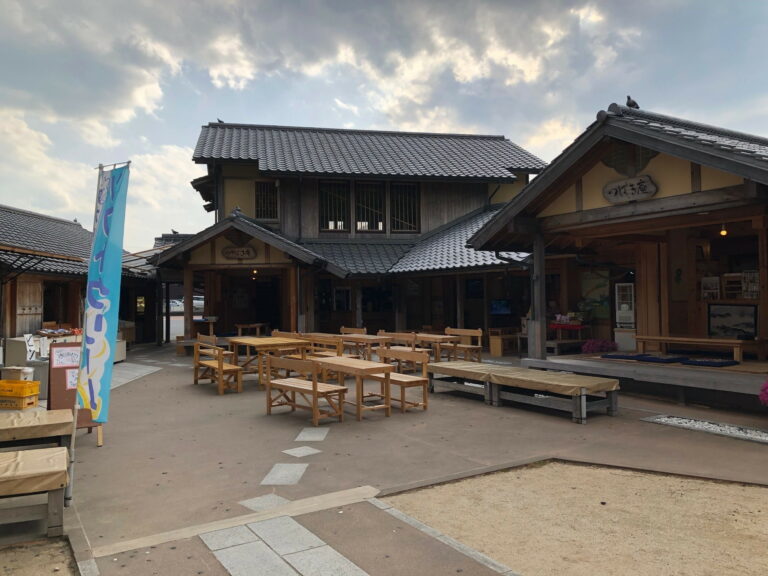
Road Station Kumano, Flower Cave

A roadside station located in front of the "Hana no Ku Shrine", which is said to be the oldest shrine in Japan, which also appears in the "Nihon Shoki". A base that conveys tourist information such as the Kumano Kodo and the flower cave and the charm of Kumano ''Oozuna Chaya'' is registered as a roadside station, and inside a wooden facility with a tiled roof where you can feel the warmth of trees, there are shops and tourist information centers, exhibition corner of materials, restaurant, set up a rest area, etc. At the restaurant, there are local specialties such as udon noodles and rice balls using the ancient rice "Izanami rice", and sama sushi Yame Hari sushi. The concession store also has attractive items such as the hand-built ginjo sake "Kumano Sanzan" and "Nachi Kuroishi" from Kamikawa-cho and crafts made with Kumano cedar.
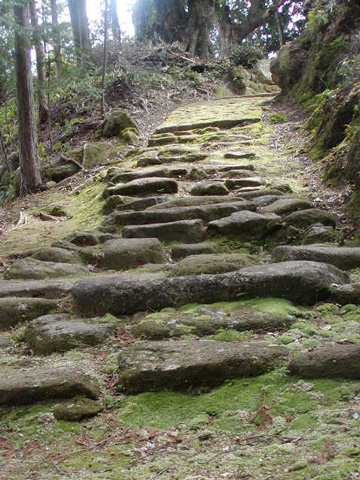
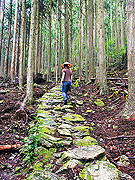
Road of Hatasu

The oldest Kamakura period cobblestones of the Kumano Kodo "Iseji" remain in the mountains. There is a legend about the landing of Xu Fu in Hada-su-no-sato on the seaside, and the palace of Xu Fu is celebrated. It is about a 10-minute walk from Xufu Chaya on the national highway to Xufu no Palace.

Street Pass

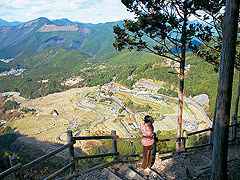
The route across the mountain pass to Maruyama Senmaida, where a continuous landscape of countless terraced rice fields spread on steep slopes. You can also stop at the observation deck from the top of the pass and admire the majestic landscape, like the ruins of the sky. Pass by the side of the private house from the side of the bus stop at Senmaida/Street Pass, and go to the entrance of Street Pass. Walk through a grove of trees and head to the top where Koyasu Jizo is located. The Senmaida Observatory is about a 10-minute walk from the branch road. Climb the steep stairs, but I want to stop by. If you return to the summit again, you will go down the pass to Maruyama Senmaida. You can return to the bus stop by following the asphalt road that goes through the terraced rice fields.

Kumano City Historical and Folk Materials

In the Tozo-style building, it contains more than 6000 historical materials such as archaeology, folk implements, and literature transmitted to this area. In addition to earthenware, spears, and matchguns, the second floor displays folk materials (tools) on agricultural and forestry fisheries in the early modern period.

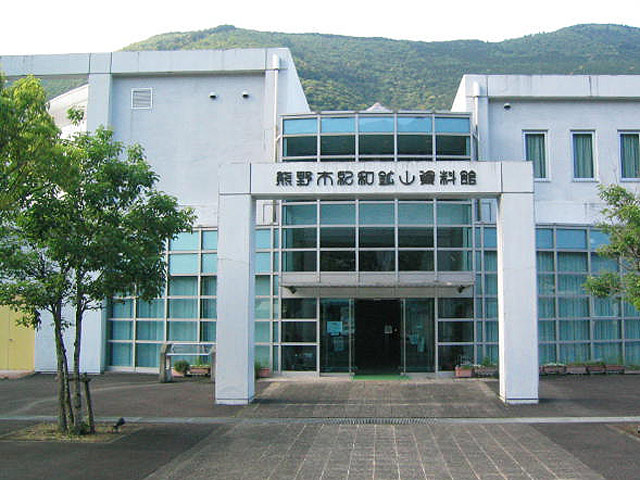
Kiwa Mining Museum, Kumano City

In the old days, the Kishu mine had a history from the Nara period until 1978, and Kiwa-cho, which was also one of the country's best mining towns in the early modern era. At the Kiwa Mining Museum, Kumano City, the dioramas show the appearance of each era, and real objects such as a trolley and a digging instrument are on display. In addition to demonstrating the fluorescence of Kiwa's largest fluorite in Japan, ore groups from around the world are also on display. There is also a production of pseudo-experiences to the basement in the elevator, and an exhibition of conversation plays by mannequins, and depending on the day, there is also an ore-collecting experience and commentary guidance. There is also a display of nearby tourist spots and a free miner no-foot-yu on the site.

Senmaida Observatory

A view point with sweeping views of the vast Maruyama Senmaida, which was also selected for Japan's 100 terraced rice fields. It is located another 260m from the top of the street pass, about 10 minutes or so, climbing a steep staircase.

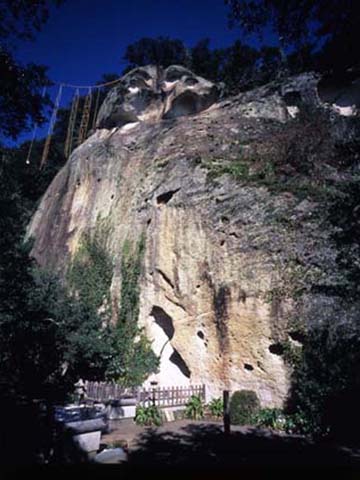
Cave of Flowers Shrine

A shrine whose body is a 45m high and 80m wide megalith. It is said that Arima-mura, who buried Izanami-no-Mikoto, a national-born mythology that appears in the "Nihon Shoki", is a cave of this flower. Every year on February 2 and October 2, a ritual is held in which a noose is placed from the top of a rock during the annual festival.

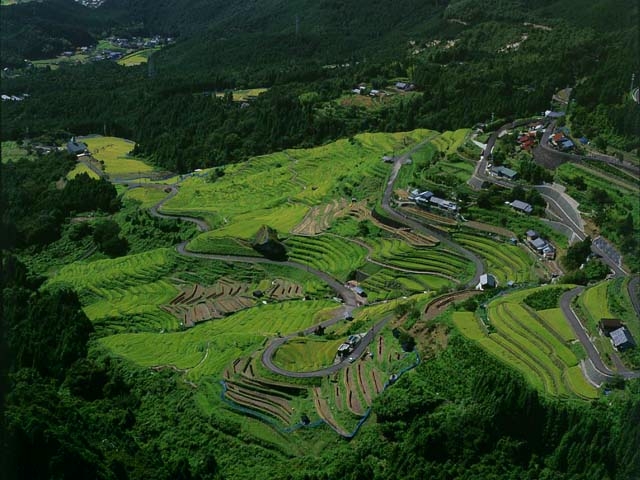
Maruyama Senmaida

The terraced rice fields spread in the mountains of Kiwa. It is said to be "a thousand at first sight" and the sight of 1340 sheets in a row of cotton is spectacular. Records also remain that there were more than 2200 rice paddies in Gyeongsang 6 (1601). A rare landscape that is in harmony with nature while being created gives beauty and emotion to the human heart.

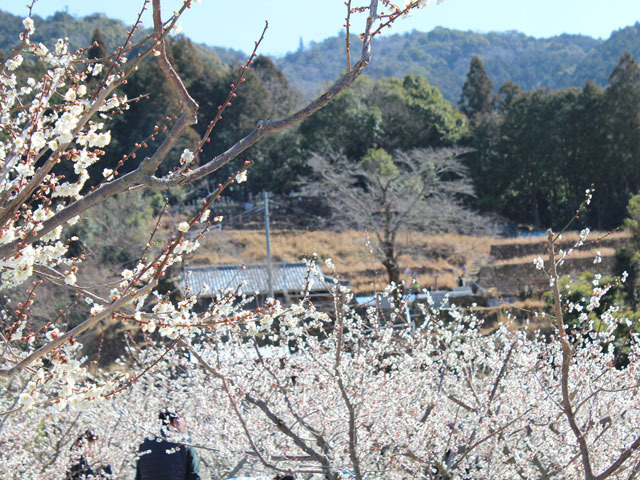
Small boat plum forest

A plum forest that spreads in the small boat village near the point where the Kitayama River, known for sightseeing raft descent, joins the Kumano River. The riverside of the Kitagawa River along the prefectural road No. 740 is a grassy square, and some people can hold tents and camp during the season. In addition, a plum forest extends long on the bank side where the settlement is located. About 650 plum trees have been planted on the 1.2ha site, mainly in the southern high plum, which is considered to be the finest variety of plum, with its large grain and thick flesh. In early spring, the white plum blossoms are in bloom, and the village has a plum scent. It is carefully raised by cutting branches and watering, and the fruits of the harvested plum are made into umeboshi, a specialty of Kishu.

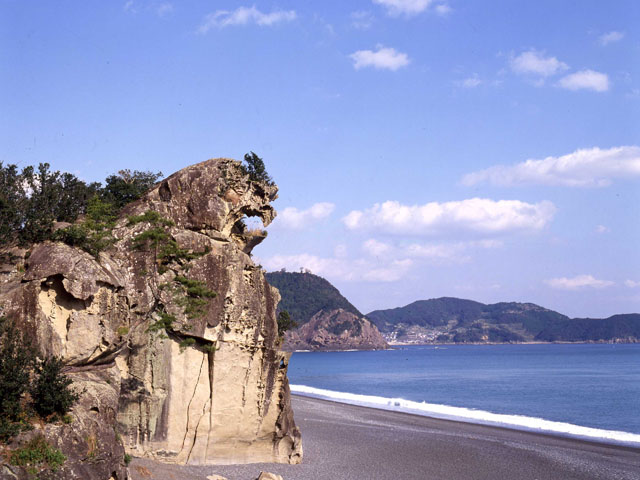
Lion rock

As the name suggests, a rock rock in the shape of a lion, created by the uplift of the ground and the erosion of the Kuroshio, with a height of 25m and a circumference of 210m. Its magnificent figure is like a lion barking toward the sea. World Heritage Site, designated a national natural monument.

Contact Us: Business & Personal Inquiries

By proceeding, you agree to our Terms of Use And confirm you have read our Privacy Policy .

Notes

· We are available for inquiries 24 hours a day. Responses will be provided between 9:00 and 18:00 (including weekends, public holidays, and year-end/New Year holidays).
· Depending on the nature of your inquiry, it may take some time for us to respond.